To fully understand the world of solar energy, here are the essential points to remember regarding kWp and associated units.
Key Takeaways
- kWp (kilowatt-peak) measures the maximum power of a solar panel under ideal conditions.
- kWh (kilowatt-hour) measures the amount of electricity produced or consumed, not the power.
- kVA is the unit of measurement for your electricity meter’s power, important for grid connection.
- kWp helps in sizing your installation and comparing solar panels to each other.
- The actual production of your solar panels will depend on many factors, not just the kWp.
Understanding Peak Power (kWp)
Definition of Watt-peak and Kilowatt-peak
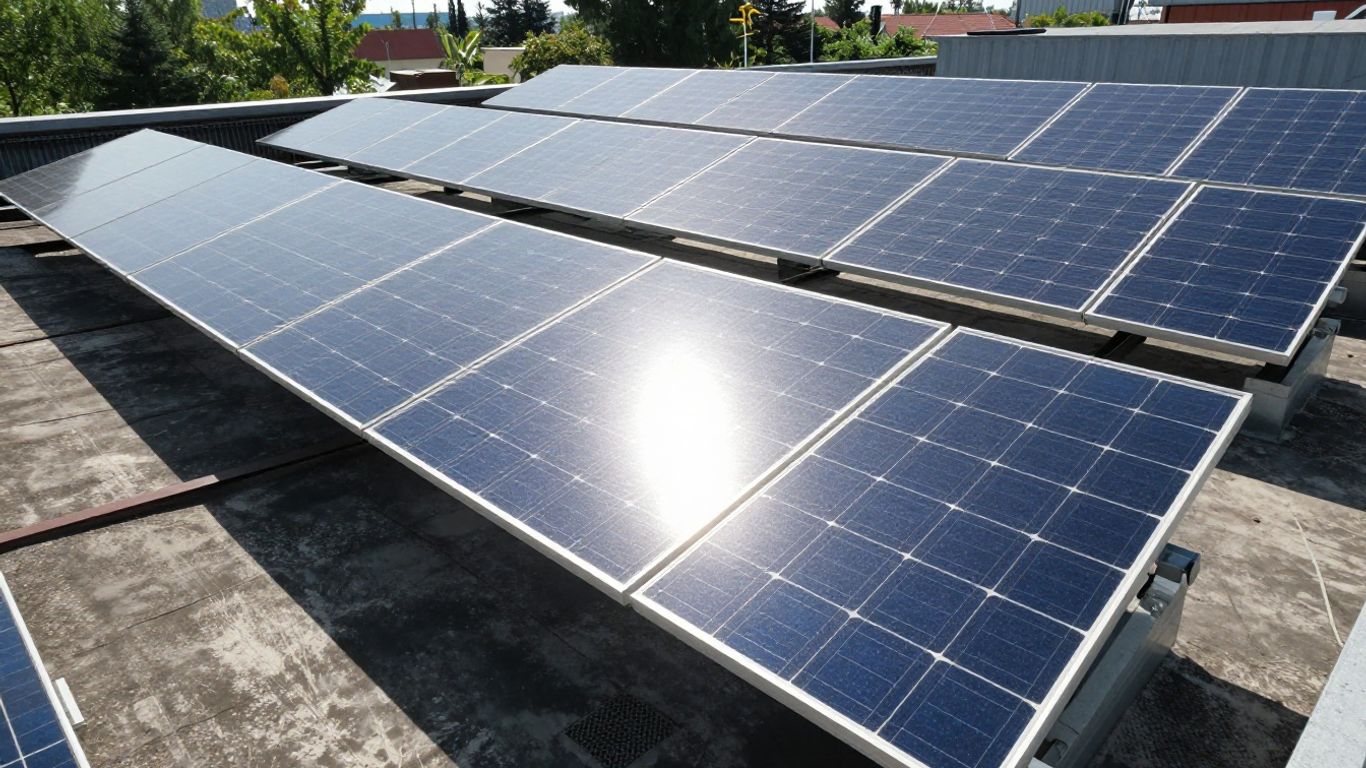
When we talk about solar panels, we often hear about peak power, expressed in kWp. But what does that mean exactly? The watt-peak (Wp) is the unit used to measure the maximum power a solar panel can produce. Think of it as the peak performance of an engine. For an entire installation, kilowatt-peak (kWp) is more commonly used, which is equivalent to 1,000 Wp. It’s simply a matter of practicality for handling smaller numbers, especially on quotes. For example, a 10,000 Wp installation will more easily be noted as 10 kWp [46c2].
Ideal Conditions for Measuring kWp
It’s important to know that this peak power is measured under very specific conditions, called Standard Test Conditions (STC). These conditions simulate an ideal environment for the panel: an irradiance of 1000 W/m², a temperature of 25°C, and an air mass of 1.5. It’s a bit like testing a car under perfect track conditions. These conditions allow for an objective comparison of different solar panels, regardless of their installation location or the day’s weather [5467].
kWp as a Reference Unit for Solar Panels
kWp therefore serves as a reference for evaluating the capacity of a solar panel or installation. It gives you an idea of the maximum power the system can generate under optimal conditions. However, it’s important to remember that the actual electricity production will vary depending on many factors, such as the season, time of day, weather, and the orientation and tilt of your panels. kWp is a measure of power, not a measure of energy produced over time.
Differentiating kWp and kWh
kWp: A Measure of Power
Kilowatt-peak, or kWp, represents the maximum power a solar panel can produce under ideal laboratory conditions. Think of it as the raw power of an engine. It’s a measure of instantaneous capacity, not of what is actually generated over time. kWp is used to compare the performance of different solar panels available on the market and to size your installation. For example, a 3 kWp installation is designed to reach this maximum power under perfect sunshine.
kWh: A Measure of Energy Produced or Consumed
Kilowatt-hour, or kWh, measures the amount of energy actually produced or consumed over a given period. It’s the equivalent of the distance a car travels: it depends on the engine’s power (kWp) but also on the time of use and road conditions. Your electricity bill uses kWh to quantify your consumption. For solar panels, kWh indicates how much electricity your installation has actually generated, taking into account all real factors such as weather or season.
Analogy to Better Understand the Distinction
Imagine a tap. The flow rate of the tap is like kWp: it indicates the maximum amount of water that can come out per second under optimal conditions. The total volume of water you have collected in a bucket over an hour is kWh. This volume depends not only on the tap’s flow rate but also on how long you have left the tap open and whether you have positioned the bucket correctly. Similarly, the energy production of your solar panels (kWh) depends on their maximum power (kWp) but also on the sunshine, orientation, and the duration they are operating.
- kWp is maximum instantaneous power.
- kWh is energy produced or consumed over time.
- kWp helps in choosing and comparing panels.
- kWh allows for the evaluation of actual production and consumption.
It is important not to confuse these two units, as they are used for different calculations and evaluations within a solar project. The choice of your installation’s power is made in kWp, but it is in kWh that you will measure its annual performance. Understanding peak power is therefore a first step.
The Role of kVA in a Solar Installation
When embarking on a solar project, you’ll hear about kWp, kWh, and also kVA. It’s normal to get a bit lost, as these units don’t measure the same thing. kVA, or kilovolt-ampere, is the unit that measures the power of your electricity meter. Essentially, it’s the maximum capacity of current your installation can draw from the grid at any given moment. Think of it as the size of the pipe bringing water into your home: if you open too many taps at once, the pressure drops or it stops flowing. It’s the same with electricity; if you demand too much power from your meter, it will trip.
What is Kilovolt-ampere (kVA)?
kVA is a measure of apparent power, mainly used to define the capacity of your electricity subscription. It represents the maximum power your installation can consume simultaneously. For example, a 9 kVA meter allows you to run several energy-hungry appliances at the same time without issues. This is important data for ENEDIS, the electricity distribution network operator, as it determines the network capacity required to supply your home.
kVA and the Power of Your Electricity Meter
Your meter’s power, expressed in kVA, is directly linked to your electricity contract. It is chosen when you subscribe to your plan and should match your actual needs. If you have a large house with many electrical appliances, or if you frequently use energy-intensive equipment such as induction hobs, an oven, or a heat pump, you will need a meter with a higher kVA rating. Incorrect sizing can lead to nuisance tripping if demand exceeds your meter’s capacity.
Relationship Between kWp and kVA for Grid Connection
When you install solar panels, the power of your installation is first expressed in kWp (kilowatt-peak), which represents the theoretical maximum power of your panels under ideal conditions. However, for administrative procedures, particularly with ENEDIS for grid connection, and for billing electricity fed back into the grid, the power in kVA is used. There is no simple rule to directly convert kWp to kVA, as the actual output power of the panels is influenced by many factors (temperature, sunshine, etc.) and the inverter plays a key role in the conversion. Your installer will calculate the kVA power of your installation based on the power of your panels and the inverter’s characteristics, following the manufacturers’ recommendations. It is this kVA value that will be mentioned on official documents and taken into account for sizing your grid connection. It is therefore important to understand this distinction for your project to be correctly configured and declared. If you’re looking to understand how to get started with solar energy, ‘plug and play’ kits can be a simple first step to install.
Your meter’s power (kVA) defines what you can draw from the grid, while your panels’ power (kWp) defines what you can produce. These two elements must be consistent for an optimised and compliant solar installation.
Why kWp is Essential for Your Project
Kilowatt-peak (kWp) is fundamental data for anyone considering a solar installation. It’s not just a technical figure, but the key to understanding the production capacity of your future system. Without a good grasp of kWp, it’s difficult to make the right choices for your project.
Sizing Your Solar Installation
kWp helps you determine the total power of your installation. It’s a bit like choosing the size of an engine for a car: the more powerful the engine (more kWp), the more energy it can potentially provide. Installers use this measurement to calculate the number of panels needed to cover your electricity needs, while taking into account the available roof space. A well-sized installation guarantees optimised production and efficient use of your space.
- Determine the desired total power.
- Calculate the number of panels required.
- Adapt the installation to your consumption.
Comparing the Performance of Photovoltaic Panels
When looking at different solar panel models, kWp is the primary indicator for comparison. A panel with a higher peak power (expressed in Wp, then converted to kWp) will generally be more efficient under ideal conditions. This allows you to know, for example, which panel offers the best yield for a given surface area. It’s a standardised basis for comparison, even if actual production will depend on other factors.
kWp is a measure of maximum power under standardised conditions. It allows for the comparison of equipment, but does not reflect actual production which varies according to weather and environment.
Estimating Electricity Production Potential
Beyond simple comparison, kWp gives you an idea of your installation’s annual production potential. By combining your system’s peak power (in kWp) with data on your region’s sunshine, you can estimate the amount of electricity (in kWh) you could produce each year. This estimate is vital for evaluating the profitability of your project and anticipating your energy savings. For example, a 3 kWp installation in the south of France will not produce the same amount of energy as an identical installation in the north. This is why it’s important to get informed about solar production estimates for your locality.
Factors Influencing Actual Production Compared to kWp
The Impact of Seasonality and Time of Day
The kilowatt-peak (kWp) figure you see on a solar panel datasheet is a bit like the maximum power of a car announced by the manufacturer. It’s a measurement under perfect conditions, called Standard Test Conditions (STC). But in real life, the sun doesn’t always shine as brightly, and it doesn’t always hit the same spot or with the same intensity. Seasonality plays a huge role. In the height of summer, the sun is high and strong for long hours, maximising production. In winter, it’s a different story: the sun is lower, days are shorter, and there’s less direct sunlight. The time of day is also a factor. In the morning and late afternoon, the sun is less direct than at noon, so production is lower. This is a normal variation, and your installation is designed to take it into account.
Weather Conditions: Sunshine and Humidity
Beyond the season and time of day, the day’s weather has a direct impact. A clear, sunny sky is obviously the ideal scenario for your solar panels to produce maximum electricity. But what happens when there are clouds? Even a partly cloudy sky can significantly reduce the amount of light reaching the panels. And when it rains, production drops even further. Humidity can also play a role, although its impact is generally less significant than direct sunshine. A very humid day can sometimes slightly affect panel efficiency. You also need to consider temperature. Paradoxically, solar panels are slightly less efficient when it’s *too* hot, even if there’s a lot of sunshine. STC mention a temperature of 25°C, but on heatwave days, panel temperatures can climb much higher, slightly reducing their yield. This is why it’s important to look at the estimated annual production per kWp, which takes these climatic variations over a whole year into account.
Panel Orientation, Tilt, and Maintenance
The physical location of your panels is also super important. The ideal orientation in the Northern Hemisphere is due south. That’s where the sun hits for the longest and strongest periods throughout the day. A south-east or south-west orientation is still very good, but a north orientation will be much less productive. Tilt also matters. The perfect slope depends on your latitude, but generally, a tilt of around 30 to 35 degrees is often optimal for capturing maximum sunshine throughout the year. If your panels are too flat or too steep, you lose some yield. And then there’s maintenance. Dust, dead leaves, bird droppings… all of these can accumulate on the panel surface and cast shadows, reducing their ability to capture light. Regular cleaning, say once a year or every two years, can make a noticeable difference in production. It’s a bit like cleaning your house windows to see more clearly. Remember to check the condition of your panels and their surroundings, as a little maintenance can improve the overall performance of your installation.
Calculating the Required Peak Power
To properly plan your solar installation project, it’s essential to know what peak power (kWp) you will need to install. This calculation allows you to correctly size your system so that it meets your energy needs without costly oversizing or inefficient undersizing. It’s a key step in optimising your investment.
Estimating Your Electricity Needs
Before thinking about panels, you need to know how much electricity you actually consume. Look at your electricity bills from previous years. They will give you a precise idea of your annual consumption, usually expressed in kilowatt-hours (kWh). It’s also useful to note peak consumption periods, for example, if you use many appliances at the same time. A good estimate of your needs is the first step towards a successful solar installation. Also, consider future changes: do you plan to buy an electric car or install new energy-hungry appliances? You need to anticipate to avoid having to modify your installation too quickly.
Determining the Number of Solar Panels Required
Once you have an idea of your annual consumption, you can start calculating the number of panels needed. In France, it is estimated that one kilowatt-peak (kWp) of solar panels produces on average between 900 and 1,200 kWh per year. This production varies depending on your region and sunshine conditions. To get a more precise idea, you can use a simple formula: Required peak power (kWp) = Annual consumption (kWh) / Annual production per kWp (kWh/kWp). For example, if you consume 4,500 kWh per year and your region produces an average of 1,000 kWh per kWp, you will need approximately 4.5 kWp. Then, simply divide this power by the individual power of each panel (often around 350 to 400 Wp, or 0.35 to 0.4 kWp) to get the number of panels. For example, for 4.5 kWp with 0.4 kWp panels, you would need about 11 to 12 panels.
Taking Available Space into Account
The calculated number of panels must be able to be installed on your roof. Each solar panel has a specific surface area, generally around 1.7 to 2 m². You therefore need to check that the total surface area required for the number of panels needed corresponds to the space available on your roof. Don’t forget to consider constraints such as chimneys, roof windows, or shaded areas that could reduce the efficiency of certain panels. The orientation and tilt of your roof also play a major role in energy production. A south-facing roof without obstacles will be more productive. If the space is limited, you may need to consider more powerful panels or accept a slightly lower production than your needs, which can be compensated by purchasing electricity from the grid. It is always advisable to consult a professional to accurately assess the panel surface area suitable for your situation.
Calculating the required peak power is a process that requires cross-referencing several pieces of information: your consumption, the expected performance of panels in your region, and the space you have available. A methodical approach helps avoid costly mistakes and maximise the return on investment of your solar installation.
Impact of kWp on Cost and Profitability
When talking about installing solar panels, the question of initial cost and long-term returns is central. The number of kilowatt-peaks (kWp) your installation can produce plays a direct role in this equation.
Initial Cost of a Solar Installation
The more you want an installation with a high kWp capacity, the higher the budget you will need to allocate. This is because each component, from the panels themselves to the inverter, mounting systems, and labour, increases in cost with the total power of the system. For example, a 6 kWp installation will cost more than a 3 kWp installation. Prices can vary, but for an idea, a 6 kWp installation could cost around €12,000 to €13,500 in 2023, including installation. It is therefore important to clearly define your needs to avoid unnecessarily oversizing your project.
Increased Electricity Production
The main advantage of a higher kWp capacity is, of course, greater solar electricity production. This means you capture more energy from the sun each day. This increased production translates directly into a more significant reduction in your electricity bill. In some cases, it can even generate a surplus of energy that you can sell, which can improve the overall profitability of your project.
Long-Term Profitability and Return on Investment
The profitability of a solar system is calculated by comparing the savings on your electricity bills against the initial investment. A system with a higher kWp capacity, although having a higher upfront cost, can potentially offer a faster return on investment and more substantial savings over the lifespan of the installation. However, several factors must be considered to evaluate this return: the cost of electricity you purchase, available government grants, and, of course, the amount of sunshine in your region. Good planning allows for maximising the benefits of your solar investment.
The choice of the number of kWp for your installation is a balance between the budget you can allocate upfront and the savings you hope to achieve in the long term. A more powerful system requires a larger initial investment but can generate greater returns over the years.
Understanding STC Conditions for kWp
When we talk about the power of a solar panel, we often use the term « kWp » (kilowatt-peak). But where does this figure come from? It is measured under very specific conditions, called STC conditions. It’s a bit like a car’s performance announced under ideal laboratory conditions.
The Meaning of Standard Test Conditions
STC stands for « Standard Test Conditions ». These conditions have been defined to allow for a fair comparison between different solar panels. They are set as follows:
- Irradiance: 1000 Watts per square metre (W/m²). This is equivalent to fairly strong sunshine, like you might find in the middle of a summer day.
- Cell temperature: 25 °C. Note that this is the temperature of the cells themselves, not the ambient temperature. Cell temperatures can rise much higher under the sun.
- Air Mass (AM): 1.5. This represents the path the sunlight takes to travel through the atmosphere. AM 1.5 is a representative average.
These conditions allow for a measurement of the theoretical maximum power for each panel. It is this value that is then converted into kWp and displayed on datasheets.
Why These Conditions Are Important for Comparison
Imagine if each manufacturer measured their panels’ power as they pleased. It would be chaos to choose! STC conditions create a common ground. Thanks to them, you can directly compare the peak power of different solar panel models, regardless of their brand or technology. It’s a bit like if all smartphone manufacturers announced their battery life using the same testing protocol. This helps you know which panel is the most powerful on paper. It’s an important step in sizing your installation, and it also influences available grants, such as the self-consumption bonus Prime Énergie (CEE).
The Limits of STC Conditions in Reality
Now, let’s be honest: the real world is rarely as perfect as the laboratory. STC conditions are useful for comparison, but they don’t always reflect the actual production of your solar panels. Why?
- Temperature: Solar panels get much hotter than 25°C when exposed to the sun, especially in summer. Higher temperatures slightly reduce their efficiency.
- Sunshine: The intensity of the sun varies enormously depending on the time of day, season, weather (clouds, rain), and geographical location.
- Dirt and Shading: Dust, leaves, or tree shade can reduce the amount of light reaching the cells.
It is therefore normal for the actual production of your installation to differ from what calculations based solely on STC kWp might suggest. This is why it’s important to consider other factors to estimate annual production, such as the orientation and tilt of your panels.
kWp and Inverter Output Power
The Role of the Inverter in Energy Conversion
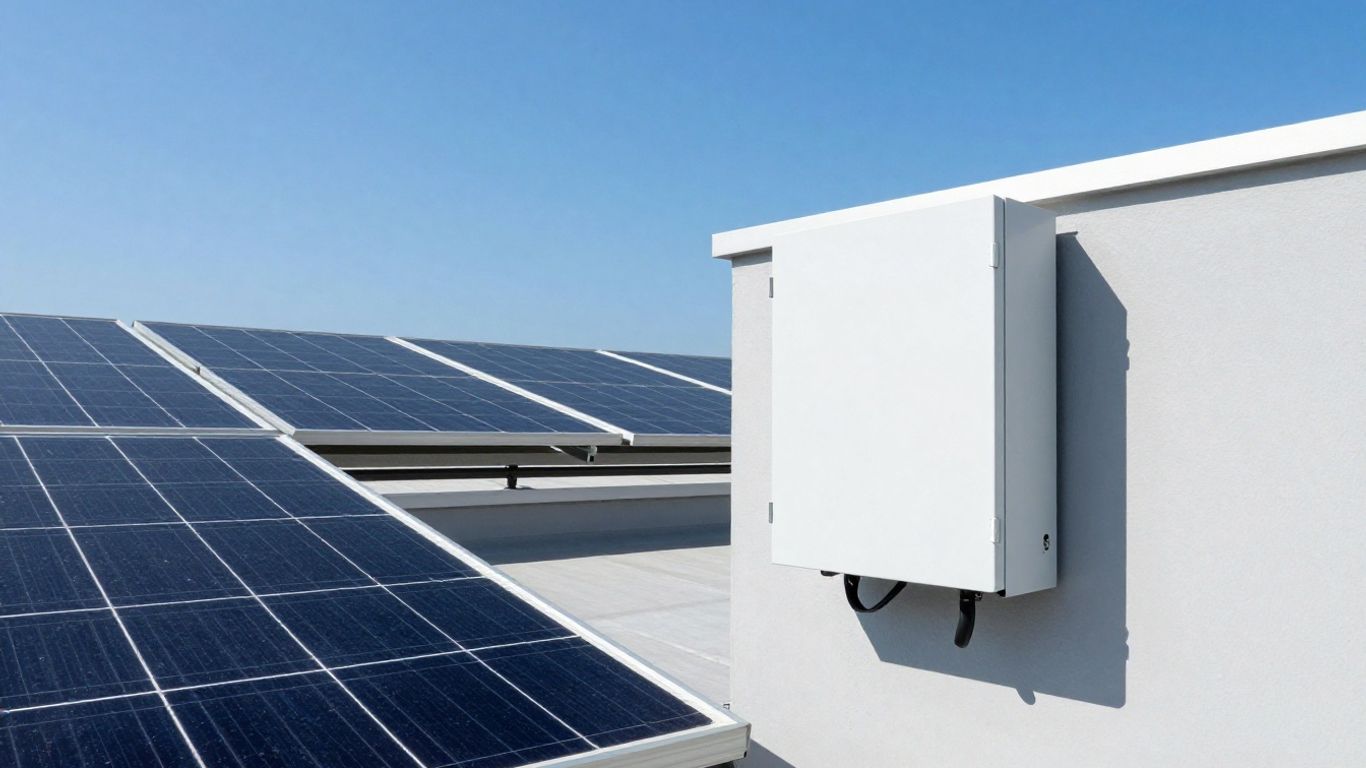
The inverter is an essential component of any photovoltaic solar installation. Its job is to convert the direct current (DC) produced by your solar panels into alternating current (AC). It is this alternating current that is then used to power your domestic electrical appliances or fed into the public grid. Without the inverter, the electricity generated by your panels would be unusable.
Why Inverter Power is Often Lower Than kWp
It is common for the inverter’s nominal power to be slightly lower than the total peak power (kWp) of your solar panels. This may seem counterintuitive, but it is a common practice in system design. Several reasons explain this choice. Firstly, solar panels reach their peak power under ideal test conditions (STC), which are rarely encountered in reality. Furthermore, the heat generated by the panels during operation can reduce their yield. The inverter is therefore sized to handle the expected *actual* power, rather than the theoretical maximum power of the panels. This optimises the overall system performance and avoids unnecessary extra costs associated with an oversized inverter.
Specific Calculation by the Installer
The exact relationship between your panels’ kWp and your installation’s kilovolt-ampere (kVA) power, which is used for grid connection, is not a simple conversion. It is the qualified installer who performs this calculation. They base it on the technical specifications of the panels and the inverter, as well as the manufacturers’ recommendations. This personalised study ensures that the system is correctly sized to maximise energy production while complying with standards and the constraints of the electrical grid. A good match between the power of the panels and that of the inverter is crucial for the longevity and efficiency of your solar installation. For an idea of costs, the price per kWp in France in 2025 varies, for example, around €5,998 for a 3 kWp installation, including fitting and after deducting the grant, price per kWp.
Here is a table illustrating the typical relationship:
| Panel Power (kWp) | Inverter Power (kVA) (indicative) |
|---|---|
| 3 kWp | 2.7 kVA |
| 6 kWp | 5.4 kVA |
| 9 kWp | 8.1 kVA |
It is important to note that these values are indicative and the precise calculation is always carried out by a professional.
Evolution of Solar Panel Performance
The field of photovoltaics has seen considerable advancements over the years. Today’s solar panels are much more efficient than those from a few decades ago. This constant improvement allows for more energy to be obtained from the same installed surface area.
Technological Progress in Photovoltaics
The solar industry has come a long way. Continuous research has led to innovations that improve the efficiency of converting sunlight into electricity. We are seeing new cell technologies, more efficient materials, and optimised manufacturing methods. These advances have quadrupled the efficiency of solar panels since the 1970s [421f].
How Panel Peak Power is Improving
Peak power, measured in kWp, of a solar panel has significantly increased. It is no longer uncommon to find monocrystalline panels exceeding 400 Wp, whereas a few years ago, powers below 300 Wp were sufficient for panels of similar size. This increase in power per panel allows for a reduction in the total number of panels needed to achieve a given installation power, which can be an advantage for roofs with limited surface area.
Here is an overview of the typical evolution of panel power:
| Approximate Year | Typical Panel Power (Wp) |
|---|---|
| 1980s | 50 – 100 |
| 2000s | 150 – 200 |
| 2010s | 250 – 300 |
| 2020s | 350 – 450+ |
Estimated Annual Production per kWp
The increase in panel peak power has a direct impact on annual electricity production. For the same installed power in kWp, newer and more efficient panels can generate more energy over the year. This is due not only to their higher intrinsic capacity but also to technological improvements that may make them slightly more efficient in real-world conditions, even if the standard measurement remains kWp [35bf].
It is important to note that while peak power is a standardised measurement, actual production depends heavily on local sunshine, orientation, and tilt conditions. Modern panels, although more powerful in kWp, must still be installed optimally to maximise their annual yield.
This constant evolution means that today’s solar projects benefit from more mature and efficient technologies, making investment in solar even more attractive.
Conclusion
Now that you are more comfortable with the concepts of peak power (kWp), it’s time to take action. Remember that kWp is a measure of maximum power under ideal conditions, while kWh measures the energy actually produced or consumed. kVA, on the other hand, relates to the power of your electricity meter. Understanding these differences is essential for correctly sizing your solar installation, comparing panel performance, and evaluating your system’s production potential. Although kWp is a reference, keep in mind that actual production varies depending on many factors. By taking all these elements into account, you will be better equipped to make informed choices for your solar project and optimise its profitability.
Frequently Asked Questions
What exactly is kWp?
kWp, or kilowatt-peak, is like the maximum power a solar panel can deliver when the weather is very nice and warm, but not too hot. It’s a measurement for comparing panels to each other, as if looking at their strength in a special test.
What is the difference between kWp and kWh?
It’s a bit like comparing a car’s speed (kWp, the power) to the distance it can travel (kWh, the energy produced or consumed). kWp is instantaneous power, kWh is the amount of electricity over time.
What is kVA used for in a solar installation?
kVA is the power of your electricity meter. It’s important for knowing if your solar installation can be connected to the grid without problems, especially when you demand a lot of electricity at once.
Does kWp tell me how much electricity I will produce?
Not directly. kWp gives you an idea of your panels’ capacity under perfect conditions. The actual amount of electricity produced (in kWh) will depend on the sun, the weather, your roof’s orientation, and many other things.
Why is the inverter’s power often lower than the total kWp of the panels?
The inverter converts the current from your panels into usable current for your home. There’s always a small loss during this conversion. So, its power is often a bit lower than the total power of your panels to ensure everything works well.
How do I calculate the number of kWp I need?
You need to look at how much electricity you consume each year on your bills. Then, we estimate how many kWp would be needed to cover part or all of your needs, taking into account the available roof space.
Does more kWp cost more?
Yes, generally. The more panels you install to have a higher peak power (more kWp), the higher the installation cost will be. But this can also mean more electricity produced and therefore greater savings in the long run.
Are STC conditions realistic for my home?
STC (Standard Test Conditions) are ideal laboratory conditions for comparing panels. In real life, the sun isn’t always perfect, the temperature changes, and there can be shade. So, actual production will often differ from figures based on STC.