The article titled « How Solar Panels Work Explained Simply to Understand Well » aims to demystify the process of producing electricity from sunlight. It is designed to offer a clear and accessible understanding, even for those without prior technical knowledge. By following a progressive approach, we will detail the key steps, from basic components to practical applications, so that everyone can grasp how solar panels work.
Key Takeaways
- The fundamental principle of a solar panel is the direct conversion of sunlight into electricity, a process known as the photovoltaic effect.
- Photons from sunlight strike silicon cells, releasing electrons that create a direct current (DC).
- An inverter is essential to transform this direct current into alternating current (AC), the type of electricity we use in our homes and businesses.
- Solar energy production is influenced by various factors such as orientation, tilt, weather conditions, and the presence of shadows.
- Before any installation, administrative steps are required, including a declaration of works and a connection request.
Understanding the Working Principle of a Solar Panel
To grasp how a solar panel produces electricity, we need to look closely at the mechanisms that transform light into usable energy. It’s not magic, but a clever application of physical principles.
The Principle of Converting Light into Electricity
At the heart of every solar panel are photovoltaic cells. These cells are typically made from silicon, a semiconductor material. When sunlight, composed of particles called photons, strikes these cells, it gives them energy. This energy causes the electrons present in the silicon to move. This movement of electrons is what we call a direct electric current (DC). It’s a bit like each photon giving a small push to the electrons to make them move forward.
The Essential Components of a Photovoltaic Panel
A solar panel isn’t just a sheet of glass. It’s a well-thought-out assembly of several elements that work together. Here are the main ones:
- Photovoltaic cells: These are the elements that convert light into electricity. They are the engine of the panel.
- Encapsulation layers: These protect the cells from weather, moisture, and impacts. They are often made of polymers.
- Glass: One or two layers of resistant glass are on the front to protect the cells while allowing maximum light to pass through.
- Frame: Usually made of aluminium, it gives the panel its structure and allows it to be securely fixed.
All these parts form a complete system, often called the « Balance of System » or B.O.S., which allows the panel to function correctly as part of a photovoltaic system.
The operation of a solar panel relies on the photovoltaic effect. Sunlight, in the form of photons, strikes semiconductor cells (often made of silicon). This interaction releases electrons, thus creating a flow of electricity in the form of direct current. This process is the basis of solar energy production.
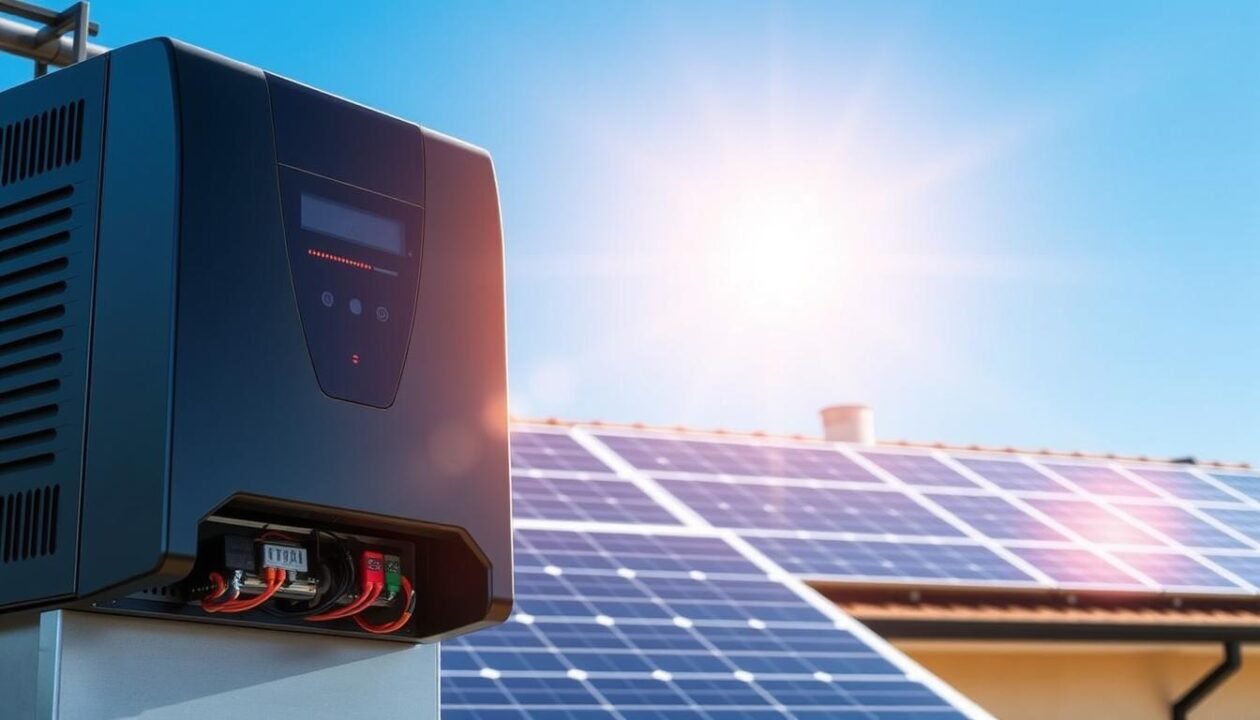
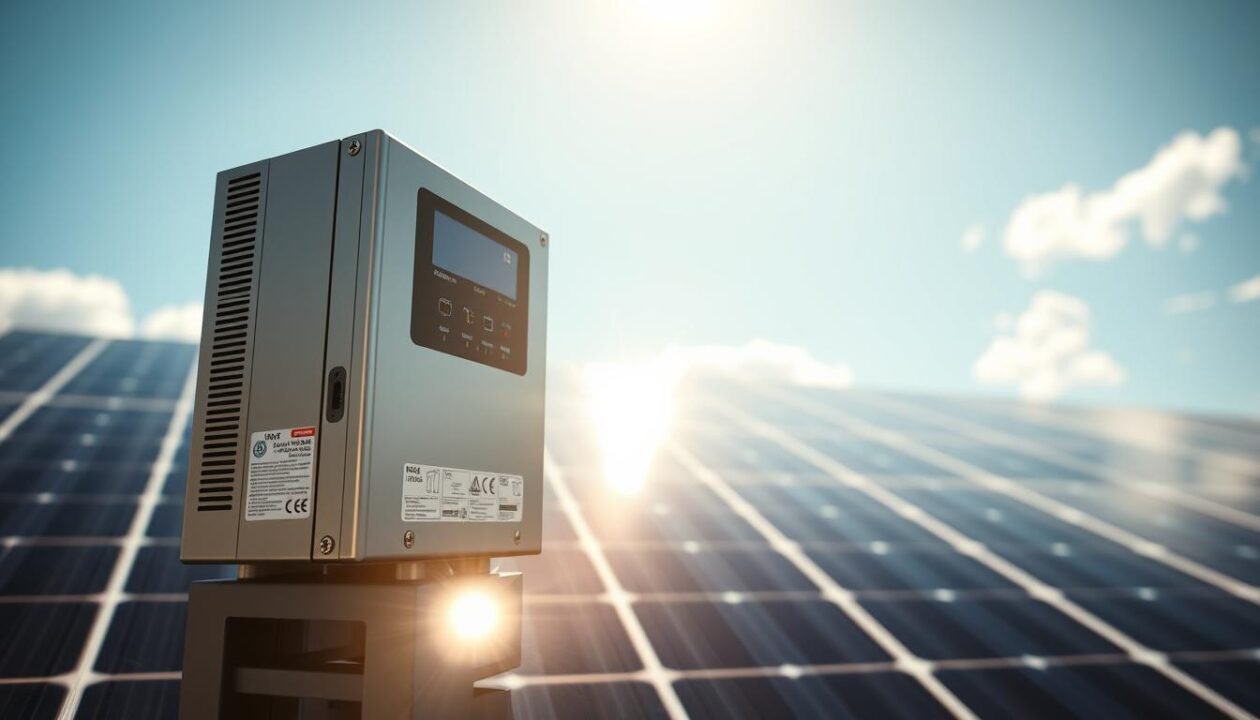
It is important to note that the solar panel produces direct current. For it to power your electrical appliances or be fed into the grid, this direct current must be transformed into alternating current (AC) by another key component: the inverter which transforms direct current into alternating current.
The Journey of Solar Energy, from the Sun to Your Socket
Once your solar panels have captured sunlight, this energy begins a well-orchestrated journey to reach your electrical appliances. This path is essential for you to enjoy the clean electricity you produce.
Sunlight Reaches the Panel
The process begins with the arrival of sun rays on the surface of your photovoltaic panels. These rays are composed of light particles called photons. The efficiency of this first step depends on several factors, including the orientation and tilt of your panels, as well as the absence of shadows.
Photons Strike the Silicon Cells
Inside each solar panel are photovoltaic cells, usually made from silicon. When photons from sunlight strike these cells, they transfer their energy. This energy is sufficient to release electrons from their atoms within the semiconductor material.
Electrons are Released and Direct Current is Generated
The specific design of photovoltaic cells creates an internal electric field. This field forces the released electrons to move in a single direction. This movement of electrons constitutes an electric current. For now, it is a direct current (DC), similar to that of a battery. This direct current is then channelled to the inverter to be transformed into alternating current (AC), the type of electricity used by most of your household appliances. If you’re looking for a simple solution to get started, plug-and-play solar kits can be an interesting option.
The journey of solar electricity, from capturing light to its use in your home, is a well-thought-out process. Each step aims to maximise the benefits of your installation, whether it’s reducing your bills or contributing to a healthier environment. The goal is to make your home more energy-independent through solar energy.
The electricity produced, once converted into alternating current, is directed to your main electrical panel. This is where it is distributed to the different circuits in your home. It is possible to monitor your production and consumption in real-time, which helps in better energy management. Regular checks of your installation can help maintain optimal performance, as suggested by the advice on solar panel testing.
The Photovoltaic Effect Explained Simply
Light-to-Electricity Conversion
The photovoltaic effect is the core of how any solar panel works. Essentially, it’s the phenomenon that allows sunlight to be directly transformed into electricity. It might seem a bit magical, but it’s pure physics. When sun rays, which are made up of tiny particles called photons, hit the surface of a solar cell, they give it an energy boost. This energy is enough to make electrons, which are tiny components of atoms, move. It’s this movement of electrons that creates the electric current.
The Process of Direct Current Production
Solar panel cells are usually made of silicon, a semiconductor material. This silicon is specially treated to create an internal electric field. When photons arrive and release electrons, this electric field pushes them in a specific direction. Imagine a small highway for electrons: they are forced to follow the intended path. This flow of electrons in a single direction is called direct current (DC). It’s a bit like the current from a battery. This direct current is then ready to be used by some devices or, more often, transformed into alternating current (AC) by a device called an inverter to power most of our household appliances. The efficiency of this transformation depends on several things, such as the quality of the cells and the intensity of the sun. This is why solar electricity production varies throughout the day and year. However, the basic principle remains the same: light hits, electrons move, and voilà, electricity! This phenomenon is the basis of electricity production by solar panels.
Here are the key steps in this process:
- Photon Absorption: Sunlight particles strike the photovoltaic cells.
- Electron Release: The energy from photons causes electrons to escape from their atoms in the semiconductor material.
- Current Creation: An integrated electric field within the cell directs these released electrons, thus generating an ordered flow, which is direct current.
Silicon, the preferred material for solar cells, has semiconductor properties that allow the movement of electrons to be controlled when exposed to light. This ability to channel light energy into a directed electrical flow is what makes photovoltaic cells so efficient for solar energy production.
The Key Elements of a Photovoltaic System
A photovoltaic system is a bit like a small open-air factory. It’s not just about the panels we see on roofs. Several key components work together to ensure that solar energy eventually powers your appliances.
The Role of Photovoltaic Cells
These are the real stars of the show. Photovoltaic cells, usually made of silicon, are designed to capture sunlight. When photons strike these cells, they make electrons move. This movement of electrons is electricity! The more cells there are and the more efficient they are, the more electricity your panel will produce. They are often grouped in 60 or 72 to form a panel.
The Importance of the Inverter in Conversion
The electricity produced by the panels is direct current (DC), similar to that from batteries. However, most of our appliances run on alternating current (AC). This is where the inverter comes in. It acts as a translator, transforming direct current into usable alternating current. Without it, solar electricity would be unusable for the home. Modern inverters also do some monitoring to check if everything is working correctly.
Protection and Metering Devices
To ensure everything runs safely, there are protective devices. They prevent overloads or short circuits, much like the circuit breakers in your electrical panel. There is also a meter. This meter measures the electricity you produce and consume. It’s important for knowing how much energy you use and how much you could sell if you produce more than you need. Sometimes, you can even have storage batteries to keep produced energy for later.
All these components form an ecosystem where each element has its function. The quality of each part and their proper integration are crucial for the overall performance of your solar installation.
Detailed Operation of a Solar Panel
Photon Absorption by the Cells
The process of electricity production by a solar panel begins with the interaction of sunlight with its components. Panels are made up of numerous photovoltaic cells, usually made from silicon. These cells are designed to capture the energy of photons, which are light particles. When sun rays strike the panel’s surface, photons penetrate the silicon cells. This is the starting point of the entire energy conversion chain.
Creation and Separation of Electric Charges
Once photons have transferred their energy to the silicon’s electrons, these electrons are released from their original state. This phenomenon creates electron-hole pairs. For electricity to flow, these charges must be separated and directed. An internal electric field, present within the photovoltaic cell, plays this role. It forces electrons to move in one direction and the
From Light to Usable Electricity
Conversion of Direct Current to Alternating Current
Once your solar panels have captured sunlight and converted it into electricity, this energy begins a journey through your home. Photovoltaic panels generate direct current (DC). However, most electrical appliances we use daily run on alternating current (AC). This is where a key component comes in: the inverter. This device’s mission is to convert direct current into alternating current. This conversion is essential for solar electricity to be compatible with your home’s electrical system. Without this step, the energy produced by your panels would be unusable for your lights, refrigerator, or television. The inverter is therefore the bridge between the raw energy from your panels and the energy your appliances can use.
Delivery of Electricity to the Home
After being transformed by the inverter, the alternating current is directed to your main electrical panel. This is the nerve centre of your electrical installation. The electrical panel then distributes this electricity to the different circuits in your home. It acts as a distributor, ensuring that each appliance receives the energy it needs. It is also at this level that real-time consumption can be monitored and different energy flows managed. Connection to the public grid also happens via this panel, subject to necessary authorisations. The solar electricity that reaches your home can take several paths, depending on your needs and your installation:
- Direct Self-Consumption: Electricity is consumed immediately by your appliances.
- Storage: If you have batteries, excess energy can be stored for later use.
- Grid Injection: Unconsumed and unstored electricity can be fed back into the public grid.
The path of solar electricity is a well-defined process, from capturing light to its practical use in your home, including conversion and distribution stages.
Factors Influencing Solar Electricity Production
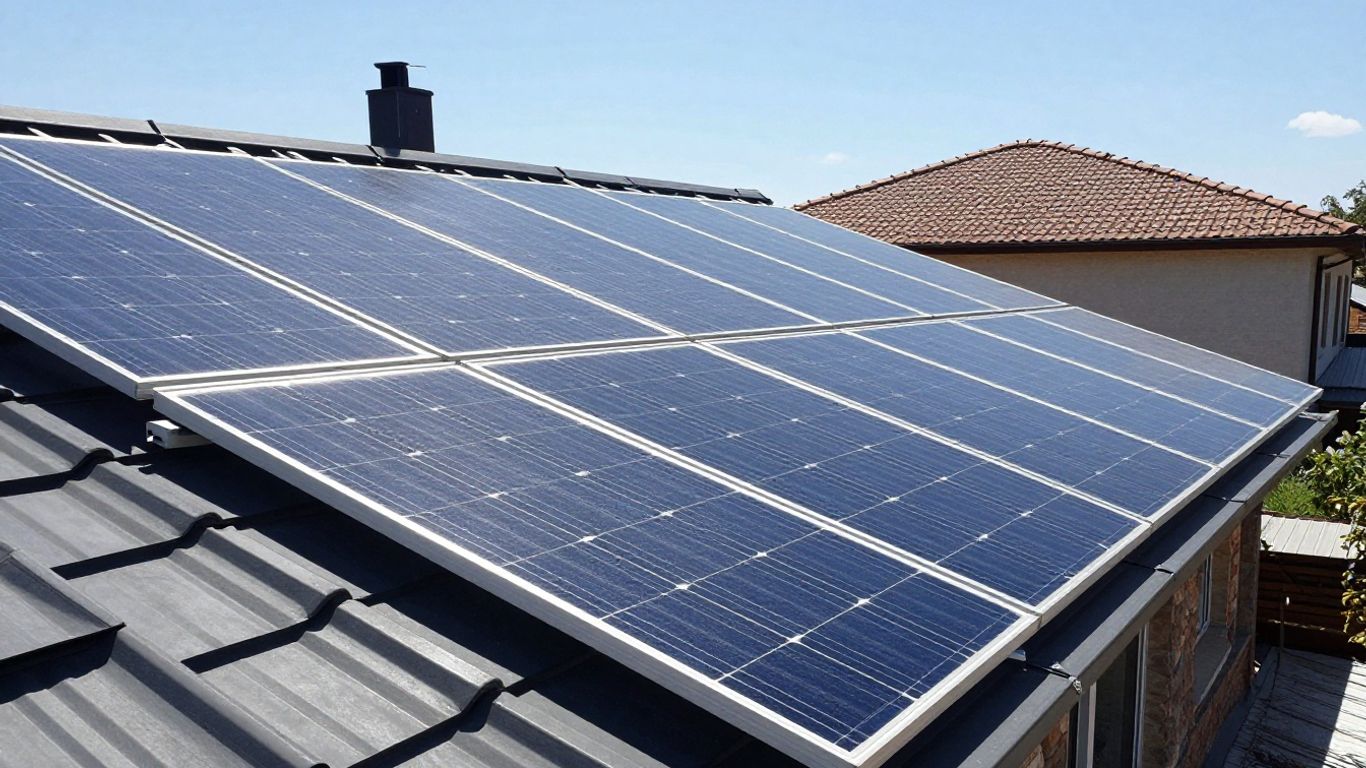
Several elements come into play to determine the amount of electricity your solar panels will produce. It’s not enough to install them; you also need to consider their environment and positioning.
The Impact of Orientation and Tilt
The orientation of your panels is an important point. In the Northern Hemisphere, a south-facing orientation is generally the most advantageous, as it allows for maximum sunlight capture throughout the day. A south orientation can increase annual production by about 10% compared to an east or west orientation. If your roof isn’t suitable, east or west orientations can be a solution, allowing for smoother production throughout the day, but with slightly lower overall yield.
Tilt also matters. The ideal angle for capturing the most light over the year is often between 30° and 35°. This is generally the natural slope of most roofs, which simplifies installation. In some regions, a slight adjustment can be made depending on the latitude.
The Influence of Weather Conditions
Of course, the sun is the main driver. The more sunshine there is, the more your panels produce. But be careful, excessive heat can paradoxically reduce their efficiency. Photovoltaic cells work best in moderate temperatures. Good air circulation around the panels is therefore beneficial to prevent overheating. On rainy days or days with heavy cloud cover, production will logically be lower.
The Importance of Location and Shadows
Location is crucial. It is absolutely essential to avoid shadows falling on your panels. Even a partial shadow, caused by a tree, a neighbouring building, or a chimney, can significantly reduce the electricity production of the entire system. It is therefore advisable to carefully study the environment of your installation to minimise these shaded areas. A preliminary shading study is often recommended to anticipate these problems [bfe7].
Furthermore, the cleanliness of the panels plays a role. Dust, dead leaves, or bird droppings can accumulate on the surface and block sunlight, thus reducing yield. Regular cleaning may be necessary to maintain optimal production [41e0].
The Different Types of Solar Panels
There are several types of photovoltaic solar panels on the market, each with its own characteristics. The choice will depend on your needs, your budget, and the space you have available. The two most common types are monocrystalline and polycrystalline panels.
Monocrystalline Panels and Their Performance
Monocrystalline panels are made from a single silicon crystal. This very pure structure gives them a uniform black colour and excellent efficiency. They are known for their high yield, generally between 18% and 22%. This means they convert a larger portion of sunlight into electricity compared to other types of panels. This is why they are often recommended when installation space is limited, as they allow for more energy production on a given surface. Although their initial cost may be slightly higher, their long-term performance and durability make them a worthwhile investment for many households. The latest technologies continue to improve these figures, sometimes exceeding 22% efficiency.
Polycrystalline Panels and Their Cost
Polycrystalline panels, on the other hand, are made up of several assembled silicon crystals. Their manufacturing process is slightly less complex, which is generally reflected in their more affordable purchase price. Visually, they are distinguished by their bluish and less uniform appearance. Their yield is generally slightly lower than that of monocrystalline panels, usually ranging between 15% and 18%. They represent a very interesting option if you have a large area for your installation and budget is a determining factor. They remain a reliable solution for producing green electricity, even if their efficiency per square metre is lower. For an overview of different technologies, you can consult different types of photovoltaic panels.
Here is a simplified comparison table:
| Panel Type | Average Yield | Appearance | Indicative Cost | Space Required | Ideal For |
|---|---|---|---|---|---|
| Monocrystalline | 18-22% | Uniform Black | Higher | Limited | Maximising Production |
| Polycrystalline | 15-18% | Speckled Blue | More Affordable | Wider | Controlled Budget |
The choice between these two types of panels will therefore depend on your priorities: maximising production in a small area with monocrystalline panels, or opting for a more economical solution in a larger space with polycrystalline panels. There are also thin-film panels, which are more flexible and lighter, but generally have lower yields, used for specific applications.
Optimising Solar Energy Use
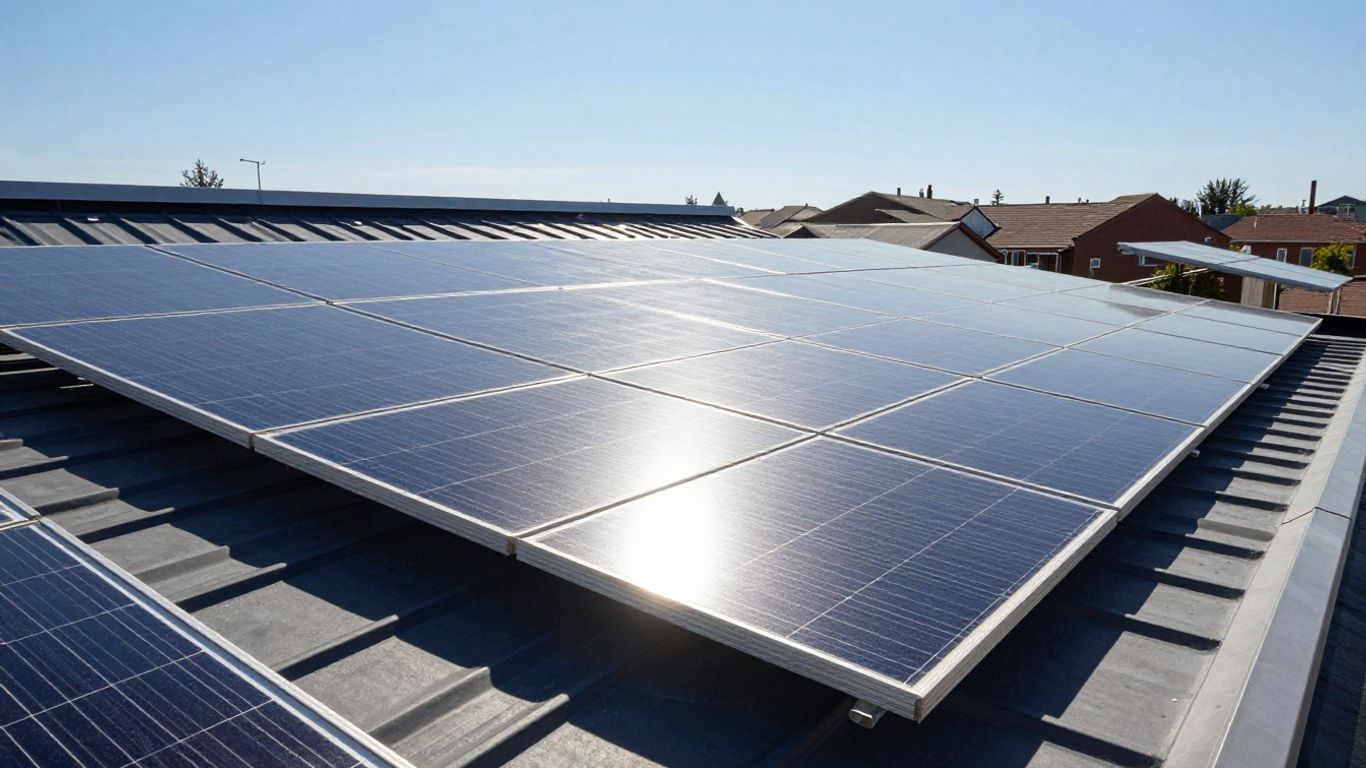
Once your solar panels are producing electricity, the question arises: how to make the most of it? It’s not just about producing, but also about consuming this clean energy intelligently. Several strategies are available to maximise the benefits of your installation.
Direct Self-Consumption
Direct self-consumption involves using the electricity produced by your solar panels at the very moment it is generated. This is the simplest way to reduce your electricity bills. To achieve this, it is wise to run your most energy-intensive appliances, such as the washing machine or dishwasher, during the hours when your solar production is highest, generally midday. This synchronisation allows you to directly consume the energy you produce, thus increasing your energy independence.
Energy Storage with Batteries
To go further in autonomy, energy storage via batteries is an interesting option. When your panels produce more electricity than you consume instantly, the excess can be stored in a battery. This accumulated energy can then be used in the evening, at night, or during less sunny days. This reduces your dependence on the traditional electricity grid and increases your self-consumption rate. Integrating a battery is particularly relevant for critical sites or for those aiming for maximum energy independence.
Injecting Surplus into the Grid
If you do not consume or store all the electricity produced, the surplus can be injected into the public distribution network. This action allows you to valorise every kilowatt-hour produced. The injected electricity is generally purchased by an organisation, which can generate additional income and improve the overall profitability of your solar installation. It’s a way to contribute to grid balance while benefiting from financial compensation. The choice between these different options will depend on your personal goals, your consumption profile, and your investment budget.
Administrative Steps for a Solar Installation
Before you can enjoy the electricity produced by your solar panels, it is essential to go through several administrative steps. These formalities, although sometimes perceived as complex, are necessary to ensure the compliance of your installation and allow you to benefit from all advantages, such as selling surplus electricity.
Prior Declaration of Works at the Town Hall
The first step generally involves informing your town hall of your project. If you are installing panels on an existing house, you must submit a prior declaration of works. This document allows the municipality to verify that your installation complies with local urban planning rules, such as those defined in the Local Urban Plan (PLU). It should be noted that in certain protected areas (classified sites, near historical monuments), stricter rules apply, and specific authorisation may be required. The town hall has one month to respond. It is therefore advisable to start early. To help you with this process, you can consult your municipality’s PLU, available at the town hall or on their website. This declaration is a key step to get the green light for your project. For new constructions, solar declarations are integrated into the building permit. Ground-mounted panels do not require a separate declaration [2f9c].
Connection Request to Enedis
Once your town hall has given its approval, you must contact Enedis, the electricity distribution network operator. If you wish to sell your surplus production or if your installation exceeds a certain power, a grid connection is necessary. You will need to complete a connection request file. This file generally includes the approved prior declaration of works, a location plan of your home, and a site plan of the installation. Enedis will study your request and send you a connection proposal, which includes a quote for any work to be borne by you and a timeframe. It is possible to delegate this task to your professional installer.
Consuel Certificate
The last major administrative step is obtaining the electrical compliance certificate, issued by Consuel (National Committee for the Safety of Electricity Users). This independent body verifies that your installation complies with all current safety standards. A Consuel technician will visit the site after the work is completed to inspect the installation. Once compliance is validated, Consuel will issue the certificate, which is essential for Enedis to commission your installation. This certificate proves that your installation is safe and compliant with regulations. It is strongly recommended to entrust this task to your installer, who will know how to carry it out professionally. These formalities are necessary for a solar panel installation [33b2].
It is important to note that these procedures may vary slightly depending on your municipality and the exact nature of your project. A qualified professional can effectively guide you through these different administrative steps, ensuring a compliant and smooth installation.
To Summarise Simply
So, we’ve covered how solar panels work. Basically, they capture sunlight, transform it into electricity, and then it can power your home. It’s not that complicated when you look closely, is it? The idea is that the sun gives us free energy, and these panels help us use it. Of course, there’s the whole system around it, like the inverter that does the conversion, but the core of it is really this transformation of light into current. I hope this has helped you see things more clearly for your project.
Frequently Asked Questions
What exactly does a solar panel do?
A solar panel is a bit like a light sponge. It catches sunlight and, through a phenomenon called the photovoltaic effect, transforms it into electricity. This electricity is initially a direct current, like that from a battery.
How does sunlight become electricity in the panel?
Inside the panel, there are small components called solar cells, often made of silicon. When sun rays (photons) hit these cells, they give energy to the electrons, which start to move. This movement of electrons is electricity!
Why do we talk about direct current and alternating current?
The electricity produced directly by the panel is direct current (DC), which always flows in the same direction. However, our electrical appliances at home run on alternating current (AC), which changes direction. Therefore, a special device, the inverter, is needed to transform DC into AC.
What is the role of the inverter in a solar system?
The inverter is very important. Its job is to take the direct current (DC) made by the solar panels and change it into alternating current (AC). It’s thanks to it that solar electricity can power your television or run your fridge.
Do solar panels work when there is no sun?
Solar panels need light to work, not necessarily direct sunlight. They produce electricity even when the sky is cloudy, but much less than on a bright sunny day. At night, they produce nothing at all.
Is the orientation of the solar panel important?
Yes, it’s very important! To capture the maximum amount of sunlight, it’s best for panels to face south and be slightly tilted. If a panel is poorly oriented or if there are shadows on it (for example, due to a tree), it will produce less electricity.
What happens if my panels produce more electricity than I consume?
If your panels produce more electricity than you are using at that moment, you have several options. You can store it in batteries for later use, or sell it to electricity companies. This is called injecting surplus into the grid.
What are the steps to take before installing solar panels?
Before installing solar panels at your home, you need to complete some administrative steps. You generally need to inform the town hall (declaration of works) and request permission to connect to the electricity grid from Enedis. You also need to obtain a certificate (like the Consuel) proving that the installation is done correctly.