Here are the key takeaways regarding the peak power of solar panels:
Key Takeaways
- Peak power measures the maximum capacity of a solar panel under perfect (laboratory) conditions.
- It is expressed in Watt-peak (Wp) or Kilowatt-peak (kWp) and allows for panel comparison.
- Actual electricity production varies depending on sunshine, temperature, and panel orientation.
- Calculating the required peak power takes into account your consumption and local sunshine conditions.
- Choosing the right peak power is important for sizing the installation and estimating energy production.
Understanding the Concept of Peak Power
Definition of Peak Power
When discussing solar installations, one term often comes up: « peak power ». It’s a key indicator, but it’s important to grasp what it truly represents. Peak power, measured in Watt-peak (Wp) or Kilowatt-peak (kWp), denotes the maximum power a solar panel can produce under standardised and ideal test conditions. Think of it as an appliance’s peak performance, measured in a perfectly controlled environment. This measurement serves as a benchmark for objectively comparing different solar panel models, regardless of their brand or technology. It gives a first idea of a panel’s production potential, but it’s important to remember that it doesn’t reflect actual production in your environment.
Ideal Measurement Conditions
For a solar panel to achieve its peak power, it must be subjected to very specific conditions, known as Standard Test Conditions (STC). These conditions are as follows:
- Solar Irradiance: 1000 Watts per square metre (W/m²). This is equivalent to very intense summer sun.
- Cell Temperature: 25°C. This is a relatively low temperature for solar panels, which tend to heat up in the sun.
- Solar Spectrum: The radiation must correspond to a standard solar spectrum (AM 1.5), simulating the passage of rays through a standard atmosphere.
These conditions establish a uniform basis for comparison for all manufacturers. It’s a bit like testing a car’s top speed on a perfectly flat, windless track. It gives an indication, but performance on a country road will be different.
Peak Power and Actual Production: What’s the Difference?
It is essential to understand that peak power is a theoretical measurement. In everyday life, a solar panel almost never operates under these ideal STC conditions. Several factors affect the actual electricity production:
- Sunshine: Clouds, mist, or simply the fact that the sun doesn’t always shine at 1000 W/m² reduce power output.
- Temperature: Solar panels heat up under the sun’s effect. Above 25°C, their efficiency decreases. A very hot day can therefore paradoxically reduce production compared to a cooler but sunny day.
- Orientation and Tilt: If your panels are not perfectly south-facing and optimally tilted, their production will be lower.
- Shading: Even partial shading (from a tree, chimney) can have a significant impact.
To get a more precise idea of the expected production, these elements must be considered. For example, in France, 1 kWp of solar panels produces an average of between 800 and 1700 kWh per year, depending on the region and installation conditions. This is why it’s important to size your installation correctly, taking these variables into account to estimate annual energy production realistically.
Peak power is a standardised comparison tool, not a production guarantee. It allows panels to be compared against each other within a defined framework, but actual production will always depend on local conditions and the installation.
Calculating Peak Power
Standard Test Conditions (STC)
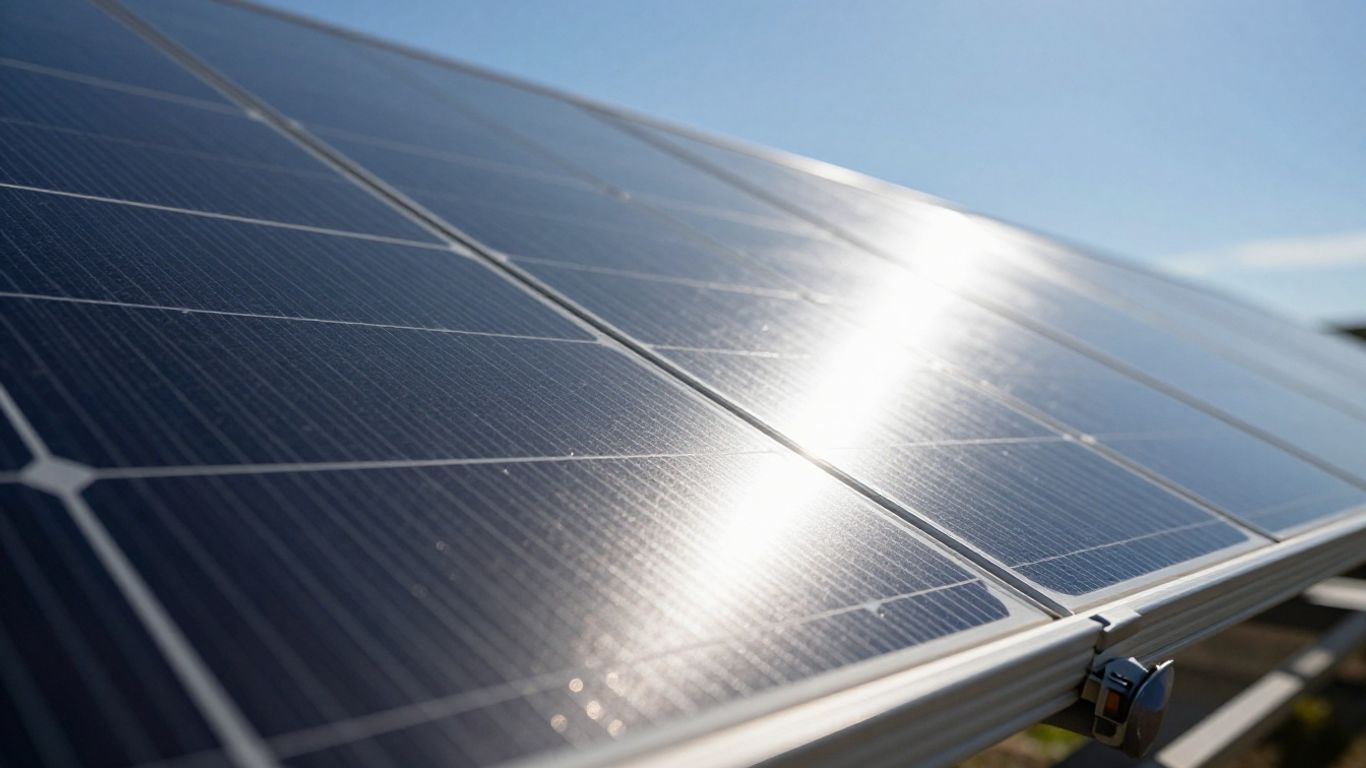
To compare solar panels fairly, manufacturers use very precise test conditions. This is called Standard Test Conditions, or STC. It’s a bit like putting all the panels in a special « gym » to see their maximum potential. These conditions include sunshine of 1000 W/m², a cell temperature of 25°C, and a specific angle of incidence for the sun’s rays. It is under these ideal conditions that peak power is measured.
Formula to Estimate Required Peak Power
Knowing how much peak power you need is an important step. It prevents oversizing or undersizing your installation. A simple formula can help you get a first idea. It takes into account your usual electricity consumption, the average sunshine in your region, and the overall efficiency of your system. The idea is to cover your needs without waste. For example, to estimate your needs, you can use the formula: Peak Power = (Daily Consumption x 1) / (Minimum Sunshine x System Efficiency). This is a good starting point for thinking about your solar panel project.
Key Steps for Sizing
Sizing your installation correctly ensures it will meet your expectations in the long term. Here are the main steps:
- Analyse your electricity consumption: Look at your bills to know your annual kWh requirement. This is the starting point.
- Assess your site’s sunshine: The amount of sun your roof receives each day varies by region and season. You need to consider the minimum, often in winter, to ensure you have enough energy.
- Choose the system’s efficiency: All systems have losses (temperature, wiring, inverter). You need to estimate this overall efficiency, often between 75% and 85%.
- Apply the calculation formula: Once you have gathered this data, you can use the formula mentioned above to get a first estimate of the required peak power in kWp.
It is important to understand that peak power is a theoretical measurement. The actual production of your solar panels will always be lower than this value, as real-world conditions (weather, temperature) are rarely ideal. This is why good sizing takes these variations into account.
Measurement Units and Equivalents
To fully understand the potential of your solar installation, it’s essential to master the measurement units used. The most common is the watt-peak (Wp), which represents the maximum power a panel can deliver under ideal laboratory conditions. These conditions include a temperature of 25°C, sunshine of 1000 W/m², and perfect orientation and tilt. It’s a standardised measurement that allows for objective comparison of different solar panels.
Watt-peak (Wp) and its Multiples
Watt-peak (Wp) is the basic unit for expressing the theoretical maximum power of a solar panel. However, for larger installations, its multiples are more frequently used:
- Kilowatt-peak (kWp): Equivalent to 1000 Wp. This is the most commonly used unit for residential installations.
- Megawatt-peak (MWp): Equivalent to 1,000,000 Wp. This unit is generally reserved for very large installations, such as solar farms.
It’s important to note that Wp measures power, not energy produced. Actual production constantly varies depending on external factors.
How Many Panels for One Kilowatt-peak?
There is no single answer to this question, as the power of individual panels varies. However, it is estimated that, on average, three standard solar panels are sufficient to reach 1 kWp. These panels generally cover an area of about 5 m². Common residential installations are often between 3 kWp and 9 kWp, depending on the available space and the household’s energy needs. For a more precise estimate, you need to consider the specific power of each panel you plan to install.
Peak Power versus Nominal Power
Peak power (or maximum power) is the value measured in the laboratory under standardised conditions (STC – Standard Test Conditions). Nominal power, on the other hand, is the power the panel is expected to produce under real-world operating conditions. The difference between the two can be significant. For example, a 400 Wp panel might produce less than 400 W in real-world conditions, due to ambient temperature, actual sunshine, or tilt angle.
Peak power is a benchmark for comparing solar panels and for calculating public aid. It does not reflect actual energy production, which depends on many environmental factors and the installation itself. It is therefore essential not to confuse peak power (kWp) with energy produced (kWh).
To get an idea of annual production, it is estimated that in France, 1 kWp produces an average of between 900 and 1200 kWh per year. This estimate can be refined depending on the region and the specific conditions of your solar installation.
| Peak Power (kWp) | Estimated Annual Production (kWh/year) |
|---|---|
| 1 kWp | ~900 to 1,200 kWh/year |
| 3 kWp | ~2,700 to 3,600 kWh/year |
| 6 kWp | ~5,400 to 7,200 kWh/year |
| 9 kWp | ~8,100 to 10,800 kWh/year |
The Importance of Peak Power for Your Installation
Peak power is a bit like the identity card for your solar panels. It gives you an idea of what they can produce under perfect conditions. But why is it so important for your project? Let’s take a closer look.
Assessing Solar Panel Performance
Peak power (expressed in Watt-peak, Wp, or Kilowatt-peak, kWp) is the standard measure for comparing panels. It’s like looking at a car’s top speed: it gives a first indication. A panel with higher peak power will, in theory, be more efficient. However, it’s important to remember that this is a measurement taken in a laboratory, under ideal conditions. Reality, with weather and temperature variations, is often different. It is therefore an excellent starting point for assessing your equipment’s potential.
Sizing Your Photovoltaic System Correctly
Knowing the peak power of your panels helps you calculate how many you need. If you consume a lot of electricity, you’ll need an installation with a higher total peak power. For example, a house with a heat pump and an electric car might require a 9 kWp installation, or even more, whereas a more moderate consumption could be satisfied with 6 kWp. You need to carefully analyse your current and future needs to avoid an undersized or oversized installation. Good sizing is key to making your solar installation profitable.
Estimating Annual Energy Production
Peak power allows for an estimation of what your installation will produce over a year. In France, it’s estimated that 1 kWp can produce between 800 and 1700 kWh per year. This range is wide because it depends heavily on your region and the orientation of your panels. For example, in the south, production will be higher than in the north. This estimate helps you determine if you will be able to cover a good portion of your needs, or even sell the surplus.
It is essential to understand that peak power is a theoretical value. The actual production of your solar panels will be influenced by many factors such as sunshine, temperature, and the orientation and tilt of your panels.
Factors Influencing Actual Production
Peak power sounds great on paper, but in real life, your solar panels won’t always produce that much. Several things can cause problems and alter the amount of electricity your installation will actually generate. It’s therefore important to understand these elements to avoid unpleasant surprises.
The Impact of Local Sunshine
It’s a bit obvious, but it needs to be said: the more sun there is, the more your panels produce. And the sun doesn’t shine the same everywhere in France. For example, a panel installed in Marseille will receive many more rays than a panel in Lille. This difference in annual sunshine, measured in kWh/m²/year, has a direct impact on production. It is estimated that one kilowatt-peak (kWp) can produce between 900 and over 1200 kWh per year in France, but this range depends heavily on your geographical location. Southern regions benefit from more generous sunshine, which translates into higher production. This is a point not to be overlooked when considering sizing your photovoltaic system.
Temperature Variations and Their Effect
We often think that the hotter it is, the better it is for the sun. Well, for solar panels, that’s not entirely true. Solar panels work better when it’s cool. When the temperature gets too high, their efficiency can decrease. It’s a bit counter-intuitive, but that’s how it is. The ideal measurement conditions, those that give peak power, are generally taken at 25°C. Above that, production can drop. So, you need to find a balance: enough sun, but not excessive heat that could harm performance.
Panel Orientation and Tilt
Where you place your panels and how you tilt them matters enormously. Ideally, they should face south and be tilted according to your latitude to capture maximum sunlight. You must also absolutely avoid any shade from trees, buildings, or even antennas. These shadows can significantly reduce energy production. If you live in a region with very hot summers, it may be useful to leave some space between the panels or use cooling systems so they don’t overheat, as heat can reduce their efficiency. Electrical installations must comply with standards; each specialised appliance must be connected to a dedicated circuit breaker with appropriately sized wires. This applies to many components, including pumps [98be].
Solar Energy Production by Region
Production Disparities in France
Sunshine is not uniform across France, which directly influences the amount of electricity your solar installation can produce. Generally, the south of France benefits from more sunshine than the north. This means that for the same peak power, a solar panel installed in Marseille will produce more energy than an identical panel installed in Lille. This difference can be up to nearly 30% more electricity in the south compared to the north.
Examples of Production by Region
To illustrate these disparities, let’s consider the estimated annual production for a 400 Wp panel:
- Northern France (e.g., Lille): approximately 350 kWh/year
- Southern France (e.g., Marseille): approximately 500 kWh/year
These figures are averages and can vary. The ‘yield’ of an installation, expressed in kWh/kWp, provides a more precise estimate. For example, in the Alpes-Maritimes, the yield can reach 1,641 kWh/kWp, while it will be lower in the Aisne, at around 1,105 kWh/kWp. These variations are important to consider when sizing your system. A solar installation saw its production increase significantly in 2025, partly due to more favourable sunshine conditions compared to the previous year and an increase in installed capacity. This positive trend confirms the potential of solar in France.
Adapting Your Installation to Your Location
It is therefore essential to consider your geographical location when planning your photovoltaic project. A professional can help you assess the sunshine potential of your specific site and size your installation accordingly. The goal is to maximise energy production by taking local conditions into account. This may involve adjusting the number of panels or choosing more efficient models if you are in a less sunny region. Considering the orientation and tilt of the panels is also a key factor in optimising solar capture, regardless of your region. For help designing your project, you can consult experts who will guide you.
Peak Power and the Cost of Your Installation
Link Between Power and Quotes
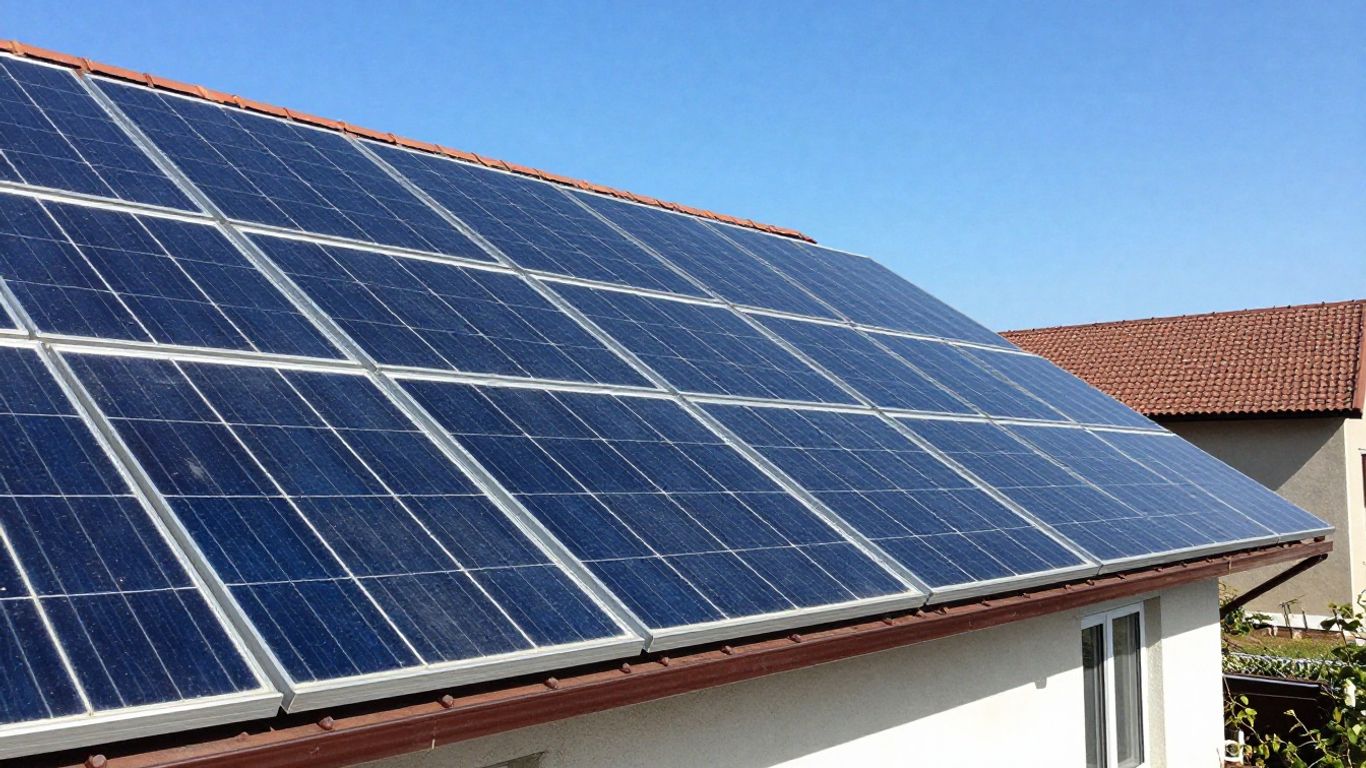
The peak power of your solar installation, measured in kilowatt-peak (kWp), directly influences the total cost of your project. The higher the desired peak power, the greater the number of solar panels required, which logically affects the quote. For example, a 3 kWp installation will cost less than a 6 kWp installation. It’s important to note that the price is more related to the installed power than the total surface area of the panels. The cost of a photovoltaic installation is therefore directly proportional to its maximum production capacity.
Here is an estimate of average costs based on power:
| Peak Power (kWp) | Estimated Cost (€) |
|---|---|
| 3 kWp | 6,000 – 12,000 |
| 6 kWp | 10,000 – 20,000 |
Impact on Installation Payback
Although higher peak power entails a greater initial investment, it generally leads to better long-term profitability. A more powerful installation will produce more electricity, which can translate into greater savings on your energy bills and potentially higher income if you sell the surplus production. The payback period for your solar system will therefore depend on the balance between the initial investment and the gains generated by production. It should also be noted that solar systems that simply plug in, without major work, can offer an entry-level solution, but their production is limited and they are generally not eligible for financial aid. These plug-and-play systems are an option for those seeking a flexible solution.
Influence on Available Financial Aid
Financial aid, grants, and tax credits related to solar panel installation are often modulated based on the peak power of your system. In some cases, the higher the peak power, the lower the grant per kWp. It is therefore essential to obtain detailed information on the schemes in effect at the time of your project. Furthermore, taxation can vary: installations with a power of 3 kWp or less often benefit from a reduced VAT rate and may be exempt from tax on income generated from electricity sales, unlike more powerful installations.
It is crucial to consider peak power not only as a performance indicator but also as a determining factor in calculating the return on investment and eligibility for financial support schemes.
Choosing the Right Peak Power for Your Needs
Knowing which peak power to choose for your solar installation is a bit like choosing the right shoe size: too small, it won’t fit; too big, it’s uncomfortable. You need to find the right balance so that your photovoltaic system is truly suited to your consumption and the space you have available.
Criteria for Determining Suitable Power
To make the right choice, several factors come into play. First, there’s your current electricity consumption. Look at your bills to get an idea of what you use over a year. Then, think about your future plans: do you plan to buy an electric car, install a heat pump, or expand your family? These changes will impact your energy needs. The available space on your roof is also a limiting factor. The more space you have, the more panels you can install, and therefore aim for higher peak power. Finally, the budget you allocate to your project will play a decisive role. You need to find a balance between your ambitions and your financial means.
The Role of the Professional Installer
This is where the professional installer becomes your best ally. It’s not just about installing panels; it’s a genuine personalised study. The professional will analyse your consumption, assess your site’s sunshine, and take into account the specificities of your home. They will then propose precise sizing, often expressed in kilowatt-peak (kWp). For example, a 3 kWp system can produce between 800 and 1700 kWh per year in France, but this figure varies greatly depending on the region and orientation. The installer will help you understand these estimates so you can make an informed choice, such as choosing an international moving offer that suits your specific needs.
Adapting Power to Your Budget
It is clear that the higher the peak power of your installation, the higher the initial cost will be. A more powerful system generally means more panels, and therefore a more significant investment. However, this should not be viewed solely as an expense. A more powerful installation can lead to a better long-term payback, as it will produce more electricity. Furthermore, some financial aid may be linked to the installed power. It is therefore essential to discuss your budget openly with your installer to find the most cost-effective and suitable solution for your situation. Remember that peak power is a measurement under ideal conditions; actual production will always be slightly lower, often around 75% of peak power in good conditions, as highlighted by the NOCT characteristics.
Peak Power as a Benchmark Indicator
Objective Comparison of Solar Panels
Peak power, often expressed in kilowatt-peak (kWp), is the standard used to compare different solar panels available on the market. It represents a panel’s maximum capacity to produce electricity under ideal laboratory conditions. It’s a bit like the advertised power for a car: it gives an idea of the potential, even if actual usage may vary. This measurement allows consumers to quickly get an idea of the expected performance of one model compared to another, thus facilitating the initial choice of equipment. It offers a neutral and standardised basis for comparison.
Benchmark for Public Aid
Government agencies and organisations offering grants or tax credits for solar panel installations use peak power as the primary criterion. The amount of aid is often calculated based on the number of installed kilowatt-peaks. For example, an aid might be X euros per kWp. This ensures a certain equity in the allocation of financial support and encourages the adoption of solar technologies. This is why it is important to understand this measurement when drawing up your quote for a solar installation.
Goals for Industry Development
At national and international levels, the goals for developing renewable energies, particularly solar photovoltaic energy, are expressed in terms of installed peak power. Governments set annual or longer-term targets to increase solar electricity production capacity. These figures, such as the 4 to 7 GWp of new installations per year mentioned by France Renouvelables, are used to measure progress and guide energy policies. They provide a clear vision of the sector’s growth and its importance in the energy transition. Monitoring these objectives allows for an assessment of market dynamics and the commitment of various stakeholders, including panel manufacturers and installers, to achieve cleaner energy production. Calculating peak power is therefore a key element for monitoring overall photovoltaic capacity.
Optimising Your Installation’s Performance
Choosing the Right Equipment
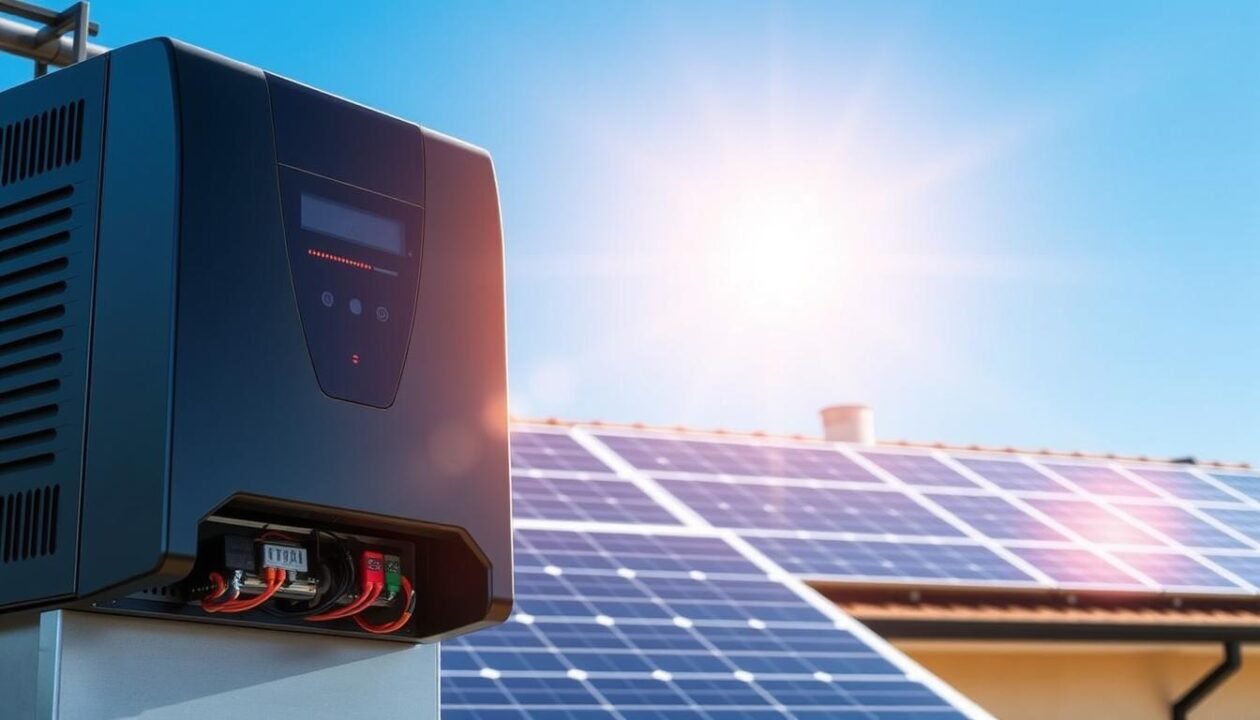
For your solar installation to perform optimally, you need to start by choosing the right components. This begins with the panels themselves. Current models vary greatly in terms of power, ranging from 300 to over 400 watts-peak (Wp) per panel. Opting for panels with higher peak power may mean you need fewer panels overall, which is practical if your space is limited. But be careful, that’s not all. Inverters, which convert the current produced by the panels into electricity you can use, must be well-matched to your system’s total capacity. A poorly chosen inverter can limit overall production. Also consider storage batteries: if they are well-sized, they can significantly help increase the amount of electricity you consume directly, rather than sending it back to the grid. Good planning of your new electrical installation is an important step to anticipate your future needs and ensure a functional and safe system [79e6].
Careful Orientation and Installation
Where you place your panels and how they are tilted plays a huge role. Ideally, they should face south and be tilted according to your latitude to capture maximum sunlight. You must also absolutely avoid any shade cast by trees, buildings, or even antennas. These shadows can significantly reduce energy production. If you live in a region with very hot summers, it may be useful to leave some space between the panels or use cooling systems so they don’t overheat, as heat can reduce their efficiency. Electrical installations must comply with standards; each specialised appliance must be connected to a dedicated circuit breaker with appropriately sized wires. This applies to many components, including pumps [98be].
Ensuring Regular Production Monitoring
Once your installation is in place, the work isn’t finished. It’s important to regularly monitor what it’s producing. This allows you to quickly identify if something is wrong. For example, if you notice a sudden drop in production, it could indicate a problem, such as a dirty panel, a faulty component, or even a shadow that has recently appeared. Regular maintenance, which may include cleaning the panels and checking connections, helps maintain the efficiency of your photovoltaic system in the long term. It’s a bit like maintaining your car: it prevents major breakdowns and ensures it always runs at its best.
Peak power is a theoretical measurement that gives an idea of the maximum potential of your panels under perfect conditions. To get the best performance from your solar installation, you need to consider all the details, from choosing the equipment to how it’s installed, including its exposure to the sun.
Conclusion
In summary, peak power is an essential technical data point for evaluating the maximum potential of a solar panel under ideal conditions. It serves as a benchmark for comparing equipment and sizing a photovoltaic installation. However, it is crucial to keep in mind that actual electricity production will depend on numerous environmental factors and the installation itself. A good understanding of peak power, combined with the expertise of a professional, will enable you to make the best choices for a high-performing solar installation tailored to your needs.
Frequently Asked Questions
What is the peak power of a solar panel?
Imagine your solar panel is a small factory making electricity from the sun. Peak power is like saying, « under perfect conditions, with no clouds and when it’s exactly 25 degrees, this panel can make X amount of electricity per second. » It’s its maximum capacity, a bit like an athlete’s world record.
Why do we talk about « ideal conditions »?
It’s because the sun and temperature change all the time. To be able to compare all solar panels, manufacturers test them in a controlled environment, like a laboratory. They give them maximum sun and perfect temperature to see their best possible performance. It’s a kind of standard test.
Will my panel always produce its peak power?
Unfortunately, no. In real life, the sun isn’t always there, it can be very hot or very cold, and there can be shadows. The actual power your panel will produce will often be a little lower than its peak power.
What is peak power used for then?
It’s mainly used to compare different solar panels and to calculate how many panels you need for your roof. It’s an important piece of information for choosing your equipment well and estimating how much electricity you can produce in general.
What is Watt-peak (Wp)?
It’s the unit we use to talk about peak power. It’s like the metre for measuring length. When you see « 400 Wp » on a panel, it means it can produce 400 Watts under perfect conditions.
How do I know how much peak power I need?
You need to look at how much electricity you consume at home each year. Your installer can help you calculate the total power needed, taking into account your consumption and your region’s sunshine. It’s a bit like choosing the right shoe size.
Does peak power influence the price of my installation?
Yes, absolutely. The higher the total power of your installation (meaning the number of panels and their peak power), the higher the cost will be. It’s logical, as more equipment is needed.
What is the difference between peak power and actual production?
Peak power is the theoretical maximum under ideal conditions. Actual production is the electricity you actually get at home, day after day, which depends on many things like sunshine, weather, and how the panels are installed.