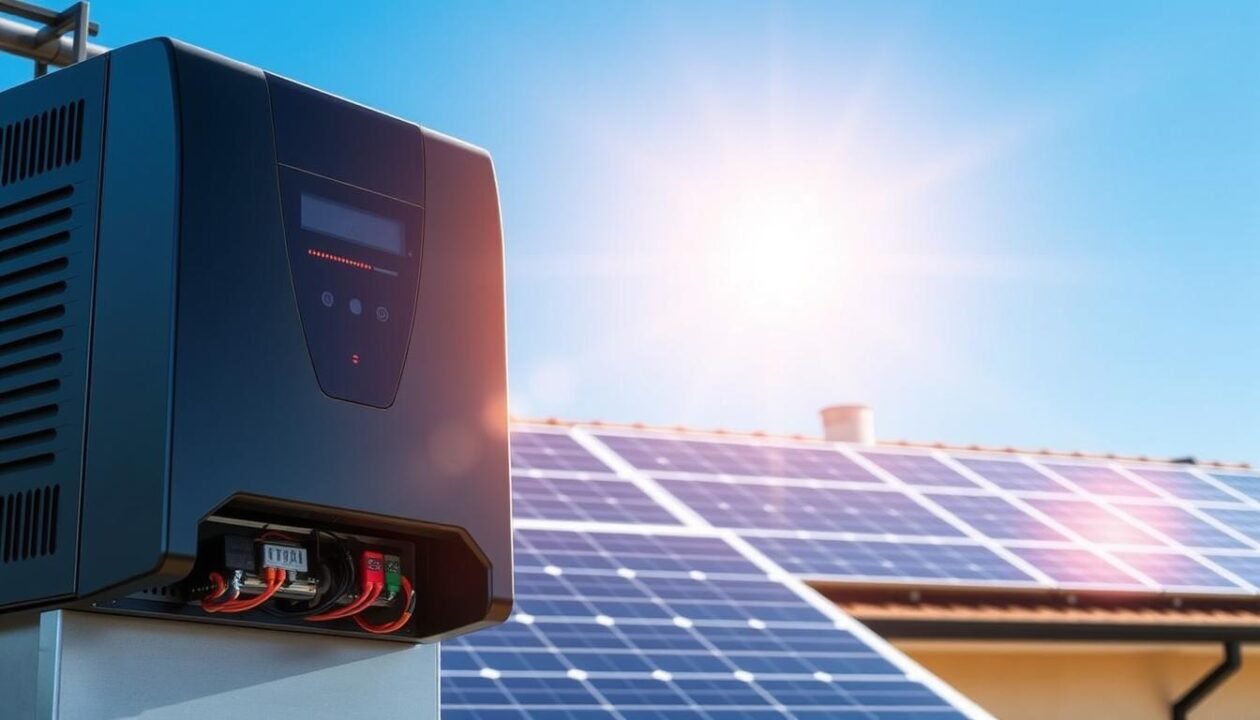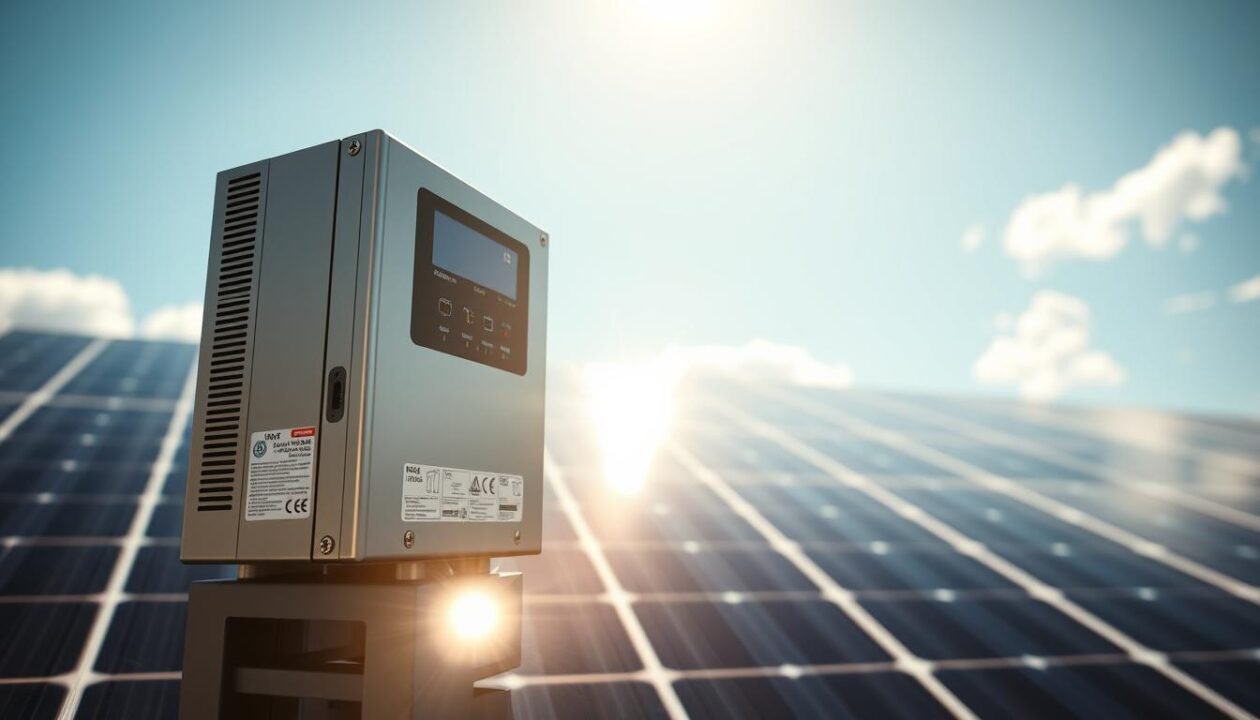
To help you get a clearer picture when choosing your solar battery, here are the essential points to remember. These elements will guide you towards the best option for your home.
Key Points to Remember
- The LiFePO4 lithium battery is the most recommended technology for homes due to its long lifespan and good performance.
- It is crucial to accurately assess your energy consumption to choose the right battery capacity, neither too small nor too large.
- The battery’s output power must be sufficient to power your appliances simultaneously, especially during peak consumption.
- The total cost over the lifespan, including the purchase price and the number of charge cycles, is a better indicator of profitability than the purchase price alone.
- Check the battery’s compatibility with your existing inverter and inquire about warranties and recycling options.
Understanding the Role of a Solar Battery in Your Home
Installing solar panels is already a step towards greener and more economical energy production. But to truly make the most of your installation, adding a solar battery is a game-changer. It allows you to store the electricity your panels produce during the day, so you can use it when you need it most, like in the evening or at night. Without this storage capacity, some of the energy produced could be lost or sold back at an unfavourable price.
What is a Solar Battery?
A solar battery, also known as an energy storage system, is essentially a reservoir for the electricity produced by your photovoltaic panels. It works much like a large rechargeable battery. When your panels generate more electricity than your home is consuming at that moment, the surplus is directed to the battery for storage. Later, when solar production is low (e.g., at night or during cloudy weather), the battery releases this stored energy to power your appliances.
Why Install a Battery with Your Solar Panels?
The main benefit is to increase your self-consumption. In simple terms, this means you use a larger portion of the electricity you produce yourself, instead of feeding it back into the public grid. This makes you less dependent on traditional electricity suppliers and can significantly reduce your bills. Furthermore, it allows for better utilisation of your production, especially if the buy-back rate for surplus energy is low. It’s a way to make your solar installation more profitable in the long run.
Here are the key advantages:
- Increased self-consumption rate: You use more of your own energy.
- Reduced electricity purchases: Less dependence on grid tariffs, especially during peak hours.
- Better surplus utilisation: Stored energy is more valuable than energy sold at a low price.
- Power security: In some cases, a battery can provide backup power in the event of a grid outage.
A poorly sized battery can be expensive and may not meet your expectations. Therefore, it is essential to carefully assess your needs before making your choice.
The Benefits of a Battery for Self-Consumption
Self-consumption with a solar battery offers you increased energy independence. You smooth out your consumption over the day, using solar energy when it’s available and drawing from your storage when it’s not. This limits electricity purchases during the most expensive hours. For those who work from home or have significant energy needs in the evening, a battery becomes a major asset. It allows you to adapt your consumption to your lifestyle while optimising the profitability of your solar investment. Consider comparing storage options to find the one that best suits your household.
Assessing Your Energy Needs to Choose the Right Capacity
For your solar battery to be truly useful and profitable, you first need to understand how much energy your household consumes and when. This is the basis for not ending up with a battery that is too small and doesn’t store enough, or conversely, a battery that is too large, is expensive, and will never be full.
How to Analyse Your Daily Consumption?
The first step is to look at your usual electricity bills. Try to identify your average consumption over a day, a week, and especially over a year. Electricity suppliers often provide detailed graphs of your hourly consumption. This is where you will see the peaks, for example, in the morning when you wake up, in the evening when everyone gets home, or during weekends. It is essential to know these patterns to understand when you need stored electricity the most.
You also need to consider seasonality. Your consumption can vary enormously between winter, when heating is in use, and summer, when air conditioning may be needed. An analysis over a full year will give you a more accurate picture.
Identifying Key Electrical Appliances to Power
Once you have an idea of your overall consumption, you need to look at which appliances are the most energy-intensive. Think about major consumers like the refrigerator, freezer, water heater, heat pump, washing machine, tumble dryer, oven, or air conditioning. If your goal is to power part of your home during power outages or simply to maximise your self-consumption, you need to know which appliances you want to prioritise.
Here is an indicative list of appliances to consider:
- Appliances running continuously (refrigerator, freezer, internet router)
- Appliances used in the evening (lighting, television, computers)
- Large household appliances (washing machine, dishwasher, tumble dryer)
- Comfort appliances (air conditioning, auxiliary heating)
- Specific appliances (pool pump, electric vehicle charging station)
Matching Capacity to Your Household Composition and Habits
The size of your household and your lifestyle play a major role. A single person will not have the same needs as a large family. If you work from home, your daytime consumption will be higher. If you are often away, you might focus on powering essential appliances while you are absent and those used in the evening.
For a 3 kWp solar installation, a 5 to 8 kWh battery is often a good starting point. For a more substantial installation, such as 6 kWp, you would look towards 10 to 15 kWh. These figures are benchmarks, and it is always best to have a personalised study done. For example, a well-insulated house with few electrical appliances will not need the same capacity as a large house with many pieces of equipment, even if the solar panel power is identical. You also need to consider the battery’s depth of discharge; a 10 kWh battery with 90% usable depth of discharge will give you 9 kWh usable, while a battery at 50% will only offer 5 kWh. This is a point not to be overlooked to optimise your storage.
Your battery’s sizing should be a balance. Too small, and you’ll let too much surplus go to the grid. Too large, and you’ll pay more for capacity that won’t always be used, extending the payback period. The goal is to store a significant portion of your surplus production for use when the sun isn’t shining, while staying within a reasonable budget.
It is also important to check the battery’s output power. A battery can store a lot of energy, but if it cannot deliver it fast enough to power multiple appliances at once, its usefulness will be limited. Consider the continuous power you need, especially if you have appliances that start up simultaneously, like the refrigerator and the washing machine.
Different Types of Residential Solar Batteries
When we talk about energy storage for a home, several types of batteries come to mind. It is important to understand their differences to make the right choice. There are mainly three major categories on the residential market.
LiFePO4 Lithium Technology: The Current Benchmark
Lithium-iron-phosphate technology, often abbreviated as LiFePO4 or LFP, has established itself as the standard for modern solar installations. It combines safety, long lifespan, and excellent capacity to deliver stored energy. These batteries are lighter than their predecessors and require little maintenance. Their depth of discharge is generally very good, meaning a large part of their total capacity is actually usable on a daily basis. A Battery Management System (BMS) is essential to monitor charge, temperature, and protect the battery from overcharging or excessive discharge. Although their initial cost is higher, their performance and longevity make them a profitable long-term investment for self-consumption. This is an option to seriously consider if you are looking for a durable and high-performing solution for your energy storage system.
Lead-Acid Batteries: An Economical Option for Certain Uses
Lead-acid batteries have been around for a long time and remain a more affordable purchase option. They are often used in applications where budget is a major constraint or for occasional needs. However, they have notable limitations: they do not tolerate deep discharges well, which reduces their usable capacity, and their lifespan is generally shorter than that of lithium batteries. They also require more attention in terms of maintenance, especially open-vented models. For intensive daily use in self-consumption, they are rarely the best option due to their limited performance and their actual cost per kWh stored over several years.
AGM and Gel Batteries: Maintenance-Free Alternatives
AGM (Absorbent Glass Mat) and Gel batteries are variants of lead-acid batteries, designed to be maintenance-free. They are easier to install and are well-suited for small solar systems, motorhomes, boats, or installations where consumption is moderate. They offer better resistance to discharge than open lead-acid batteries, but remain less performant than lithium in terms of depth of discharge and number of charge cycles. Their cost is generally higher than conventional lead-acid batteries but lower than lithium. They represent a good compromise for specific needs, but for a home looking to maximise its energy autonomy, lithium often remains superior.
Here is a simplified comparison table:
| Technology | Strengths | Limitations | Recommended Use |
|---|---|---|---|
| Lithium / LiFePO4 | Long lifespan, good efficiency, high usable capacity | Higher initial price | Home, self-consumption, sustainable energy storage |
| Open Lead-Acid | Low price | Maintenance, limited lifespan | Occasional use, minimal budget |
| AGM | Maintenance-free, flexible installation | Limited cycles | Small solar, vehicle, backup |
| Gel | Good resistance to moderate discharges | Slower charging, higher cost than AGM | Light off-grid, motorhome, boat |
The choice of battery technology will strongly depend on your budget, your consumption habits, and the expected lifespan of your installation. It is important not to focus solely on the initial purchase price, but to consider the total cost over the battery’s lifespan.
Essential Technical Criteria for a High-Performance Solar Battery
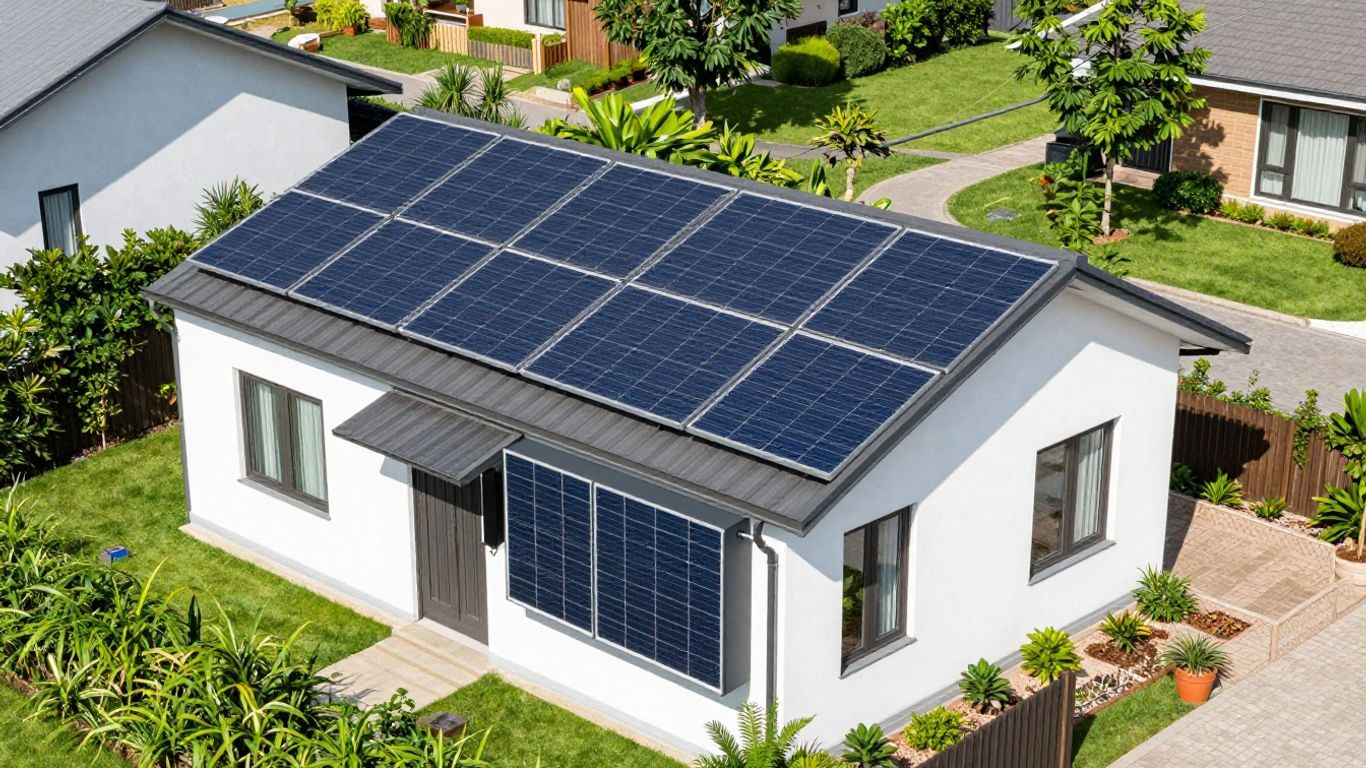
For your solar storage system to function optimally, you need to look beyond the simple displayed capacity. Several technical points need to be examined closely to make the right choice.
Understanding Usable Capacity and Depth of Discharge
The nominal capacity of a battery, often expressed in kWh, is not the total amount of energy you can use. You need to take into account the depth of discharge (DoD). This is the percentage of the total capacity that the battery can deliver without being damaged. For example, a 10 kWh battery with an 80% DoD can only provide 8 kWh of usable energy. Ignoring this criterion can lead to a real under-sizing of your system. A well-calculated usable capacity is the key to satisfactory autonomy.
Analysing Continuous Output Power
Capacity tells you how much energy is stored, but output power tells you how much energy the battery can deliver at a given moment. It’s a bit like comparing the size of a water tank to the width of the pipe coming out of it. If you have a lot of stored energy but the output power is too low, you won’t be able to power multiple energy-intensive appliances simultaneously, such as an oven and a washing machine, without risking a circuit breaker trip. Therefore, you need to assess the maximum power you need at the same time.
The Importance of Efficiency and Energy Management (BMS/EMS)
Battery efficiency measures energy loss during charge and discharge cycles. High efficiency means less energy is wasted, which is more economical and environmentally friendly. Modern batteries have efficiencies above 90%.
Furthermore, the BMS (Battery Management System) is the battery’s brain. It protects against overcharging, deep discharge, and overheating, thereby extending its lifespan. An EMS (Energy Management System) goes further by optimising your entire solar system, deciding when to store, when to consume directly, or when to feed into the grid, based on your habits and tariffs. A good EMS can significantly improve your profitability and comfort. For a modern installation, LiFePO4 lithium is often the preferred choice due to its longevity and performance.
Here is a simplified comparison table of technical aspects:
| Technical Criterion | Description | Importance |
|---|---|---|
| Usable Capacity | Actual available energy after DoD | Daily autonomy |
| Output Power | Energy delivered instantly | Simultaneous appliance power supply |
| Efficiency | Storage/delivery effectiveness | Energy savings |
| BMS | Internal battery protection and management | Safety and lifespan |
| EMS | Overall system optimisation | Profitability and comfort |
Choosing a solar battery is not just about looking at its gross capacity. You need to consider how that energy is actually usable, the speed at which it can be supplied, and how it is managed by intelligent systems to maximise its efficiency and lifespan. Proper sizing, taking these criteria into account, is the foundation of a high-performing and profitable long-term solar installation.
Lifespan and Warranty: Planning for Your Battery Replacement
When thinking about a solar installation, one often imagines the longevity of the panels, which can last 30 years or more. However, the battery has a more limited lifespan. It is therefore important to understand this point to avoid unpleasant surprises.
What is the Average Lifespan of a Solar Battery?
The lifespan of a battery is primarily measured in the number of charge and discharge cycles. A lead-acid battery, for example, can last between 500 and 1200 cycles, while a lithium-ion battery, and more specifically LiFePO4 technology, can reach 4000 to 6000 cycles. This generally translates to a lifespan of 5 to 8 years for lead-acid, and 10 to 15 years for lithium. Therefore, you should expect to have to replace your battery at least once during the life of your solar installation.
- Lead-acid batteries: 5 to 8 years (500-1200 cycles)
- Lithium-ion batteries (excluding LiFePO4): 8 to 12 years (3000-5000 cycles)
- LiFePO4 batteries: 10 to 15 years (4000-6000 cycles)
It is important to note that these figures are averages. Actual usage, depth of discharge, and installation conditions can influence this duration.
Comparing Warranties and Number of Charge Cycles
The warranty offered by the manufacturer is a key indicator of their confidence in their product. It is often expressed in years, but it is equally important to look at the number of guaranteed charge cycles. Some warranties are limited to a certain number of years or a certain number of cycles, with the first condition met ending the warranty. For example, a battery may be guaranteed for 10 years or 6000 cycles. If you use your battery a lot and reach 6000 cycles in 7 years, the warranty will end at that point.
You also need to check the guaranteed remaining capacity at the end of the period. A manufacturer may guarantee 80% of the initial capacity after 10 years, for example. This gives you a more precise idea of the expected long-term performance. Don’t hesitate to compare offers, as conditions vary greatly from one manufacturer to another. Remember to check compatibility with your system, as a good battery is an investment for energy autonomy.
Anticipating the Cost and Logistics of Replacement
Replacing a solar battery represents a significant cost. Therefore, it must be included in the overall budget of your installation. The price of a battery tends to decrease over time thanks to technological innovations, but it remains a substantial investment. Also, consider the logistics: how will the battery be transported and installed? Who will do it? Some installers offer maintenance contracts that include monitoring and battery replacement, which can simplify things. It is also worthwhile to inquire about available financial aid, such as MaPrimeRénov’, which can sometimes cover part of these costs.
Correctly Sizing Your Solar Battery for Optimal Profitability
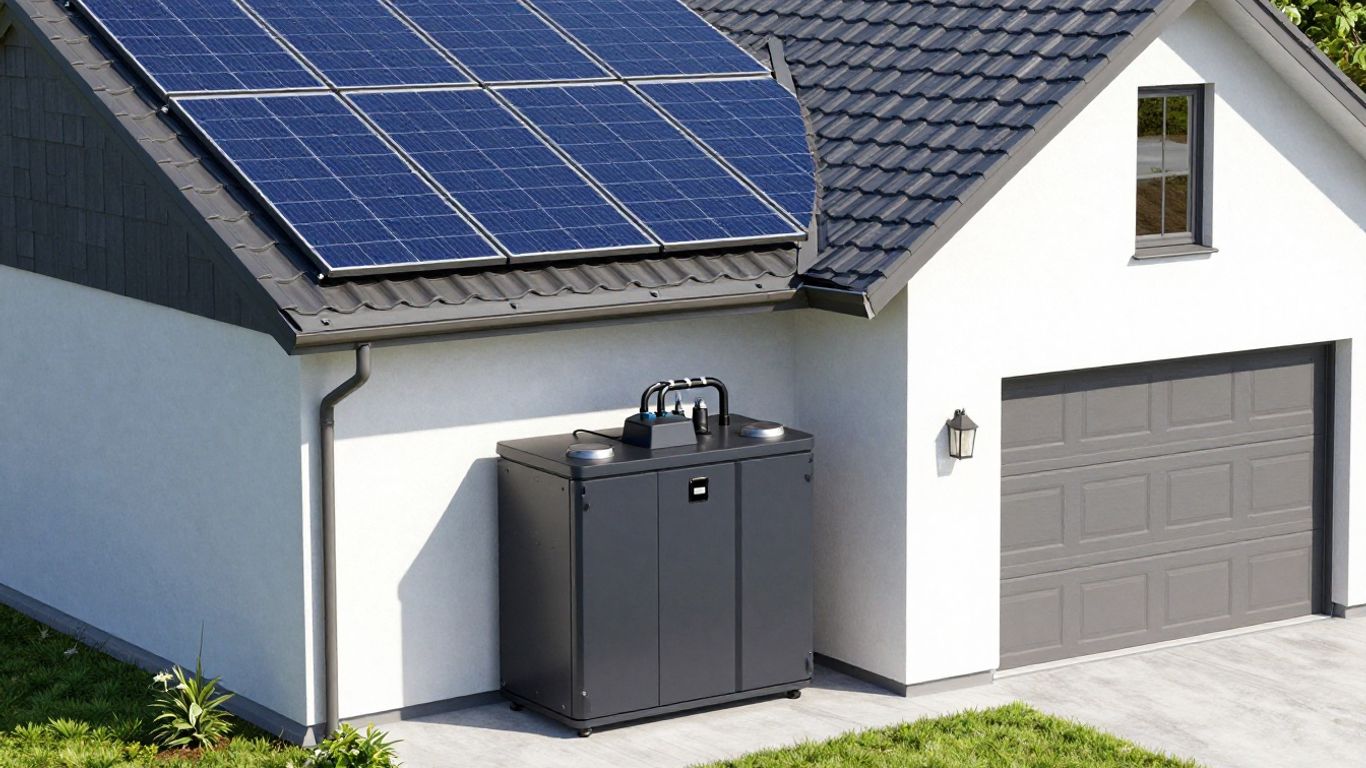
Choosing the right size for your solar battery is a bit like choosing the right shoe size: too small, it won’t fit; too large, it’s useless and expensive. The goal is to find the right balance so that your storage system is both efficient and profitable in the long run. It’s not simply about taking the largest available capacity, but about matching the battery to your actual production and consumption.
Assessing Your Solar Production Surplus
The first step towards successful sizing is to understand how much energy your solar panels produce and, more importantly, how much you don’t use immediately. This surplus is the energy your battery can store. Therefore, you need to look at your production records over a representative period, ideally a year, to get a precise idea of what is fed into the grid or lost due to lack of storage. Consider looking at your installation’s production data, such as those provided by the Beem app.
Avoiding Costly Oversizing
One might think that a larger battery is always better, but that’s not the case. A battery that is too large means you have paid for capacity you will never use. This increases the initial cost without providing proportional benefits. Furthermore, a battery that is not frequently charged to its full capacity may have its lifespan affected. Therefore, you need to be realistic about your actual consumption, especially that which occurs when the sun isn’t shining.
The Cost per kWh Stored Over the Lifespan as a Key Indicator
To judge profitability, you shouldn’t rely solely on the battery’s purchase price. A more relevant indicator is the cost per kilowatt-hour (kWh) stored over the battery’s entire lifespan. This takes into account the purchase price, but also the usable capacity, the number of charge/discharge cycles the battery can withstand, and its lifespan. A battery that is more expensive to buy but lasts longer and stores more energy may prove more economical in the long run. Therefore, you need to look beyond the displayed price to make an informed choice about the real cost of energy storage.
Here are some points to consider when evaluating this cost:
- Actual usable capacity: Not all batteries can be discharged to 100%. Usable capacity is what you can actually use.
- Number of cycles: Each charge and discharge counts. The more cycles a battery can withstand, the more durable it is.
- Guaranteed lifespan: Manufacturers often provide an estimate in years or cycles.
- Discharge rate: The recommended depth of discharge affects the lifespan.
Precise sizing is key. You need to find a balance between the amount of energy you produce in surplus and the amount you need when your solar system is not producing. An analysis of your daily consumption and habits is essential to avoid making a mistake.
The Cost of a Solar Battery: Beyond the Purchase Price
When talking about the price of a solar battery, it’s easy to focus solely on the amount displayed on the label. However, this approach is a bit short-sighted, as the true cost of a battery is measured over the long term. You need to look beyond the initial purchase to understand its real profitability.
Factors Influencing Battery Price
Several elements affect the price of a battery. The technology used is a major factor: lithium-ion batteries, and specifically LiFePO4 models, are often more expensive to purchase than older lead-acid, AGM, or gel technologies. However, their longer lifespan and better performance can make them more economical over time. Storage capacity, expressed in kilowatt-hours (kWh), is of course another key determinant: the more energy the battery can store, the more expensive it will be. Output power, i.e., the amount of electricity it can supply instantly, also plays a role. Finally, the brand, the quality of components, and the offered warranties also influence the final price. You also need to consider compatibility with your existing system, as adaptations could incur additional costs.
Calculating Potential Return on Investment
To assess the profitability of a battery, several aspects need to be considered. First, the price of electricity you buy from the grid. If this price is high, each kilowatt-hour stored and consumed at home represents a greater saving. Second, your self-consumption rate: the more you consume the energy produced by your solar panels and stored in the battery, the more profitable the investment. A simple estimate can be made: if your battery allows you to use 5 kWh per day that you would otherwise have bought at €0.25/kWh, this represents a saving of approximately €456 per year. The projected increase in electricity tariffs reinforces the interest in storage. Don’t forget that the cost per kWh stored over the battery’s entire lifespan is a more reliable indicator than the simple purchase price. You also need to consider the comfort and energy independence that a battery provides, benefits that are not always measurable in euros. For a more precise view, you can consult articles dedicated to optimising your solar installation.
Innovations and Market Evolution of Batteries
The energy storage sector is evolving very rapidly. Battery prices, particularly for lithium batteries, tend to decrease over time thanks to technological advancements and increased production volumes. Innovative solutions are emerging, such as the use of second-life electric vehicle batteries for stationary storage, which can make solar storage more accessible. It is therefore advisable to stay informed about the latest developments. The evolution of electricity costs in 2026 also makes solar solutions increasingly attractive. The goal is to find the right balance between the necessary capacity, the desired performance, and the available budget, keeping in mind that the market is dynamic and more affordable options may emerge.
Compatibility and Installation of Your Storage System
Once you have determined the capacity and technology of battery that best suits you, it’s time to think about integrating this new component into your existing solar installation. Installing a battery is no small feat and requires particular attention to compatibility with your current equipment and connection methods.
Checking Compatibility with Your Inverter
The inverter is the brain of your solar installation, converting the direct current produced by your panels into alternating current usable by your appliances. It is therefore essential that your battery is compatible with the inverter model you already have. Some inverters are specifically designed to work with storage systems, while others require modifications or additional modules. Incompatibility can lead to a loss of performance, or even prevent the entire system from functioning correctly. It is often recommended to consult your inverter’s technical documentation or to call on a professional to confirm this compatibility. Remember to check if your current inverter supports energy storage and if it is compatible with the battery technology you are considering.
Options for Extension and Adding Modules
The solar battery market is evolving rapidly, and it is wise to choose a solution that offers some flexibility for the future. Many modern batteries are modular, meaning you can start with a smaller capacity and add modules later if your energy needs increase or if you wish to increase your autonomy. This approach helps avoid costly initial oversizing and allows you to adapt your system over time. Find out about the extension possibilities for the battery you are considering; this can be a determining factor for the long-term profitability of your investment.
Understanding the Basics of Series or Parallel Connection
The physical installation of the battery involves connecting it to the rest of your system. Batteries can be connected in two main ways: in series or in parallel. Series connection increases the system voltage while maintaining amperage, whereas parallel connection increases amperage while maintaining voltage. The choice between these two configurations will depend on the specifications of your inverter, the battery itself, and the overall design of your installation. An incorrect configuration can not only damage your equipment but also compromise safety. It is strongly advised to entrust this delicate step to a qualified installer who can master battery compatibility and ensure an installation compliant with current standards. A thorough study of your existing system is key to a successful integration.
Environmental Considerations and Battery Recycling
The Impact of Battery Manufacturing
Installing solar panels and batteries for self-consumption is an important step towards a greener future. However, it is fair to consider the environmental impact of producing these batteries. Manufacturing processes, especially for lithium-ion technologies, can be energy-intensive and require the extraction of materials whose ecological impact must be taken into account. It is therefore essential to choose sustainable technologies and to correctly size your system to minimise this initial footprint. The battery recycling market is growing rapidly, especially for manufacturing waste, which represents a significant portion of future needs [7a45].
Existing Recycling Channels for Solar Batteries
Fortunately, recycling channels exist and are developing for solar batteries. Lead-acid batteries, for example, benefit from a very mature recycling chain, with a large part of their components being reused. For lithium batteries, recycling technologies are progressing rapidly. They allow for the recovery of precious metals and reduce dependence on new extractions. It is important to inquire about the take-back and recycling options offered by manufacturers and installers when purchasing your storage system.
Prioritising Sustainable Technologies and Correct Sizing
Beyond recycling, the choice of technology and the sizing of the battery play a key role in its sustainability. Lithium-ion batteries, although high-performing, require careful management. Lead-acid batteries, more affordable, have a shorter lifespan but are easier to recycle. The important thing is to avoid oversizing, which leads to overconsumption of resources for capacity that will never be fully used, especially in winter. A well-sized system, like plug-and-play solar panels which simplify access to solar energy, allows for optimal use of produced and stored energy, thus maximising its ecological and economic benefits in the long term.
Choosing a solar battery involves looking beyond simple performance and purchase cost. The environmental impact of its manufacturing and its end-of-life are aspects to be seriously considered for a truly sustainable commitment. Correct sizing and the choice of an appropriate technology are key to minimising this impact.
Conclusion
Choosing the right solar battery for your home is an important step in maximising the benefits of your photovoltaic installation. It’s not just about finding the most powerful battery, but rather the one that best matches your actual consumption, your solar production, and your budget. By considering the available technologies, such as LiFePO4 lithium which is now the standard, usable capacity, output power, and lifespan, you can make a wise investment. Precise sizing, professional installation, and a good understanding of environmental aspects will ensure a high-performing and sustainable energy storage solution for your home.
Frequently Asked Questions
What is a solar battery for a home?
A solar battery is like a large rechargeable battery for your home. It stores the electricity produced by your solar panels during the day. This way, you can use this energy later, for example in the evening when there is no more sun, instead of buying electricity from the grid.
Why put a battery with solar panels?
Solar panels produce a lot of electricity when it’s sunny, often more than you need at that moment. The battery allows you to keep this excess electricity to use when you need it, like in the evening. This makes you more independent from your electricity provider and can lower your bills.
What size battery should I choose for my home?
To know what size battery you need, you have to look at how much electricity your home consumes each day. An average home often uses between 5 and 15 kWh per day. If you consume little, a small battery will suffice. If you have many appliances, you will need a larger capacity.
What is the best solar battery technology?
Currently, lithium batteries, especially those called LiFePO4, are considered the best for home use. They last longer, can be charged and discharged more times, and store energy more efficiently than older lead-acid batteries.
How long does a solar battery last?
The lifespan of a solar battery depends on its technology and its use. Lithium batteries can last between 10 and 20 years, sometimes more, and support thousands of charge cycles. Older batteries, like lead-acid ones, last less long, often between 5 and 10 years.
Does a solar battery make me completely autonomous?
A solar battery makes you much more autonomous, that’s true. You use more of your own energy. But being completely autonomous, meaning no longer needing the electrical grid at all, is more complicated. It depends on the weather, the size of your installation, and your consumption. Often, the main goal is to reduce your bill.
Is a solar battery expensive?
Yes, a solar battery represents an investment. The price varies greatly depending on the technology, capacity, and brand. Lithium batteries are more expensive to buy but can be more profitable in the long run as they last longer. You need to calculate carefully if the savings on electricity bills offset the cost.
Can modules be added to an existing battery?
Some batteries are designed to be expandable later. This means that if your needs increase, you can add additional modules to increase the storage capacity. This is a good thing to check before purchasing if you think your consumption will change.