With the growing popularity of renewable energy, many people are interested in solar panels. Among them, the 400W solar panel is attracting particular interest. But what makes this panel so special and how exactly does it work? This article aims to demystify the performance of a 400W solar panel, explaining the basic principles in a simple way. We will cover the factors that influence its production, how to estimate its performance, and how to make the most of it.
Key Takeaways
- A 400W solar panel produces 400 watts under ideal conditions, which is more powerful than traditional models.
- The actual production of a 400W solar panel depends on many factors such as sunshine, weather, orientation, and tilt angle.
- Production is estimated by considering daily and annual production, which varies by geographical location.
- To optimise performance, choose the right technology, maintain panels regularly, and consider storage solutions.
- 400W solar panels are versatile, usable for domestic needs, off-grid installations, and even in mobile contexts.
Understanding the Rated Power of a 400W Solar Panel
Definition of a 400W Solar Panel
A 400W solar panel is a bit like an engine for your home, but one that runs on solar energy. Its rated power of 400 watts (Wp, for Watt-peak) indicates the maximum amount of electricity it can produce under ideal laboratory conditions. Think of it like the maximum speed of a car announced by the manufacturer: it’s achieved in perfect circumstances. In practice, actual production varies, but this 400Wp value gives a good idea of its potential. This is a fairly high power output, allowing it to cover a significant portion of a household’s energy needs or power more demanding appliances. These panels are generally larger than their predecessors, meaning they capture more sunlight. They are an attractive option for those looking to maximise their energy production on a given surface area, or to reduce the total number of panels needed for an installation. For example, powering a home often requires several panels, and choosing 400W models can simplify the installation. It is important to note that electricity production is measured in Watt-hours (Wh), not Watt-peak. A 400Wp panel can produce around 300 to 320 Wh per hour of good sunshine, which is a starting point for estimating its annual production. To get a more precise idea of the power needed for your home, it is advisable to analyse your annual consumption from your electricity bills. A standard house may require around 6 kWp, while an all-electric house with a heat pump and an electric vehicle could require 9 kWp or more. Therefore, it is important to size your installation correctly, and for this, consulting a professional is a good idea to avoid mistakes and choose the technology best suited to your situation and budget. Consult a professional
Comparison with Traditional Solar Panels
When we talk about solar panels, there has been significant evolution. The panels found a few years ago were often less powerful, say around 250W to 300W. A 400W panel is therefore a considerable leap forward. Imagine you need 10 panels to cover your needs with older models; with 400W panels, you might only need 6 or 7. This means less space occupied on your roof, a potentially faster installation, and ultimately, a better return on investment. Older panels were also often larger for a given power output, which wasn’t always practical. 400W models are generally more efficient, meaning they convert a larger portion of sunlight into electricity. Of course, this increased power comes at a cost. 400W panels are often slightly more expensive to purchase than less powerful models. Furthermore, their larger size can make handling and installation a bit more complex, which can be reflected in installation costs. Here’s a small table to summarise:
| Characteristic | Traditional Solar Panel (e.g., 300W) | 400W Solar Panel |
|---|---|---|
| Rated Power | 300 Wp | 400 Wp |
| Number of panels for a given installation | Higher | Lower |
| Space required | More | Less |
| Purchase cost per panel | Generally lower | Generally higher |
| Efficiency | Lower | Higher |
You also need to consider the practical aspect. If you have limited roof space, a 400W panel might be a more sensible solution as it produces more energy per square metre. It’s a bit like choosing between an economical small car and a more powerful SUV: it all depends on your needs and your budget. The goal is to find the right balance between power, cost, and available space for your solar installation.
Factors Influencing the Production of a 400W Solar Panel
The rated power of 400W for a solar panel represents its maximum potential under ideal conditions. However, the actual electricity production can vary considerably depending on several factors. Understanding these factors is essential for correctly estimating the performance of your installation.
The Impact of Sunshine and Weather Conditions
Sunshine is, unsurprisingly, the main driver of solar production. The more direct light a panel receives, the more electricity it generates. Regions with strong sunshine, such as the south of France, will see their panels produce more than an installation in the north of the country. On cloudy days, rain, or snow naturally reduce the light intensity reaching the photovoltaic cells, thus decreasing production. Even light cloud cover can have a noticeable impact.
The Importance of Panel Orientation and Tilt Angle
Orientation and tilt angle are physical parameters that you can adjust to optimise sunlight capture. Ideally, a solar panel should face due south in the Northern Hemisphere to capture maximum sunlight throughout the day. The optimal tilt angle depends on your latitude and the seasons; a steeper tilt may be beneficial in winter to capture the sun lower on the horizon, while a shallower tilt may be preferable in summer. Misalignment can significantly reduce production, sometimes by tens of percent. It is therefore advisable to study these aspects carefully before installation, or to call on professionals for an optimal solar installation.
The Role of Shadows and Obstructions
Shadows, whether from trees, neighbouring buildings, chimneys, or even poorly spaced solar panels, are particularly detrimental to production. Contrary to what one might think, a shadow on a single cell can affect the performance of the entire panel, or even a whole string of panels, due to how the cells are connected in series. It is therefore essential to choose a location that is as clear as possible. Even a partial and temporary shadow can have consequences on overall performance.
The production of a 400W solar panel is not a fixed value. It is the result of a complex interaction between the panel’s potential and its immediate environment. Careful planning of the location and an understanding of local conditions are therefore essential to maximise return on investment.
Estimating the Energy Production of a 400W Solar Panel
It is natural to want to know how much electricity a 400W solar panel can actually produce. The rated power of 400W, often expressed in watt-peak (Wp), represents the panel’s maximum capacity under ideal conditions. However, actual production, measured in watt-hours (Wh), varies considerably depending on several factors.
Average Daily Production
Under optimal conditions, a 400W solar panel can produce between 1.6 and 2 kWh per day. This means it can generate a significant amount of energy to power various household appliances. It is important to note that this average is calculated on a daily basis and can fluctuate greatly from one day to the next.
Estimated Annual Production
Considering an annual average, a 400W solar panel can produce between 360 kWh and 560 kWh. This estimate takes into account seasonal variations and average weather conditions. For a more precise idea, it is useful to consult data specific to your region. For example, a 400W solar panel in the south of France will benefit from more sunshine than a panel installed in the north of the country.
Variations by Geographical Location
Geographical location is a determining factor for solar energy production. Regions with more intense and longer sunshine, such as the Mediterranean coast, will see their panels produce more. Conversely, areas less exposed to the sun, or prone to more frequent cloud cover, will have more modest energy production. It is therefore advisable to find out about the average sunshine in your place of residence to get a more reliable estimate. Plug and play systems offer limited production, designed for partial self-consumption.
The production of a 400W solar panel is not an exact science. It depends on a complex combination of environmental and installation factors. Good planning and an understanding of these elements allow for optimised performance.
Here is a table illustrating estimated production by location:
| Region | Estimated Annual Production (kWh) | Notes |
|---|---|---|
| Southern France | 500 – 560 | High sunshine, ideal conditions |
| Northern France | 360 – 420 | Lower sunshine, more clouds |
| Central Europe | 400 – 480 | Moderate sunshine |
It is also important to consider the impact of the panel’s orientation and tilt angle, as well as the presence of shadows, which can significantly affect the amount of energy produced. Regular maintenance, such as cleaning the panels, can help maintain optimal performance and extend the lifespan of your solar installation.
Optimising the Performance of Your 400W Solar Installation
To make the most of your 400W solar panels, a few adjustments can make a real difference. It’s not just about installing them and forgetting about them. Think of it like maintaining your car: a little regular attention can extend its life and improve its performance.
Choosing the Right Solar Cell Technology
The type of cells that make up your panel directly impacts its ability to convert sunlight into electricity. Monocrystalline panels, for example, are generally more efficient than polycrystalline ones. They are made from a single crystal of silicon, which allows electrons to flow more freely. This results in better energy production, especially in low-light conditions. Although their initial cost may be slightly higher, their superior long-term performance can justify the investment. It is therefore important to thoroughly research the specifics of each technology before making your choice.
The Importance of Regular Maintenance
Dust, dead leaves, or even bird droppings can accumulate on the surface of your panels and block sunlight. Simple annual cleaning can increase energy production by 2% to 7%. Use clean water and a soft sponge, ideally with a telescopic pole to reach the panels safely from the ground. A clean panel is a panel that produces more. Also, remember to check that no shadows are obstructing your panels, whether from vegetation that has grown or from a new structure built nearby.
Energy Storage Solutions for Increased Autonomy
To truly maximise the usefulness of your installation, energy storage is an option to consider. Solar batteries allow you to store electricity produced during optimal sunshine hours for later use, for example in the evening or on less sunny days. This makes you less dependent on the electricity grid and increases your energy autonomy. It’s an excellent way to make full use of the energy you produce, especially if you are looking to reduce your electricity bill or power an off-grid installation. The idea is to be able to use the energy produced when you need it, not just when the sun is shining. This can be particularly useful for powering your domestic needs more consistently.
Here are some key points for optimising your installation:
- Orientation and Tilt: Ensure your panels face south (in the Northern Hemisphere) and adjust their tilt angle according to the seasons to capture maximum sunlight. A steeper tilt in winter and a flatter tilt in summer can make a difference.
- Cell Technology: Opt for monocrystalline panels for better overall efficiency.
- Cleaning: Simple annual maintenance keeps energy production optimal.
- Storage: Batteries allow you to store excess energy for later use, increasing your autonomy.
The efficiency of a 400W solar panel, like that of a surface area of about 2 square metres, depends on many factors. Beyond cell technology, the immediate environment and maintenance play a significant role in long-term electricity production. A proactive approach helps maintain high performance.
Technologies at the Heart of 400W Panel Performance
Understanding the Differences Between Monocrystalline and Polycrystalline
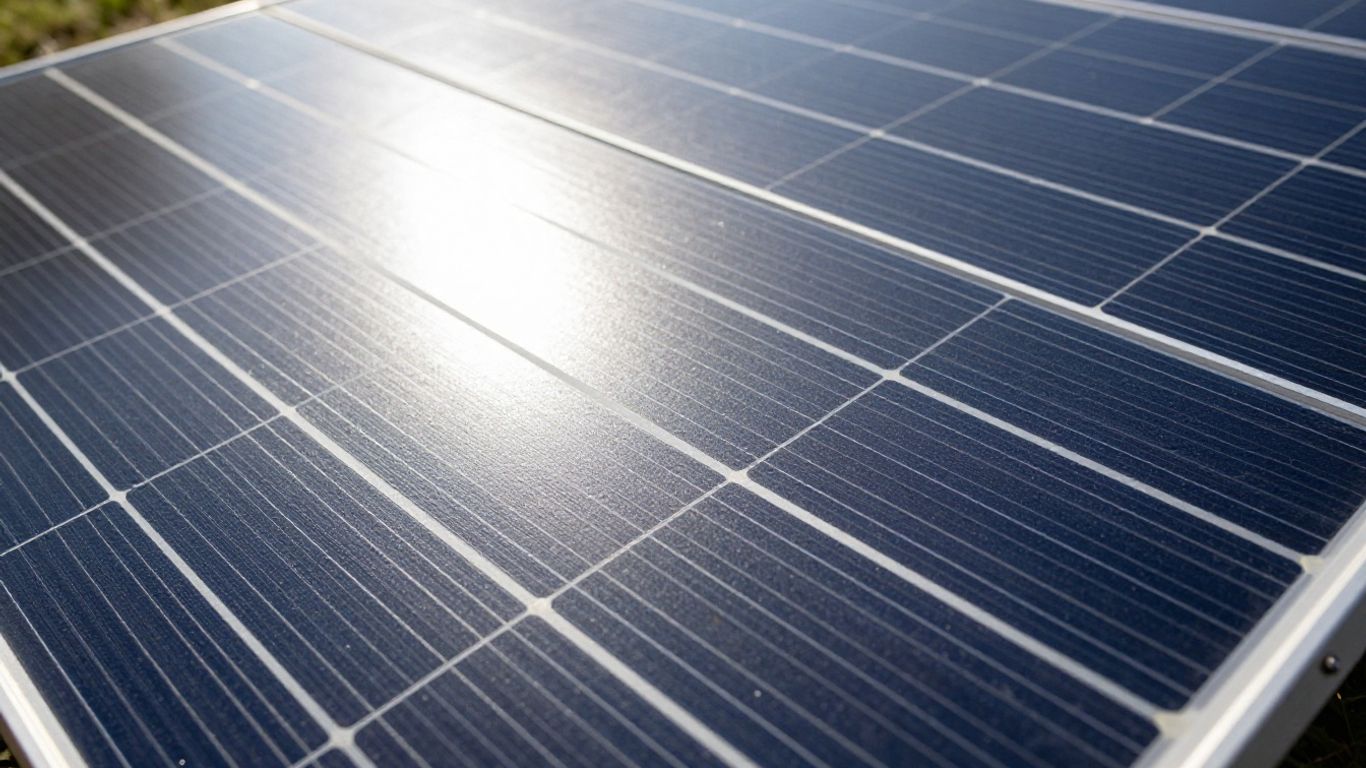
When talking about 400W solar panels, the technology of the cells that compose them is an essential point for understanding their performance. The two most common types are monocrystalline and polycrystalline panels. Monocrystalline panels are made from a single crystal of pure silicon. This gives them a uniform, usually black, colour and superior efficiency. They are often preferred for their performance, especially in low-light conditions. Polycrystalline panels, on the other hand, are made from several silicon crystals melted together. They have a more speckled appearance, with shades of blue. They are generally slightly cheaper to produce, but their performance is slightly lower than that of monocrystalline panels. For a 400W panel, the choice between these two technologies can influence the surface area needed to achieve this power, with monocrystalline panels being more compact for the same production.
Thin-Film Solar Panels and Their Efficiency
Beyond crystalline silicon, there is another family of technologies: thin-film panels. These panels use photovoltaic materials deposited in very thin layers on a substrate (glass, plastic, metal). Materials such as cadmium telluride (CdTe) or amorphous silicon (a-Si) are used. The main advantage of thin films is their flexibility and lightness, which opens up various installation possibilities. Their efficiency is generally lower than that of crystalline panels, but research continues to improve their performance. For a 400W panel, thin-film technology is less common, as it would require a larger surface area to achieve this power. However, for specific applications where weight or flexibility are paramount, they can be an interesting option.
The Impact of Materials on Overall Performance
The choice of materials doesn’t stop at silicon. The quality of the glass, the type of anti-reflective coating, the design of the electrical contacts, and even the frame structure can impact the overall performance of a 400W solar panel. For example, a good anti-reflective coating allows more sunlight to be captured, thus increasing production. Similarly, the quality of electrical connections minimises energy losses. The durability of materials is also a key factor in maintaining performance over the long term. Reputable manufacturers use weather- and UV-resistant materials to ensure a long lifespan for their panels. It is also important to consider how shadows can affect production. A shadow on a single cell can reduce the power of the entire panel, much like a blocked tap limits water flow. This is why good design and careful installation are necessary to avoid shaded areas.
Here is a simplified comparison table of the main technologies:
| Technology | Typical Appearance | Efficiency (general) | Cost (indicative) | Common Applications |
|---|---|---|---|---|
| Monocrystalline | Uniform black | High | Medium to high | Residential, commercial |
| Polycrystalline | Speckled blue | Medium to high | Medium | Residential, agricultural |
| Thin-film | Variable | Lower | Variable | Building-integrated, mobile |
It is important to note that 400W panels are generally based on high-performance monocrystalline or polycrystalline technologies to achieve this power output within a reasonable size. Technological advancements continue to push the boundaries of efficiency, making solar panels increasingly performant and accessible.
Durability and Longevity of 400W Solar Panels
400W solar panels, like any technology, have a lifespan and performance that evolve over time. It is important to understand these aspects for a sustainable solar installation.
Manufacturer Warranties
Solar panel manufacturers generally offer two types of warranties. The first, called a product warranty, covers manufacturing defects and materials. It often extends for 10 to 15 years, sometimes more. The second, and most important for performance, is the performance warranty. This guarantees that the panel will maintain a certain percentage of its rated power over a given period, typically 25 to 30 years. It is not uncommon to see warranties guaranteeing 85% of the initial power after 25 years. It is important to check the specific conditions for each brand.
Expected Lifespan of Panels
Beyond warranties, the actual lifespan of a 400W solar panel is often longer. With adequate maintenance, these panels can continue to produce electricity for 30 years or more. Performance degradation is a natural phenomenon; a slight decrease in output is observed each year. However, a significant drop in production, for example, below 70% of the initial power, may indicate a problem requiring investigation. The goal is to maintain stable energy production over the long term.
Tips for Extending Performance
To ensure your 400W solar panels perform at their best for many years, a few simple steps are recommended:
- Regular Cleaning: Dust, leaves, bird droppings, or pollution can accumulate on the panel surface and block sunlight. Annual cleaning, or even semi-annual cleaning in dusty areas, with clean water and a soft brush is usually sufficient. Avoid harsh chemicals.
- Visual Inspection: Take a look at your panels from time to time. Look for any physical damage, cracks, or signs of delamination. Also, check that nothing is obstructing the light, such as new tree branches that have grown.
- Production Monitoring: Most modern solar systems include production monitoring. Monitoring this data allows you to quickly detect any unusual drop in performance that could indicate a problem. A drop in production can be due to shadows or dirt, problems that can often be easily resolved.
The longevity of a solar installation depends not only on the intrinsic quality of the panels but also on how they are maintained and monitored over the years. A small investment in time and care can significantly increase the useful life and profitability of your system.
Practical Applications of a 400W Solar Panel
A 400W solar panel is a bit like the Swiss Army knife of solar energy for many situations. Its power makes it quite versatile, capable of meeting various needs, whether for a home, a converted vehicle, or even for more isolated projects.
Powering Domestic Needs
For a home, a 400W panel won’t cover your entire electricity consumption, let’s be clear. However, it can significantly contribute to your self-consumption efforts. Imagine being able to power some of your appliances without drawing from the grid. Here’s an idea of what it can handle, keeping in mind that usage duration and storage capacity play a role:
- Lighting: Several LED bulbs can run without issue.
- Electronic Devices: Your internet router, a television, or a laptop can be powered.
- Small Appliances: A refrigerator, a dishwasher, or a washing machine can be partially supported, especially if you optimise their use (e.g., run the dishwasher when the sun is shining).
It is important to calculate your needs carefully to know how best to integrate this panel into your existing installation. For a more precise estimate, there are tools to calculate the solar power needed for a converted vehicle.
Use for Off-Grid Installations
This is where the 400W panel truly shows its potential. For chalets, cabins, or any dwelling far from the electricity grid, it becomes a valuable energy source. It provides appreciable comfort without resorting to a noisy and polluting generator. Combined with storage batteries, it offers significant energy autonomy. It is particularly suitable for installations where space is limited but reliable energy production is required.
The 400W Solar Panel in a Mobile Context
Motorhome, campervan, or boat enthusiasts will find the 400W panel a valuable ally. It can be sufficient to cover the basic energy needs of a vehicle, especially if you travel during the sunniest months and your consumption remains moderate. This allows you to recharge your electronic devices, power a small refrigerator, or have lighting without relying on campsite hookups. It’s an excellent option for improving the energy independence of your vehicle.
Integrating a 400W solar panel into an existing system requires a good understanding of your consumption habits. It’s not about completely replacing the grid, but about intelligently supplementing it to reduce your bills and your environmental impact.
Comparative Analysis: 400W Solar Panel vs. Other Power Ratings
Differences in Production Capacity
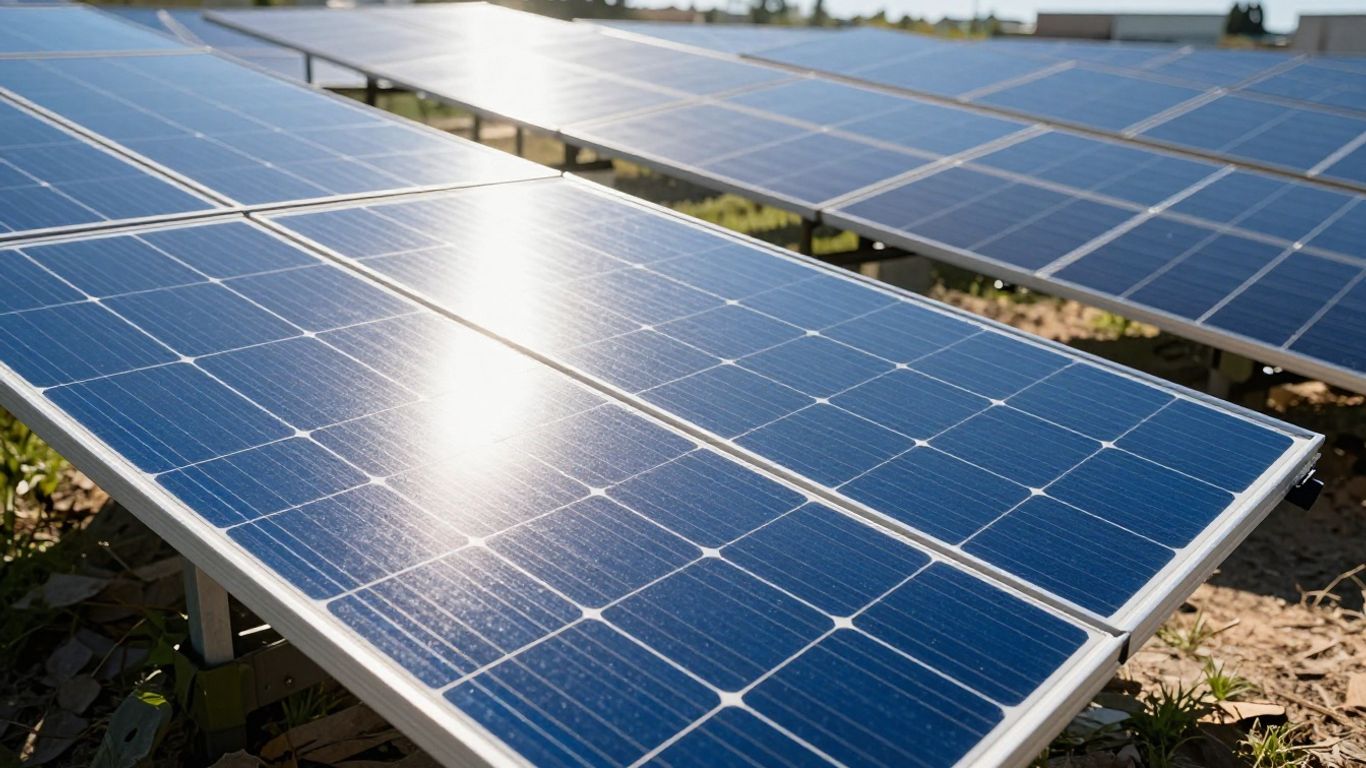
When comparing a 400W solar panel to lower-power models, such as a 100W panel, the most obvious difference is their ability to generate electricity. A 400W panel, as its name suggests, can produce up to 400 watt-peak under ideal conditions. This is significantly more than a 100W panel, which caps at 100 watt-peak. This means that a single 400W panel can theoretically produce as much energy as a cluster of four 100W panels. This difference in capacity has a direct impact on the space required for a given installation. For the same total energy production, far fewer 400W panels will be needed than 100W panels. For example, for a 3 kWp installation, about 7 to 8 panels of 400W could be used, whereas 30 panels of 100W would be required. This is an important point to consider for roofs with limited space. Installing solar panels on your roof offers significant benefits, including savings on electricity bills.
Adaptability to Different Installation Sizes
The power of a solar panel largely determines its suitability for different types of projects. 400W panels are often considered a good compromise for medium-sized residential installations. They allow for a significant portion of a home’s energy needs to be met without requiring excessive roof space. For small installations, such as those intended to power a campervan or an off-grid system for a garden shed, lower-power panels (100W, 200W) may be more practical and less expensive. They are easier to transport and install in confined spaces. Conversely, for large commercial or industrial installations, even higher-power panels, or a very large number of 400W panels, would be needed to meet the energy demand. The choice therefore depends directly on the targeted electricity consumption and the available space.
Impact on the Total Number of Panels Required
One of the major advantages of 400W solar panels is the reduction in the total number of panels required to achieve a given installed capacity. If you aim for, for example, a 6 kWp installation, opting for 400W panels means you will need 15 panels (6000W / 400W). If you chose 300W panels, you would need 20 panels (6000W / 300W). This reduction in the number of panels has several positive consequences: fewer fixing points on the roof, a potentially faster installation, and a decrease in costs related to labour and accessories (cabling, connectors). Furthermore, it can simplify inventory and maintenance management. For homes with average annual electricity consumption, a 3 kWp capacity may be sufficient, which translates to a manageable number of 400W panels.
Choosing the power of solar panels is a decision that must be aligned with your specific energy needs and site constraints. A 400W panel offers an excellent balance for many residential applications, but it is always good to compare with other power ratings to find the most suitable solution.
Financial Considerations for a 400W Solar Panel
Addressing the financial aspect of a 400W solar panel is a logical step after understanding its operation and production potential. You need to look carefully at your budget before proceeding.
Purchase Cost of the Panel
The price of a 400W solar panel can vary. Generally, the cost is estimated at around €110 per square metre. As a 400W panel is about 2m², this brings us to an average price of €220 per panel. Of course, this depends on the materials and the brand. Monocrystalline panels, often more efficient, can cost slightly more than polycrystalline ones. It is important to compare offers to find the best value for money. Also consider looking at solar kits, which can sometimes be more advantageous.
Estimated Installation Costs
Beyond the cost of the panels themselves, you need to budget for their installation. Installation costs for several 400W solar panels generally range between €5,000 and €11,000, excluding potential aid. This amount can change depending on the complexity of your roof, the necessary equipment (inverter, cabling, mounting system), and the installer you choose. It is recommended to request several quotes to get a precise idea of the costs. A well-done installation by professionals is a guarantee of safety and long-term performance. Installing solar panels can be a significant investment, but there are aids available to reduce the purchase and installation cost of your solar panels, such as the reduced VAT rate of 10% or aid from energy suppliers CEE scheme.
Potential Return on Investment
The return on investment (ROI) of a 400W solar panel depends on several factors: the initial cost, the amount of energy generated, the price of electricity you no longer have to buy, and any possible aid or subsidies. On average, a 400W solar panel can produce between 1.6 and 2 kWh per day. Considering average annual consumption and the current price of electricity, the payback period can vary, but it is often estimated between 8 and 15 years. 400W panels, thanks to their high power output, can reduce the total number of panels needed, which can also lower overall installation costs and accelerate the ROI. It is also possible to sell the surplus energy produced, which contributes to improving the profitability of your installation.
Investing in 400W solar panels represents a significant financial commitment. However, considering the savings on electricity bills, tax incentives, and the lifespan of the panels, the financial balance over the long term is generally very positive. It is wise to carefully assess your consumption and compare offers to optimise this investment.
Here is an overview of costs for different installation sizes:
| Installation Capacity | Estimated Cost (excluding aid) |
|---|---|
| 3 kWp | €6,000 – €10,500 |
| 6 kWp | €9,500 – €17,000 |
These figures provide a general idea, but each project is unique and requires a personalised assessment. Do not forget that the cost of a 400W solar panel is higher than that of less powerful panels, but their efficiency can compensate for this difference over time installation cost.
The Impact of Seasons on 400W Solar Performance
The seasons have a notable influence on the amount of energy your 400W solar panel can produce. It is important to understand these variations to have a realistic idea of your annual production.
Production During Winter Months
In winter, days are shorter and the sun’s angle is lower on the horizon. This means the intensity of solar radiation is generally lower. Consequently, the energy production of your 400W solar panel will naturally be reduced during this period. Even though panels continue to work in cloudy weather, the absence of direct sunlight impacts their efficiency. It is therefore normal to see a drop in performance compared to the summer months. Good orientation and tilt, such as facing south, can help capture the maximum available light, even in winter [8a46].
Increased Performance During Summer
Summer, on the other hand, is the most favourable period for solar production. Days are longer, the sun is higher in the sky, and the sunshine is more intense. These optimal conditions allow your 400W solar panel to reach its maximum production potential. It is during these months that you will generate the most electricity, which can be an excellent opportunity to offset the lower production of the winter months or to recharge energy storage systems.
Adjusting Tilt for Different Seasons
Although the pre-set tilt of your installation is often optimised for average annual production, it is technically possible to adjust the angle of the panels to maximise production according to the season. A steeper tilt (e.g., 60°) can be beneficial in winter to capture low-angle light, while a shallower tilt (between 10° and 20°) is preferable in summer when the sun is higher [27af]. However, for most residential installations, the fixed roof tilt is maintained for practical and cost reasons, and the impact on overall performance remains manageable. The important thing is to ensure that the panels are not obstructed by shadows, as this has a much more significant impact on production than seasonal tilt adjustments.
It is essential to remember that solar production is not constant throughout the year. Seasonal variations are normal and should be taken into account when planning your energy needs.
Conclusion on 400W Solar Panels
So, we’ve covered what a 400W solar panel can do. It’s an interesting option, especially if you’re looking to produce a good amount of energy without having to install dozens of panels. We’ve seen that performance depends heavily on where you live, the weather, and even how you orient the panel. It’s not magic; it requires some thought to place it well and take care of it. But ultimately, for those who want to do their bit for the planet and perhaps reduce their bills, it’s definitely worth looking into. It’s a good step towards energy independence, even if it requires a small initial investment.
Frequently Asked Questions
What exactly is a 400W solar panel?
A 400W solar panel is a device that converts sunlight into electricity. Its maximum power of 400 watts is reached when there is a lot of sun and it is well-positioned. It’s a fairly powerful panel, more so than older models, which means it can produce more electricity with fewer panels.
How much electricity can a 400W solar panel produce?
The amount of electricity produced by a 400W panel varies. On average, under good conditions, it can produce between 1.6 and 2 kilowatt-hours (kWh) per day. This production depends heavily on the sunshine it receives, where it is installed, and the season.
What factors influence the production of a 400W solar panel?
Several things affect a solar panel’s production. Sunshine is the most important: the more sun, the better. The orientation (ideally south-facing) and tilt of the panel are also crucial. Clouds, rain, snow, and even shadows from trees or buildings can reduce the amount of electricity produced.
Do weather and season change the panel’s production?
Yes, absolutely. The sun is stronger and more present in summer than in winter, so production is generally higher during the warmer months. Very sunny days allow the panel to operate at full capacity, while grey or rainy days reduce its ability to produce electricity.
How can the production of a 400W solar panel be improved?
To get the maximum electricity, the panel should be oriented south and set at the correct tilt angle, which can change depending on the season. It is also very important to ensure that no objects cast a shadow on the panel. Regular maintenance, such as cleaning, also helps maintain good performance.
What is the difference between a 400W panel and a less powerful panel, like a 100W?
The main difference is the amount of electricity they can produce. A 400W panel generates much more energy than a 100W panel. This means that to cover a house’s needs, fewer 400W panels will be needed than 100W panels, which can simplify installation.
Can a 400W solar panel be used to power an entire house?
A single 400W panel can cover part of a house’s needs, such as lighting or some small appliances. To power an entire house, several panels are generally required, especially if you want to be self-sufficient in electricity. It is also possible to store the electricity produced in batteries for use when there is no sun.
How much does a 400W solar panel cost and what is its return on investment?
The price of a 400W solar panel is higher than that of less powerful panels, as it is larger and more efficient. Expect to pay between 350 and 550 euros per panel, excluding installation costs. The return on investment depends on your consumption, the sunshine in your region, and possible aid, but these panels are designed to last a long time (over 25 years).