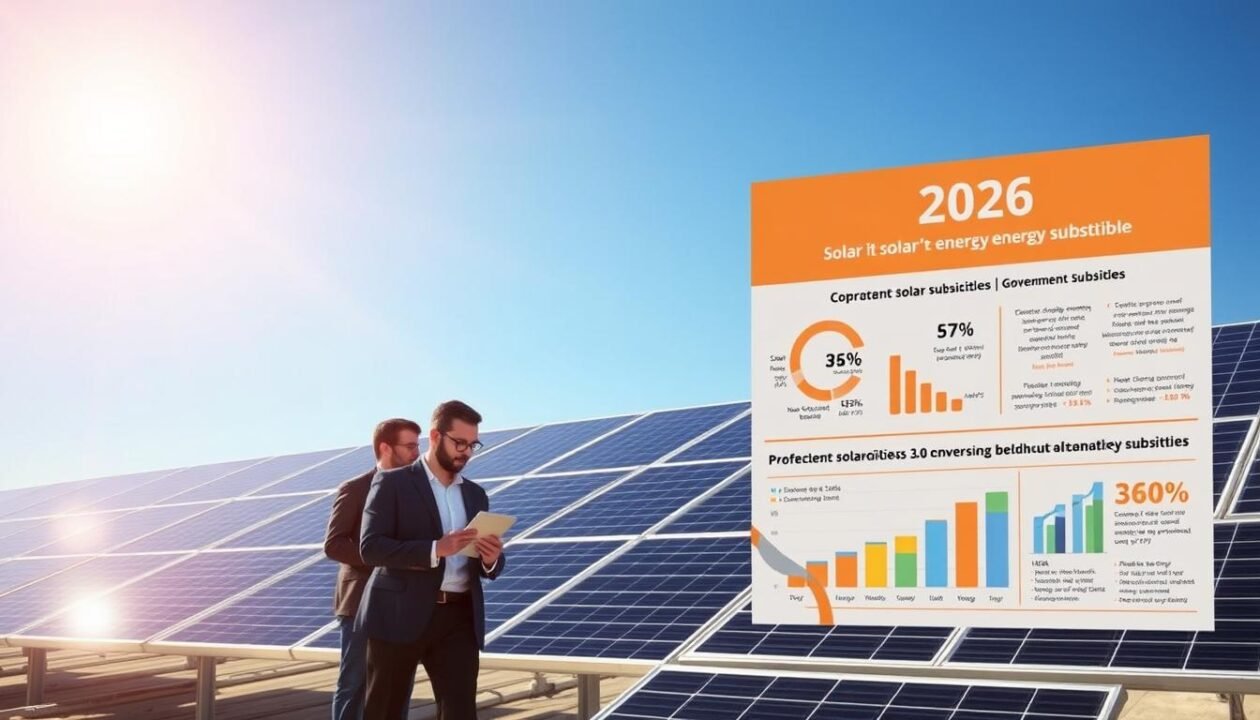
Rooftop photovoltaic leasing represents an interesting opportunity to make use of unused space on your building. Instead of leaving your roof unoccupied, why not transform it into a source of income? This system allows specialised companies to install solar panels on your property. In return, you receive rent, without having to spend a penny on the installation. It’s a step towards the energy transition while offering a significant financial advantage. However, it is important to fully understand the ins and outs before getting started.
Key points to remember
- Rooftop photovoltaic leasing is a solution where a company installs solar panels on your roof and pays you an annual rent. The installation is entirely covered by the company.
- This scheme is particularly suitable for owners of large areas such as agricultural hangars, industrial or commercial buildings, often requiring a minimum surface area of 500 to 800 m².
- Eligibility depends on several factors: available surface area, the condition of the roof structure, absence of shading, and, most importantly, proximity to an electrical grid connection (transformer or medium-voltage line).
- Potential income varies depending on the leased area, the power of the installed panels (kWp), and the specific contract conditions. It can be in the form of annual rent or a one-off payment.
- It is essential to choose your operator partner carefully by verifying their financial stability and references, and to thoroughly analyse all the terms of the lease agreement to secure the deal and understand its legal and tax implications.
Understanding the principle of rooftop photovoltaic leasing
Rooftop photovoltaic leasing is a scheme that allows building owners, often businesses or agricultural operators, to make their roof available to a company specialising in solar energy. This company handles the installation and operation of solar panels on the leased area. In return, the building owner can receive financial compensation, which can take the form of annual rent or a one-off payment. Sometimes, the agreement may also include assistance for the renovation of the roof itself.
What is rooftop leasing for solar panels?
This is an agreement where you authorise a company to install and manage solar panels on your roof. The company invests in the installation, handles maintenance, and sells the electricity produced. You, as the roof owner, benefit from rental income without having to bear the costs of installation or maintenance. It’s a way to utilise an often-unused space to generate additional income while contributing to renewable energy production. The duration of these contracts is generally long, often between 20 and 30 years, and the precise terms are defined in a specific lease, sometimes a long-term lease [fe31].
Who can benefit from rooftop photovoltaic leasing?
Historically, this model was more accessible to individuals, but today it primarily concerns owners of large buildings such as agricultural hangars, industrial warehouses, or commercial buildings. Eligibility criteria often include a significant minimum roof surface area, generally over 600 m², and good solar exposure. Proximity to electrical infrastructure, such as transformers or medium-voltage lines, is also a determining factor due to connection costs. Individuals wishing to install solar panels on their homes are more likely to opt for direct purchase of the installation, sometimes with government support.
The advantages of rooftop leasing for owners
For eligible owners, rooftop leasing offers several benefits. The main one is the generation of passive income through the rent paid by the solar operator. Furthermore, it allows for the utilisation of space that would otherwise remain unused. In some cases, the contract may include assistance with roof renovation, which can represent substantial savings. It is a turnkey solution that relieves the owner of the technical and financial constraints associated with installing and managing a photovoltaic power plant. The company installing the panels takes care of everything, from installation to maintenance and the sale of the electricity produced.
Eligibility criteria for leasing your roof
Before embarking on leasing your roof for a photovoltaic project, it is important to know if your building meets the requirements of investors. These criteria aim to ensure the long-term profitability and safety of the installation.
Minimum surface area required for installation
Companies specialising in the operation of rooftop solar power plants generally seek large surface areas for the project to be economically viable. A minimum surface area of 300 m² is often mentioned, but many operators prefer roofs of 400 m² to 1,000 m² or more. The larger the surface area, the higher the installed capacity (in kWp) can be, which increases the potential for electricity production and therefore the profitability for the investor. It is therefore essential to accurately measure the available and unobstructed surface area of your roof.
Importance of the roof’s condition and structure
The general condition of your roof is a determining factor. It must be in good structural condition to support the weight of the solar panels, which can be up to 30 kg per square metre for some models. A solid frame is therefore essential. Furthermore, the orientation and inclination of the roof play a role. A south, south-east, or south-west orientation is ideal for maximising sunlight. If your roof requires renovation work, some operators may offer to include it in the contract, which can be an advantage, but this must be clearly defined.
Impact of shading and the surrounding environment
Sunlight is a key factor for the performance of photovoltaic panels. Areas with high annual sunshine are preferred, which explains why many projects are concentrated in the south of France. The environment surrounding your building must also be taken into account. The presence of tall trees, neighbouring buildings, or even chimneys can create shade on your roof. This shading, even if partial, can significantly reduce electricity production and therefore the profitability of the project. A thorough analysis of the environment is therefore necessary to assess the potential impact on the performance of the solar panels. A well-exposed roof is a major asset.
It is important to note that even if the law does not impose strict criteria, economic reality pushes investors to select only the most profitable projects. A roof in good condition, well-oriented and with sufficient surface area is therefore the basis for hoping to secure a lease agreement.
The role of location and grid connection
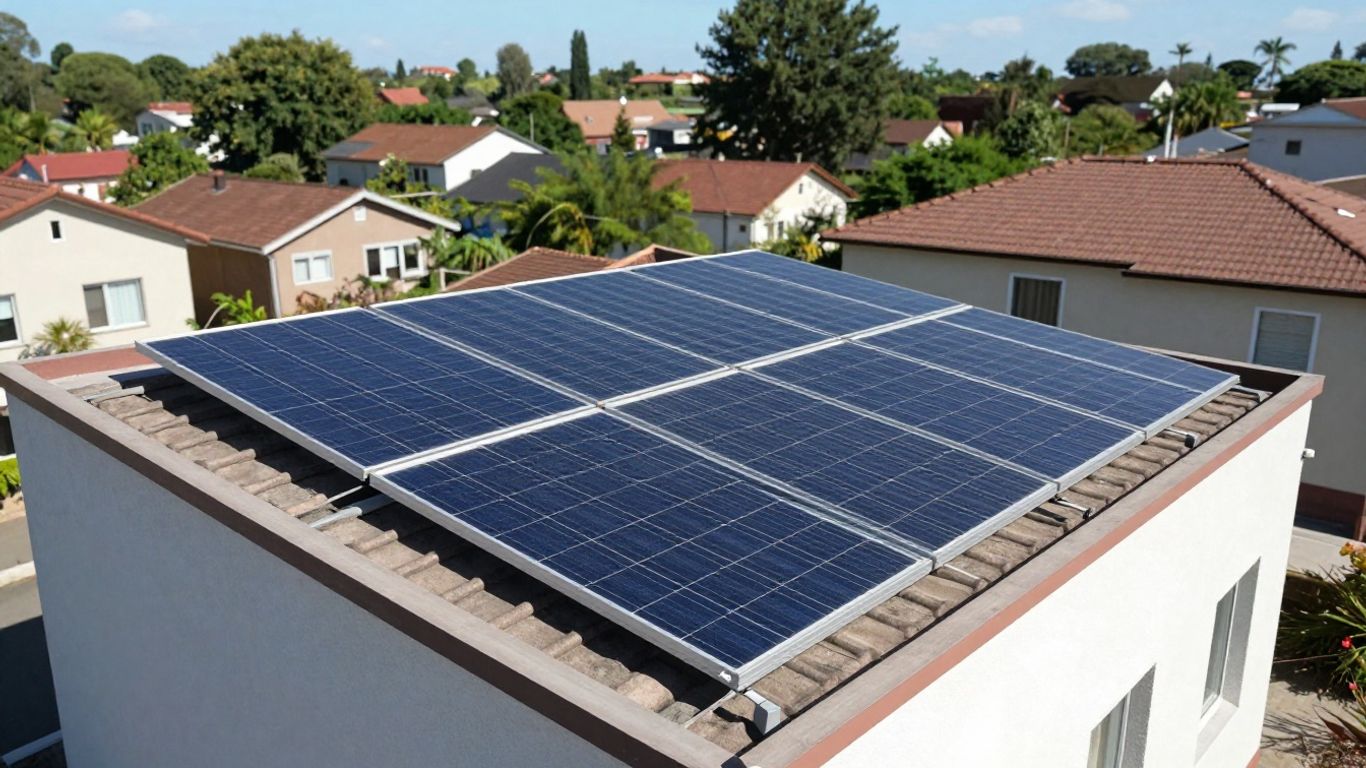
The location of your building is a determining factor for the success of a rooftop photovoltaic leasing project. It is not enough to have a large roof area; the proximity of electrical infrastructure plays a major role.
Proximity to transformers and power lines
For the electricity produced by your solar panels to be injected into the grid, your building must be located within a reasonable distance of a transformer or a medium or high-voltage power line. Operators generally favour sites located within 300 metres, or even 200 metres, of these connection points. This constraint is directly related to costs.
Cost of connection depending on distance
The greater the distance between your roof and the grid connection point, the more expensive the cable installation work will be. These connection costs can quickly become prohibitive, making the project less profitable or even unviable for the operator. This is why companies specialising in rooftop leasing are often more interested in large industrial, agricultural, or commercial buildings, which are sometimes already located near suitable infrastructure.
Preferred geographical areas for rooftop leasing
Some areas are more suitable than others. Rural or peri-urban areas, where buildings are often more spaced out but where power lines may cross the landscape, can be of interest. Industrial areas, by their nature, are also often well-served. It is important to note that projects for individuals on single-family homes have become rarer in the context of free leasing, with the focus being on installations where the operator can make the investment profitable through significant production and injection. To understand connection procedures, it is useful to find out how to connect photovoltaic panels to the grid.
The geographical location and ease of connection to the electrical grid are fundamental technical and economic criteria that directly influence an operator’s decision to lease your roof. An in-depth feasibility study will take these elements into account from the outset.
Estimating potential income from rooftop leasing
Factors influencing the rental price per m²
The amount you can expect to receive for leasing your roof is not fixed. It varies considerably depending on several factors. The surface area of your roof is obviously a key factor, but the sunshine in your region also plays a major role. A roof that is well-exposed to the sun, without shading, will be more attractive. Furthermore, the general condition of your roof is important; if renovation work is necessary before the installation of the panels, this can influence the price. Sometimes, the operator may cover part of this work, which can alter the rent calculation. Rates are generally between €3 and €7 per square metre per year in the most favourable areas, but this remains an estimate.
Remuneration based on installed capacity (kWp)
The total power that solar panels can produce, measured in kilowatts-peak (kWp), is directly linked to the remuneration you will receive. The higher the installed capacity, the higher the potential income. Operators often seek to optimise their installations on large surfaces to benefit from economies of scale. Thus, a large-scale installation can offer better overall profitability, resulting in a more substantial rent for the owner. It is therefore relevant to consider the production capacity of the planned installation.
Examples of annual income and one-off payments
To give you a more concrete idea, here are some examples of potential income. For a 500 m² roof, the estimated annual rent can range between €2,000 and €4,000. For a 1,000 m² area, this estimate rises to between €5,000 and €8,000 per year. If your roof reaches 2,000 m², annual income could be between €9,000 and €15,000. These contracts generally extend over 20 to 30 years. It is also possible, in some cases, to negotiate a one-off payment at the beginning of the lease, which can range from €4,000 to €15,000 depending on the project size. It is important to note that if the operator covers significant renovation work, these amounts may be adjusted. For smaller areas, such as an agricultural hangar, annual income can be estimated at up to €4,500 per 1,000 m² over a period of 20 to 30 years. Leasing your hangar for solar panels can thus represent a stable source of income.
It is always advisable to request several quotes from different operators. This will allow you to compare offers and ensure you get the best possible terms for your project. Limit yourself to three proposals to avoid overloading potential partners.
Choosing the right operator for your photovoltaic project
Finding the right partner for your rooftop leasing project is a step that requires careful consideration. It’s not just about finding someone to install panels; it’s about finding a reliable company that commits for the long term. The operator’s financial stability is a point not to be overlooked, as it guarantees their ability to honour their commitments throughout the contract duration, which can extend over 20 years or more.
Selection criteria for a solar partner
To make your choice, several elements need to be examined closely. You need to look beyond promises and verify concretely what the company has already achieved. References and past achievements are good indicators of its seriousness and expertise. Do not hesitate to ask for examples of projects similar to yours and to consult reviews from other clients. A transparent company will readily share information on these aspects.
Importance of financial stability and references
A financially healthy company will be better able to manage unforeseen events and keep the installations in good condition throughout the lease period. Inquire about its structure, its age, and, if possible, consult its financial statements. References, on the other hand, will give you an idea of previous client satisfaction and the quality of installations. A solid partner will bring you peace of mind.
Comparing offers from multiple operators
It is strongly recommended not to rush and to request proposals from several companies. Each operator has its own approach, pricing, and conditions. By comparing at least three offers, you will be able to better understand market practices and identify the one that best meets your expectations. This will also allow you to negotiate the contract terms more serenely. Remember to check exactly what each offer includes, particularly in terms of maintenance and insurance. You might find an interesting solution by looking at the solar solutions offered.
Installing solar panels, whether for personal consumption or for selling surplus, represents a commitment. Ensuring the reliability of the operator is therefore a logical step to secure your project and your potential income.
Analysing the terms of the rooftop lease agreement
Before committing, it is absolutely essential to scrutinise the lease agreement for your roof. This document, often long and complex, governs the relationship between you and the solar operator for many years. Careful reading and clear understanding of each clause will save you a lot of future trouble.
Essential clauses to check in the contract
The rooftop lease agreement is the cornerstone of your project. You must ensure that it protects your interests while being clear about each party’s commitments. Here are the points that deserve particular attention:
- Lease duration: Generally between 20 and 30 years, this duration aligns with the lifespan of solar panels. Ensure it matches your long-term expectations.
- Rent amount: Check how and when the rent will be paid to you (annually, quarterly?). Amounts can be fixed or indexed to inflation.
- Access to the roof: The contract must define the conditions of access for the operator, particularly for maintenance, while specifying the necessary notice periods.
- Termination clauses: Understand the conditions under which the contract could be terminated prematurely, either by you or by the operator. Cases of force majeure are usually provided for.
- Transfer upon sale: If you sell your property, is the contract automatically transferred to the buyer? It is crucial to inform the buyer in advance.
It is strongly recommended not to sign a contract without having it reviewed by a legal professional. A lawyer or notary can clarify the implications of each article and help you negotiate more favourable terms if necessary.
Maintenance and insurance conditions for the panels
Who is responsible for what when it comes to maintenance and potential issues? The contract must clearly state this. The operator is generally responsible for the maintenance of the solar panels and the installation. They must take out insurance covering the risks associated with the operation of the photovoltaic power plant. For your part, you must ensure that your roof remains in good structural condition so as not to compromise the installation. It is important to know that the maintenance of the panels is the responsibility of the operator.
Responsibilities in case of damage and restoration
In the event of damage (fire, storm, etc.), the allocation of responsibilities must be unambiguous. The contract must define who is responsible for repairs and which insurance policies apply. It is also necessary to anticipate what happens at the end of the contract: are the panels removed? Who pays for the dismantling? Is there an option for the owner to buy back the installation? These aspects are often detailed in the clauses relating to the end of the lease, which can extend over a long period, sometimes up to 30 years [18be].
Here is an overview of common responsibilities:
- Operator: Responsible for the installation, its performance, its safety, maintenance, and specific insurance for solar panels.
- Owner: Responsible for the general and structural condition of the roof, and for reporting any damage that could affect the installation.
It is essential that these points are clearly established to avoid any conflict. Negotiating these terms is a key step in securing your rooftop leasing project [22d8].
Legal and tax implications of leasing
Negotiating a fair contract for both parties
Entering into a rooftop lease for solar panels involves understanding the legal and tax aspects. The lease agreement is a complex document, often a long-term lease, which can extend over several decades. It is therefore essential to read it carefully and ensure that it protects your interests. Thorough negotiation of the clauses is key to a balanced agreement. For example, it is necessary to clarify who bears the costs in case of unforeseen roof work before installation, or how responsibilities are shared if a problem arises after the panels are installed. The operator is generally responsible for the installation and its maintenance, but your role in maintaining the roof structure must be clearly defined.
Consulting a legal professional to secure the agreement
Given the length and complexity of rooftop lease agreements, it is strongly recommended to seek professional help. A lawyer or notary specialising in energy law can clarify the implications of each article and help you identify points that may be unreasonable or disadvantageous to you. They can assist you in negotiating changes to certain clauses and thus secure the agreement on solid foundations. This will prevent unpleasant surprises in the long term, particularly regarding the lease duration or end-of-contract conditions.
Understanding the taxation associated with rental income
The rent you receive as the owner of a roof leased for solar panel installation is considered rental income. Depending on your situation, you may opt for the micro-property regime, which offers a flat-rate deduction, or the actual regime, which allows for the deduction of actual expenses. It should be noted that social security contributions are added to income tax. It is important to note that income from installations with a capacity of up to 3 kWp is not subject to income tax (IR) [ccb5].
Here is an overview of the tax aspects to consider:
- Nature of income: Generally considered rental income.
- Possible tax regimes: Micro-property (30% deduction) or actual regime (deduction of expenses).
- Social security contributions: 17.2% applied to income, except in specific cases.
- Property tax: Remains your responsibility, but the installation does not systematically increase it.
The taxation of solar rental income can vary. It is therefore essential to obtain accurate information from the tax authorities or an accountant to anticipate the amounts to declare and the taxes to pay.
Contract duration and end-of-lease options
Typical duration of a rooftop lease agreement
Most rooftop lease agreements for solar panels are concluded for a rather long period, generally between 20 and 30 years. This duration allows the operator to amortise their investment in the installation and the owner to benefit from regular income over a long period. It is important to note that this type of contract often takes the form of a long-term lease, a long-term commitment that gives the tenant a status close to that of an owner for its entire duration. This lease ensures that improvements made by the tenant revert to the owner at the end, without additional financial compensation.
Renewal or panel removal options
At the end of the contract, several scenarios are possible. The parties may agree to renew the lease by an addendum or by tacit renewal, if both agree to continue the collaboration. Alternatively, the contract may provide for the complete dismantling of the solar panels, an operation that is generally the responsibility of the operator. It is therefore crucial to fully understand what is planned at the end of the lease to anticipate the steps.
Possibility of purchasing photovoltaic installations
Another common option at the end of the contract is the possibility for the building owner to purchase the photovoltaic installation. The purchase price is either defined in advance in the contract or determined based on the residual value of the equipment at the end of the lease. This option allows the owner to become the owner of their solar installation and to continue producing their own electricity, potentially for the remaining lifespan of the panels. If you sell your property, the contract is generally transferred to the new buyer, unless otherwise specified in the lease. It is therefore advisable to inform any potential buyer of the existence of this contract before the sale. This contractual provision ensures continuity and clarity for all parties involved.
Alternatives to rooftop leasing for solar energy
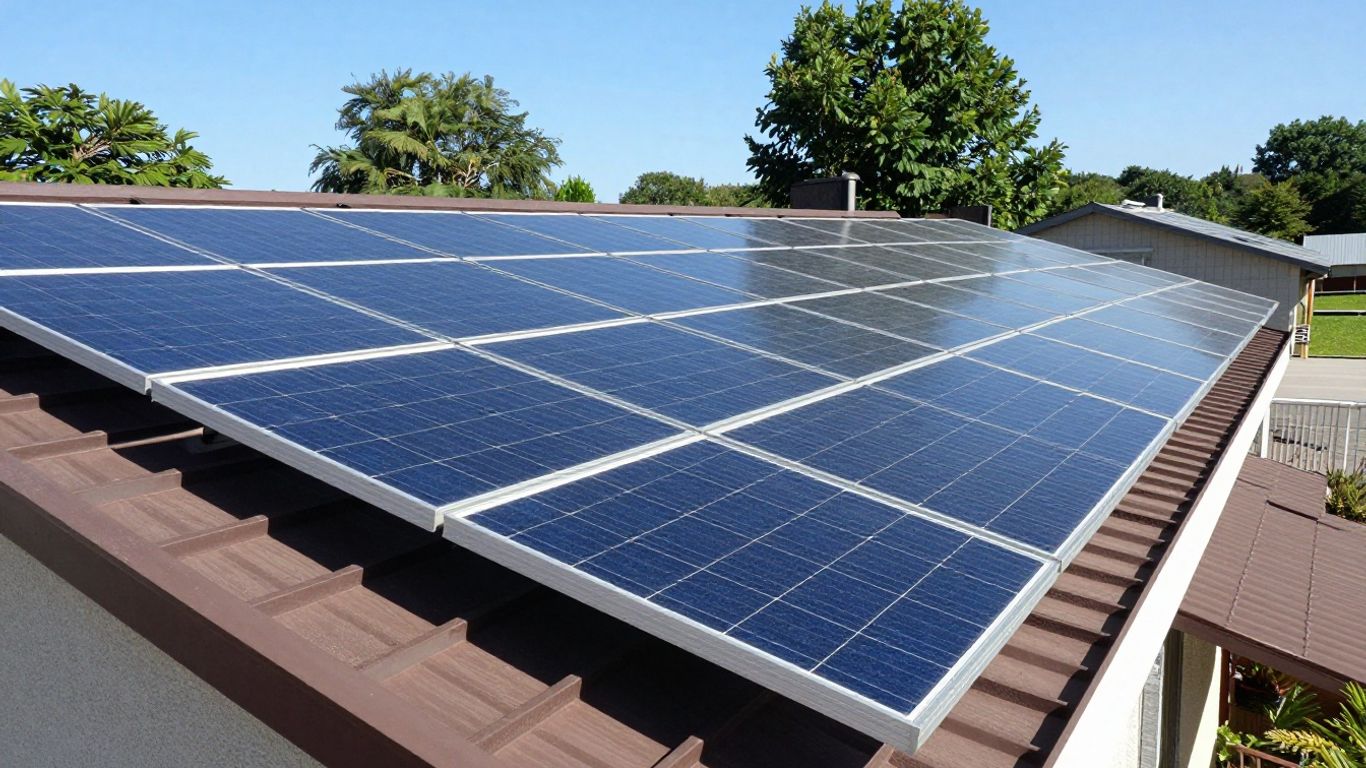
If leasing your roof for solar panel installation does not meet your expectations, several other options are available to produce your own green electricity. These alternatives allow you to become an active participant in your energy consumption, while benefiting from the advantages of solar power.
The most direct way to harness the sun is to acquire and install your own photovoltaic system. This involves an initial investment, but it offers you complete independence and full ownership of your installation. You directly benefit from the electricity produced and can sell the surplus to authorised organisations, such as those offering a electricity purchase contract.
- Advantages: Energy autonomy, increased property value, potential income from selling electricity, and direct contribution to the energy transition.
- Disadvantages: Initial purchase and installation costs, need to manage maintenance and potential repairs.
An intermediate solution is to opt for a lease with an option to buy (LOA). This model allows you to use solar panels without having to bear the full purchase cost upfront. You pay monthly instalments for the use of the equipment, and at the end of the contract, you have the option to buy the panels at a defined price. This is a way to test solar power without a heavy financial commitment, while having the prospect of becoming the owner of your installation.
Regardless of the chosen solution, it is important to inquire about government support schemes. Subsidies, tax credits, or grants can significantly reduce the cost of your solar project. These aids aim to encourage the development of renewable energy and make investment more accessible. It is advisable to consult official information to know the eligibility criteria and available amounts.
It is always wise to carefully compare the different proposals and fully understand the terms of each contract before committing. A thorough analysis of costs, expected benefits, and the responsibilities of each party is necessary to make the most suitable choice for your situation.
Practical advice for successful rooftop leasing
Embarking on leasing your roof for photovoltaic panels is a process that requires serious preparation. It is not a decision to be taken lightly, as contracts often extend over several decades. Here are some tips for approaching this project with peace of mind and maximising your chances of success.
Take time to reflect before committing
The most common mistake would be to rush. Offers may seem attractive, but each project is unique. It is therefore essential not to give in to pressure or urgency. Take the time to analyse all the options available to you, compare proposals, and fully understand the implications of each clause. A commitment for 20 or 30 years requires a clear vision and a well-considered decision. Think about the future of your property and your own long-term plans.
Seek advice from independent experts
The field of photovoltaics and property law can be complex. It is strongly recommended not to face this process alone. Engaging independent professionals can provide you with valuable insight. A lawyer specialising in energy law or a property consultant can help you decipher contracts, identify sensitive points, and negotiate more favourable terms. Their external perspective and knowledge of the sector are major assets for securing your project. Do not hesitate to consult multiple opinions to form your own judgment.
Anticipate roof renovation needs
Even before considering the installation of solar panels, it is essential to ensure the good health of your roof. A photovoltaic installation represents a significant investment for the operator, and they will want to ensure that the structure is capable of supporting the weight of the panels and will not require major work in the coming years. If your roof shows signs of weakness or is nearing the end of its lifespan, it may be wise to plan for renovation before signing the lease agreement. Some operators may include renovation work in their offer, but this must be clearly negotiated and specified. A roof in perfect condition is a prerequisite for a sustainable and profitable solar installation. The condition of your roof is a determining factor for the eligibility of your project and for the valuation of your property. Also consider the impact of shading on panel performance, a factor often overlooked but very important for energy production. Good orientation and sufficient sunshine are key elements for maximising solar energy production.
In conclusion: a decision to be carefully considered
In summary, rooftop photovoltaic leasing can seem like an interesting idea to utilise unused space and generate passive income. This is particularly true for large areas such as agricultural hangars or industrial buildings. However, do not rush. It is really important to fully understand all aspects of the contract, compare offers, and, above all, seek professional advice to avoid unpleasant surprises. Think carefully, as this is a long-term commitment.
Frequently Asked Questions
What is rooftop leasing for solar panels?
It’s like you’re lending your roof to a company. This company installs solar panels on it and gives you money every year for using your roof. It’s a way to earn money without doing anything and without spending any money.
Who can lease their roof?
This system is mainly for people who have large buildings, like farmers with their hangars, or businesses with large warehouses. You need to have a large roof area, at least 800 m², that is in good condition and not too much in the shade.
Do I have to pay to install the solar panels if I lease my roof?
No, not at all! The company that leases your roof takes care of everything: they pay for the installation of the panels, their maintenance, and their repair. You don’t have to pay anything.
What happens when the lease contract ends?
At the end of the contract, you have several options. You can decide to buy the panels at a reduced price, ask for them to be removed, or extend the contract if you still agree.
Can I sell my building if my roof is leased?
Yes, it’s possible. If you sell your building, the roof lease contract is transferred to the person who buys it. They will have to continue to abide by the terms of the contract.
How much money can I expect to earn by leasing my roof?
The amount depends on the size of your roof and the number of panels that can be installed on it. Generally, you can earn between €3 and €7 per square metre per year. Sometimes, you can also receive a one-off sum of money at the beginning of the contract.
Is the location of my building important?
Yes, it’s very important. Your building needs to be close enough to power lines so that connecting the solar panels doesn’t cost too much. Companies prefer locations where there are already electrical installations nearby.
What are the risks if I lease my roof?
There are a few risks, such as the contract being very long or the rent amount not being very high. That’s why it’s advisable to read the contract carefully and seek expert help to ensure everything is fair for you.