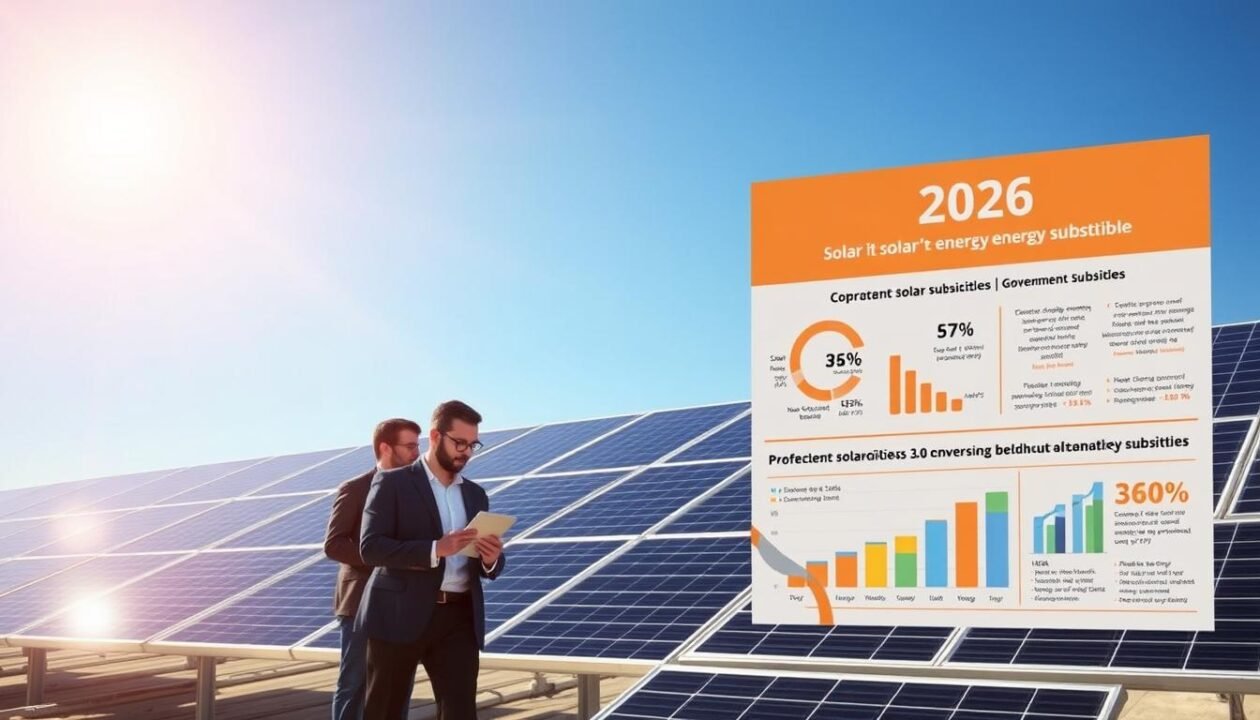
Installing solar panels at home is a good idea to reduce your bills and your ecological impact. But how do you finance all of this? MaPrimeRénov’ is there to help, but we often wonder if we can combine it with other grants. It’s a bit complicated to get to grips with, as there are rules to follow. This article sheds light on the possibilities of combining grants so you can optimise your project.
Key takeaways
- MaPrimeRénov’ can be combined with other grants such as energy premiums (CEE) and the eco-loan at zero interest (éco-PTZ), but not always. Combining it with the MaPrimeRénov’ accompanied pathway and CEE premiums is not possible.
- Grants from local authorities are generally combinable with MaPrimeRénov’, but you must check the specific conditions for each region or municipality.
- The reduced VAT rate (5.5%) for solar panels is compatible with most other grants, including MaPrimeRénov’ and CEE.
- There are capping rules: the total amount of grants cannot exceed the total cost of the work, and MaPrimeRénov’ is capped according to your income level and the chosen pathway.
- The order of grant applications is important. It is often advisable to apply for the energy premium (CEE) before MaPrimeRénov’ for the per-action pathway.
Understanding MaPrimeRénov’ for solar panels
Objectives of MaPrimeRénov’ for solar panels
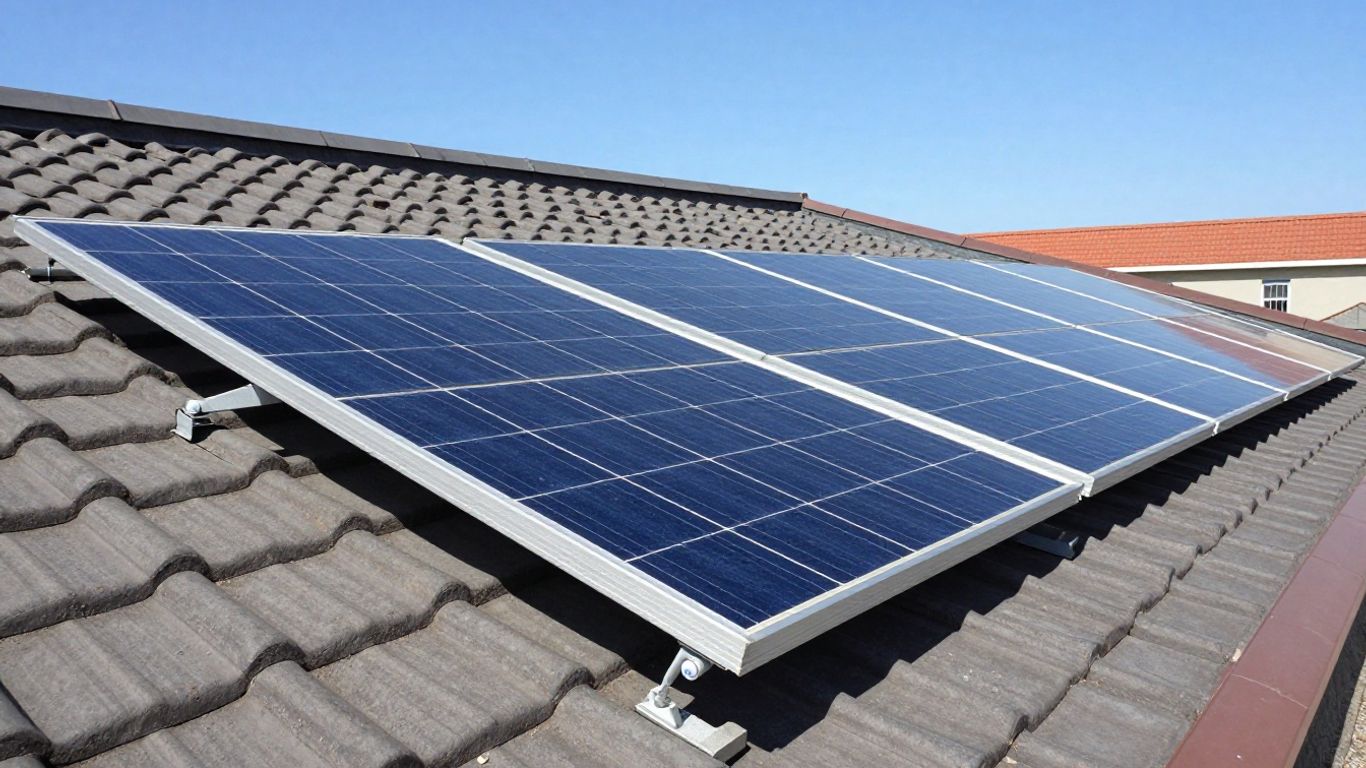
MaPrimeRénov’ is a financial aid scheme set up by the government to encourage energy renovation work in homes. Its main objective is to reduce the energy consumption of homes, which has a double advantage: reducing the environmental impact and lowering household bills. For the installation of solar panels, this premium specifically aims to support the adoption of renewable energies, particularly for the production of domestic hot water or electricity.
The grant is designed to be accessible to as many people as possible, but its amounts vary depending on several factors, including household income. The main objective is to target the most modest households as a priority. It is important to note that eligibility criteria and amounts can change. For example, for a single person in the Île-de-France region, the reference tax income must not exceed €25,500 to be eligible for certain grants [a2c2].
Evolution of the scheme in 2024
In 2024, MaPrimeRénov’ has undergone significant adjustments. The scheme is now divided into two main pathways:
- MaPrimeRénov’ (classic pathway): Intended for the installation of renewable energy heating equipment, such as heat pumps, solar water heaters, or wood stoves. Home insulation is also covered by this pathway. Support from a Mon Accompagnateur Rénov’ (MAR) is recommended but not mandatory.
- The Accompanied Pathway: Reserved for large-scale renovation projects, which include at least two major insulation works and aim for significant energy savings (at least two classes in the DPE). The use of an MAR is mandatory in this case.
It should be noted that the former MaPrimeRénov’ Sérénité grant, which specifically targeted modest and very modest households, has been integrated into these new pathways. The aim of these changes is to simplify procedures and direct aid more effectively towards projects that are most effective in terms of energy transition.
The installation of solar panels, whether thermal or photovoltaic, can benefit from MaPrimeRénov’ under certain conditions, particularly if it is part of a comprehensive energy renovation approach or if it replaces an energy-intensive heating system.
Grants combinable with MaPrimeRénov’ for solar panels
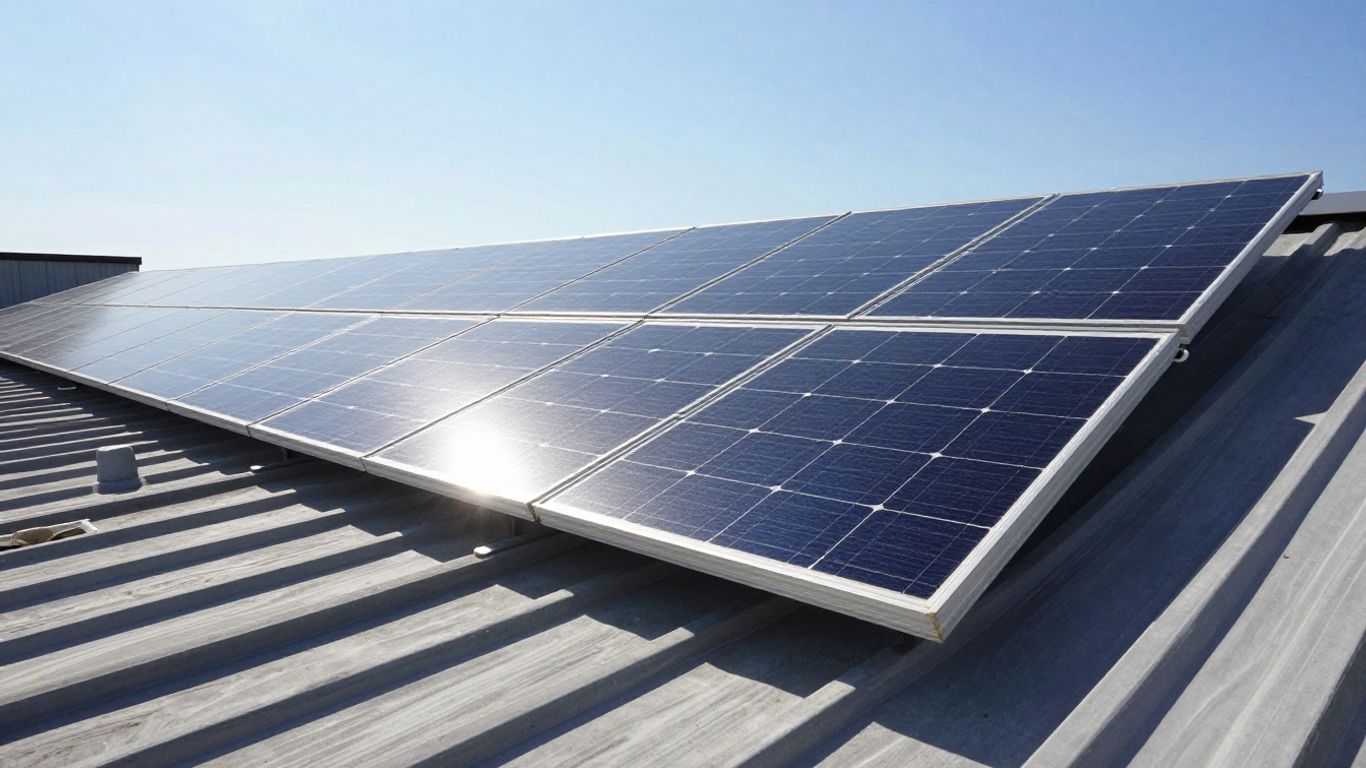
Installing solar panels represents an investment. Fortunately, several grant schemes exist to reduce the cost of your work. The good news is that MaPrimeRénov’ is not always alone; it can often be supplemented by other subsidies. You just need to understand the rules to make the most of them.
Combining with energy premiums (CEE)
Certificats d’Économies d’Énergie (CEE), often called energy premiums, are grants distributed by energy suppliers. For the installation of solar panels, combining them with MaPrimeRénov’ is possible, but it depends on how you submit your application. If you opt for the « per-action pathway » (where each work is applied for separately), you can combine these two grants. However, you must apply for the energy premium first. If you choose the « accompanied pathway » (a comprehensive renovation managed by a professional), the amount of the energy premium is directly integrated into the calculation of MaPrimeRénov’, meaning there is no separate application to make.
Combining with the eco-loan at zero interest (éco-PTZ)
The eco-loan at zero interest is an interest-free loan that can help you finance the remaining cost after deducting grants. It is entirely possible to combine it with MaPrimeRénov’. Since July 2022, procedures have been simplified: once you have received the notification of award for MaPrimeRénov’, you can present this document to your bank to obtain the éco-PTZ. This loan can cover up to €50,000 and be repaid over a period of 20 years, offering significant financial flexibility for your solar project.
Combining with grants from local authorities
In addition to national grants, many regions, departments, and municipalities offer their own support schemes for energy renovation. These local grants are generally combinable with MaPrimeRénov’. It is therefore strongly recommended to contact your local council, departmental council, or regional council to find out about the specific schemes in your area. These additional grants can make a significant difference to the total cost of your solar installation. You can also contact a France Rénov’ service point for centralised information.
It is important to note that even when combining several grants, the total financing for the work is capped. Capping rules apply to prevent the total amount of subsidies from exceeding a certain percentage of the cost of the work, with this percentage varying according to your income.
Grants not combinable with MaPrimeRénov’ for solar panels
Specific case of the accompanied pathway
It is important to know that MaPrimeRénov’ is not always combinable with all other available grants. Within the framework of the « accompanied pathway » of MaPrimeRénov’, which involves professional RGE support for your renovation project, certain grants cannot be added. More specifically, if you opt for this pathway, you will not be able to benefit from the energy premium (CEE) in addition to MaPrimeRénov’. The Agence Nationale de l’Habitat (Anah) directly integrates the amount of the energy premium into the overall calculation of MaPrimeRénov’ for this specific pathway. This is an important distinction to understand for proper financing planning.
Impact on total work financing
The inability to combine certain grants can have a direct impact on the total amount you receive for the installation of your solar panels. For example, if you are on the accompanied pathway, the fact that you cannot add the energy premium means that the overall financing of your project will be calculated differently. Therefore, you must carefully evaluate the different financing options before committing.
It is essential to be well-informed about the specific combination rules for each grant and each MaPrimeRénov’ pathway to avoid any unpleasant surprises. Careful planning is key to optimising the financing of your solar project.
Here is an overview of situations where combining is not possible or is limited:
- MaPrimeRénov’ Accompanied Pathway: Cannot be combined with the energy premium (CEE). The amount of the energy premium is included in the calculation of MaPrimeRénov’.
- Funding cap: Even when combining is allowed, capping rules apply. The total amount of grants cannot exceed a certain percentage of the cost of the work, with this percentage varying according to your income level (very modest owners, modest, intermediate, higher).
- Grants from local authorities: Combining with grants from local authorities may be subject to specific capping rules, reducing the total amount of subsidies if they exceed certain thresholds relative to the cost of the work.
The energy premium for solar panel installation
Amounts awarded according to income
The Energy Premium, from the Certificats d’Économies d’Énergie (CEE) scheme, is a valuable grant for the installation of solar panels, particularly for combined solar systems (SSC). Its amount varies according to your income category, allowing financial support to be adapted to individual needs. It is important to note that this premium can be combined with other grants, under certain conditions.
Here is an idea of the amounts you could receive:
- Very modest income: up to €2,049
- Modest income: up to €1,618
- Intermediate income: up to €1,618
- Higher income: up to €1,618
It should be noted that if you opt for the « large-scale renovation » pathway of MaPrimeRénov’, the application for the Energy Premium is generally integrated. On the other hand, for the « per-action » pathway, it is necessary to make a separate application for the Energy Premium, starting with that one.
Eligibility criteria for the combined solar system
To be eligible for the Energy Premium for the installation of a combined solar system (SSC), several conditions must be met. The installation must, of course, be carried out by an RGE (Reconnu Garant de l’Environnement – Environmentally Certified) certified professional. Furthermore, the SSC must be able to produce both domestic hot water and heating, replacing an old energy-intensive heating system. For example, if your installation replaces an oil or gas boiler, you could be eligible for a « heating boost » premium of at least €5,000. The aim is to promote renewable energies and reduce dependence on fossil fuels. Remember to check the technical specifications required for your installation to maximise your chances of obtaining the grant. The orientation and inclination of your panels are also important factors for the performance of your installation, even if they do not directly impact eligibility for the premium optimise the orientation of your panels.
Obtaining the Energy Premium is a key step in reducing the initial cost of your solar project. It reflects the public’s commitment to promoting the energy transition and the adoption of more environmentally friendly solutions. Don’t forget to check the precise conditions with the organisations offering this grant.
VAT reduction for solar panels
Applicable VAT rate
For the installation of solar panels, particularly those intended for domestic hot water or heating production, a reduced VAT rate applies. Instead of the normal rate of 20%, you benefit from a tax of 5.5%. This measure aims to make solar energy more accessible for households wishing to equip their primary residence. It is important to note that this reduction is applied directly to the quote by your qualified RGE installer.
Compatibility with other grants
The good news is that this VAT reduction is not exclusive. It is fully compatible with other energy renovation grant schemes. You can therefore combine it without any problems with MaPrimeRénov’, Certificats d’Économies d’Énergie (CEE), and even the eco-loan at zero interest. This allows you to maximise the savings made on your solar installation project. Remember to keep the certificate provided by your RGE artisan, as it may be requested in case of a tax audit.
The application of the reduced rate of 5.5% applies to work to improve the energy quality of residential properties completed more than two years ago. The installation of thermal or hybrid solar panels for domestic hot water or heating production falls within this scope.
Here is an overview of grants combinable with reduced VAT:
- MaPrimeRénov’: Grant from Anah to finance your energy renovation work.
- Energy Premiums (CEE): Grants paid by energy suppliers to encourage energy efficiency work.
- Eco-loan at zero interest (éco-PTZ): Interest-free loan to finance your renovation work.
- Grants from local authorities: Some regions, departments, or municipalities offer complementary grants.
It is always wise to check with your local council or regional council to find out about local schemes that could supplement national grants. The aim is to reduce your out-of-pocket expenses as much as possible for the installation of your solar panels photovoltaic.
The eco-loan at zero interest for the acquisition of solar panels
Conditions for obtaining the éco-PTZ
The eco-loan at zero interest, often called éco-PTZ, is an attractive financial grant for those who wish to install solar panels but lack cash flow. To benefit from it, you must be the owner of a primary residence that is more than two years old. This is a basic condition, but it is important. The loan is granted without interest, meaning you only repay the borrowed capital, without additional costs related to bank interest. This is a significant advantage for your project budget.
Maximum amount and repayment period
The amount you can borrow with the éco-PTZ depends on the nature of your work. If the installation of solar panels is part of a comprehensive renovation of your home, you can claim a maximum amount of €50,000. This sum can be repaid over a period of up to 20 years. It is important to note that the éco-PTZ can be combined with MaPrimeRénov’, which allows for a larger portion of the expenses to be covered. Banks partnered with the government offer this loan, so you need to contact a contracted banking institution to submit your application. Remember to check the specific conditions with your bank. This loan is a solution to finance your energy-saving work without paying interest.
The éco-PTZ is a valuable grant for making solar panel installation projects more financially accessible, by reducing the overall cost thanks to the absence of interest on the loan.
Specific grants for hybrid solar panels
Grants for electricity production
Hybrid solar panels, which combine electricity and heat production, are eligible for grants intended for photovoltaic panels for the electrical part of your installation. This includes schemes such as the EDF purchase obligation (OA), which allows you to sell surplus electricity produced to the public grid via Enedis. You can also benefit from the self-consumption premium, the amount of which depends on the power of your system. Let’s not forget the reduced VAT, which also applies to the electrical component of these panels.
Self-consumption premium and purchase obligation
For the electricity production part, hybrid panels are eligible for the self-consumption premium. Its amount varies depending on the power of your installation. For example, for a 3 kWp installation, the premium can reach several hundred euros. In addition, the purchase obligation mechanism allows you to sell electricity not consumed by your household at a fixed rate, thus providing a complementary income source. It is important to note that these grants are specifically linked to electricity production and do not cover the thermal part of the hybrid installation.
It is essential to clearly distinguish the grants applicable to electricity production from those concerning heat production for a hybrid installation. Each component can benefit from different support schemes.
Here is an overview of grants for electricity production:
- Self-consumption premium: Financial grant paid for the electricity you produce and consume.
- Purchase Obligation (OA): Guaranteed purchase rate for excess electricity sold back to the grid.
- Reduced VAT: VAT rate of 10% for thermal and photovoltaic solar installations, under certain conditions.
It is also possible to install solar panels on a vertical facade, which can be an interesting option depending on your home’s configuration. Ensure your installer is RGE certified to be eligible for these grants.
Capping rules for combining grants
Even if you have the possibility to combine several grants to finance the installation of your solar panels, it is important to understand that the total financing of your work will rarely be covered 100%. This is where capping rules come into play.
Funding cap for the per-action pathway
For the so-called « per-action » pathway, which concerns one-off renovations, the total amount of grants you can receive is capped. This cap varies according to your income:
- Very modest households: Maximum coverage of 90% of eligible expenses.
- Modest households: Maximum coverage of 75% of eligible expenses.
- Intermediate households: Maximum coverage of 60% of eligible expenses.
- Affluent households: Maximum coverage of 40% of eligible expenses.
It is important to note that the sum of all grants (MaPrimeRénov’, CEE premiums, etc.) can never exceed the total cost of your work. Furthermore, a portion of the expenses always remains your responsibility, which is the principle of capping. For example, for an expense of €12,000, a very modest household cannot receive more than €10,800 in grants, leaving a minimum out-of-pocket expense of €1,200.
Funding cap for the accompanied pathway
The « accompanied pathway » is a more comprehensive renovation approach, often managed by a Rénov’ advisor. The capping rules are different and more generous for certain households:
- Very modest households: Maximum coverage of 100% of eligible expenses.
- Modest households: Maximum coverage of 90% of eligible expenses.
- Intermediate households: Maximum coverage of 80% of eligible expenses.
- Affluent households: Maximum coverage of 50% of eligible expenses.
In this context, combining grants can sometimes cover the entire cost for the most modest households. It should be noted that for the accompanied pathway, CEE premiums are directly integrated by Anah into the overall calculation of MaPrimeRénov’, which simplifies the process. Therefore, it is impossible to combine MaPrimeRénov’ and CEE premiums separately in this specific case, unlike the per-action pathway. The aim is to ensure that the total amount of grants does not exceed the cap set for each income category, thus ensuring a minimal out-of-pocket expense for the owner. It is always advisable to check the specific conditions with the funding bodies before undertaking your energy renovation work via the accompanied pathway.
Capping rules aim to ensure that a portion of the work always remains the responsibility of the owner, even when several grants are combined. This prevents over-financing of projects and ensures the applicant’s financial participation.
The importance of the order of grant applications
When undertaking energy renovation work, especially for the installation of solar panels, it is easy to get lost in the multitude of available grants. MaPrimeRénov’, CEE premiums, éco-PTZ, local grants… the list can be long. But be careful, the order in which you submit your applications is not insignificant. It can have a direct impact on the total amount of grants you can actually receive.
Priority for the energy premium
In most cases, it is advisable to start by submitting your application for energy premiums, such as those offered under the Certificats d’Économies d’Énergie (CEE) scheme. These premiums are often conditional on the completion of the work and can be applied for before or after completion, depending on the specific scheme. However, to subsequently benefit from MaPrimeRénov’ and other grants, it is often necessary to be able to justify a prior application or agreement for CEE. For example, for combining with MaPrimeRénov’, you will need to provide proof of your CEE application, often called a « Contribution Framework ». Failure to follow this order could cause you to miss out on some of the funding.
Required documentation for MaPrimeRénov’ for solar panels
To complete your MaPrimeRénov’ application for your solar panels, several documents will be required. Beyond quotes and invoices for the work, you will need to provide information on your tax situation and, as mentioned, proof of your other grant applications. It is therefore essential to keep all correspondence, acknowledgements of receipt, and other certificates. Good organisation beforehand will save you a lot of hassle and ensure you don’t forget anything. Also consider checking the specific conditions related to your type of project, such as those for combined solar systems, which may have their own documentation requirements.
Anticipation and rigour in managing your grant applications are key to maximising your funding. Each grant has its own rules, and their interaction often depends on the order in which applications are submitted. Therefore, obtaining information in advance from the relevant bodies or a France Rénov’ advisor is an essential step to successfully completing your solar project.
Other potential grants for your solar panels
Beyond MaPrimeRénov’, several other schemes can supplement your financing for the installation of solar panels. It is important to get well-informed so as not to miss out on anything.
Grants from pension funds
Some pension funds, whether basic or supplementary, offer specific financial aid for their members wishing to carry out energy improvement work. This aid can take the form of subsidies, advantageous loans, or energy vouchers. Eligibility criteria and amounts vary considerably from one fund to another. It is therefore advisable to contact your pension fund directly to find out about available schemes.
Energy voucher and property tax exemption
The energy voucher, intended for modest households, can be used to finance part of the installation costs of solar panels, particularly if they are considered energy improvement work. In addition, some municipalities offer an exemption from property tax for renewable energy production installations, such as solar panels. This measure aims to encourage the adoption of these technologies. Check with your local council to see if such a measure is in place in your area. Optimising the orientation and inclination of your panels is also a key factor in maximising their energy production energy.
It is essential to check the compatibility of these grants with MaPrimeRénov’ and other schemes already applied for. Capping rules may limit the total combination of subsidies to prevent funding exceeding the actual cost of the work. Good advance planning is therefore essential to benefit from optimal financial support.
In conclusion: combining grants is possible, but with conditions
So, we’ve covered the possible grants for your solar panels, and particularly for MaPrimeRénov’. As you’ve seen, there are quite a few avenues to reduce the bill, which is good news. But be careful, it’s not the Wild West either! You need to carefully check which grants can be combined and which cannot. Sometimes, there are caps to respect, which are called capping. So, even if you can combine several things, it doesn’t mean everything will be financed 100%. You need to get well-informed, submit applications in the right order, and sometimes, there will still be a small part left for you to pay. Also, think about local grants, they can make a difference. In short, it requires a bit of research and patience, but it’s worth it to save money and help the planet.
Frequently asked questions
Can I receive MaPrimeRénov’ at the same time as other grants for solar panels?
Yes, it’s often possible! MaPrimeRénov’ can be combined with other grants such as energy premiums (CEE) or the eco-loan at zero interest. You just need to pay attention to the order of applications and the set caps so that the total amount of grants does not exceed the cost of the work.
What is the energy premium and is it combinable?
The energy premium, also called CEE (Certificats d’Économies d’Énergie), is a grant paid by energy suppliers to encourage work that reduces energy consumption. It is generally combinable with MaPrimeRénov’, but you must apply for the energy premium first.
Can the eco-loan at zero interest (éco-PTZ) be used with MaPrimeRénov’?
Absolutely. The eco-loan at zero interest is an interest-free loan that can help finance the remaining cost after receiving other grants, including MaPrimeRénov’. It’s a good solution if you don’t have enough savings to pay for all the work.
Are there local grants for solar panel installation?
Yes, in addition to national grants, your local council, department, or region may offer additional grants for energy renovation work, including for solar panels. It is advisable to check with these authorities.
Is reduced VAT compatible with MaPrimeRénov’?
Yes, entirely. The reduced VAT rate of 5.5% for solar panel installation is compatible with MaPrimeRénov’, energy premiums, and the eco-loan at zero interest. It’s a financial benefit that is applied directly to the quote by the installer.
What happens if I apply for too many grants? Are there limits?
Yes, there are rules called ‘capping’. Even when combining several grants, the total amount cannot exceed the total cost of your work. Furthermore, MaPrimeRénov’ has coverage caps that vary according to your income and the type of work.
What is the ‘accompanied pathway’ for MaPrimeRénov’?
The ‘accompanied pathway’ is intended for more significant renovations that affect several elements of the home. It requires the help of a specialist advisor (Mon Accompagnateur Rénov’) and aims to significantly improve your home’s energy performance. In this case, combining with certain grants may differ.
Do hybrid solar panels benefit from the same grants?
For the part that produces electricity, hybrid solar panels can benefit from grants intended for photovoltaics, such as the self-consumption premium or the possibility of selling surplus electricity. The part that produces heat can, in turn, be eligible for other grants.