More and more households are interested in solar energy to reduce their bills and do their bit for the planet. 3000W solar panels are attracting particular attention. But concretely, what can be powered by a 3000W solar panel? This article explores the possibilities offered by such an installation, detailing compatible appliances and factors to consider to make the most of it.
Key Takeaways
- A 3000W (or 3 kWp) solar installation can power a variety of everyday household and electronic appliances, such as refrigerators, washing machines, televisions, and computers.
- The 3000W power allows several appliances to be run simultaneously, but care must be taken not to exceed the total capacity, especially with the most energy-intensive appliances like ovens or tumble dryers.
- The orientation, tilt of the panels, the region’s sunshine, and the quality of the inverter greatly influence the actual electricity production.
- For optimal use, coupling the panels with a storage battery allows the energy produced to be used even when the sun is not shining, thus increasing self-consumption.
- A 3000W installation generally does not allow for complete electrical autonomy, but it can cover a significant portion of a household’s needs, with the possibility of selling surplus electricity.
Understanding the Power of a 3000W Solar Panel
When we talk about a 3000W solar panel, it’s important to understand what this measurement means. It’s not a constant power, but rather a maximum capacity under ideal conditions. Let’s dive into the details to clarify.
Definition of Watt-peak (Wp) and Kilowatt-peak (kWp)
The power of a solar panel is generally expressed in Watt-peak (Wp) or Kilowatt-peak (kWp). For a 3000W installation, we are therefore talking about 3 kWp. This value represents the maximum power the panel can produce under standardised laboratory conditions: 1000 W/m² of solar irradiation, a temperature of 25°C, and an air mass of 1.5. This is a reference measurement, not the actual daily production.
Optimal Conditions to Reach Maximum Power
For a solar panel to theoretically reach its maximum power, several factors must be met simultaneously. These conditions include intense and direct sunlight, a cool ambient temperature (ideally around 25°C, as heat reduces panel efficiency), and the complete absence of shade. South-facing orientation and precise tilt, often around 30°, are also crucial. In practice, these perfect conditions are rarely maintained over time.
Number of Panels Needed for a 3000W Installation
It is rare for a single panel to reach 3000W. Residential solar panels typically have a unit power between 300W and 500W. Therefore, to constitute a 3000W (or 3 kWp) installation, several panels need to be assembled. The exact number will depend on the power of each chosen panel. For example, with 400W panels, 7 to 8 panels would be needed to reach 3000W. This allows for better distribution of production and adaptation to the available roof space. Such a capacity may be eligible for tax benefits, such as a reduced VAT rate.
It is essential to distinguish between Watt-peak (Wp) and Watt-hour (Wh). Wp measures the maximum instantaneous power, while Wh quantifies the energy produced or consumed over a given period (one hour). A 3000 Wp panel operating at full capacity for one hour will produce 3000 Wh, or 3 kWh.
Household Appliances Powered by a 3000W Installation
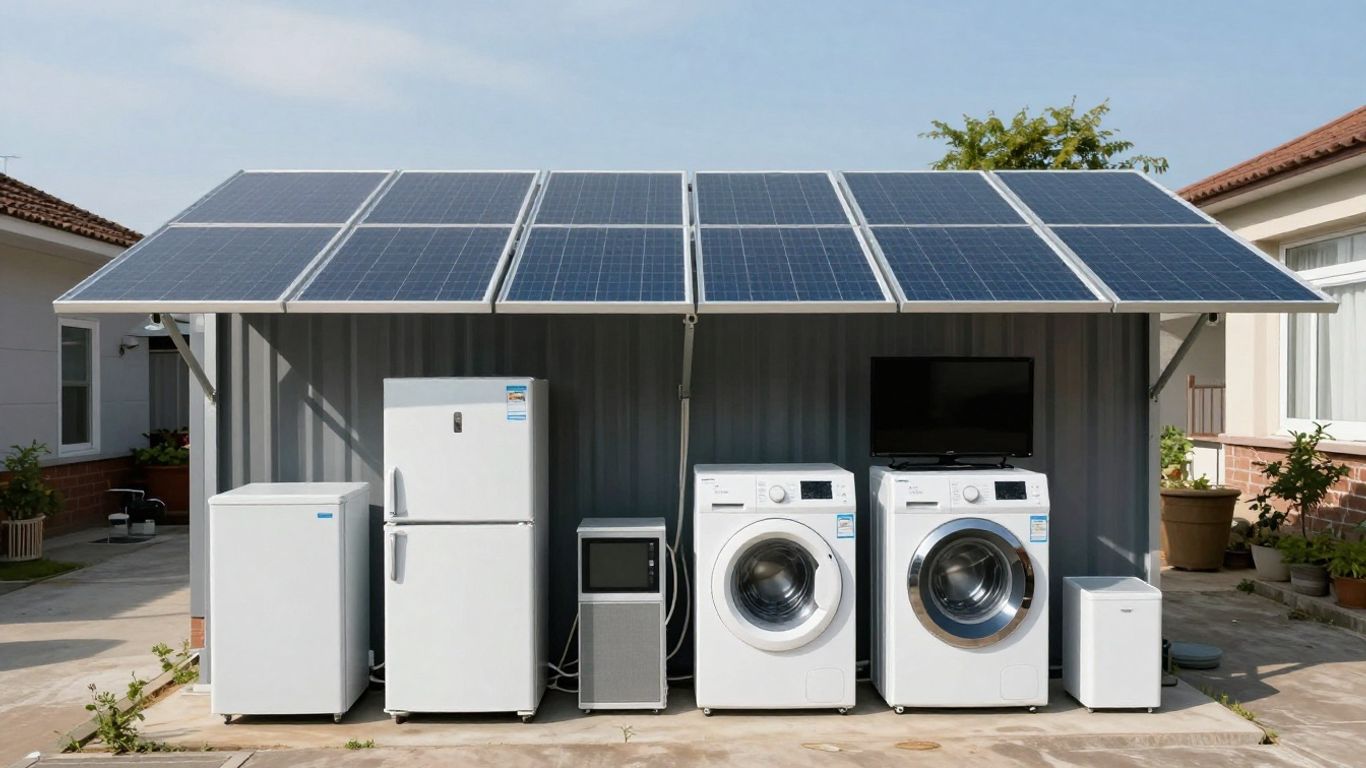
A 3000W, or 3 kWp, solar installation opens the door to powering many everyday appliances. It is important to understand that instantaneous power is what matters for running an appliance, while total consumption over the day determines the amount of energy needed.
Powering Refrigeration Appliances: Refrigerator and Freezer
Refrigeration appliances, such as refrigerators and freezers, are constant energy consumers, but their instantaneous power remains relatively modest. A typical refrigerator consumes between 100 and 250W, and a freezer between 100 and 200W. These appliances can therefore run continuously with a 3000W installation without major issues. The challenge here is more about consumption over time than peak power.
Using Washing Appliances: Washing Machine and Dishwasher
Washing appliances are known for their higher electricity consumption, especially during water heating phases. A washing machine can require between 500 and 1500W, while a dishwasher, which is more power-hungry, uses between 1200 and 2400W. It is entirely possible to power these appliances with a 3000W installation, but they generally need to be run on their own, without other high-power appliances running simultaneously, to avoid exceeding the instantaneous production capacity. It is advisable to use them during hours of strong sunshine to maximise self-consumption.
Operation of Cooking and Preparation Appliances
Cooking appliances, such as hobs or ovens, are among the most energy-intensive. Induction hobs can require between 1500 and 3000W, and an electric oven between 2000 and 4000W. With a 3000W installation, it is possible to use one of these appliances, but rarely at the same time as another high-power appliance. For example, running cooking hobs at full power will already consume the entire capacity of your installation. Therefore, their use must be carefully planned. For higher needs, such as for professional applications or installations requiring distribution across multiple circuits, a three-phase system could be considered, such as those used for electric vehicle charging stations.
Here is an overview of common power ratings:
| Appliance | Indicative Power (W) |
|---|---|
| Refrigerator | 100 – 250 |
| Freezer | 100 – 200 |
| Washing machine | 500 – 1500 |
| Dishwasher | 1200 – 2400 |
| Cooking hobs | 1500 – 3000 |
| Oven | 2000 – 4000 |
It is important to note that these figures are estimates. Actual consumption can vary depending on the model and usage. Good planning of the use of the most power-hungry appliances during sunshine hours is key to successful self-consumption.
Lighting and Compatible Electronic Devices
A 3000W solar installation opens the door to powering many lighting devices and electronic appliances, helping to reduce your reliance on the traditional grid. Whether it’s to illuminate your home or power your everyday gadgets, solar energy can play a significant role.
Powering Domestic and Outdoor Lighting
Lighting accounts for a significant portion of a household’s electricity consumption. With a 3000W capacity, you can easily power your lighting systems, whether they are indoors or outdoors. LED bulbs, for example, are particularly efficient and consume very little. A typical LED bulb requires only about 5 to 15W, allowing you to run a large number of them simultaneously or illuminate large areas without worry.
- LED bulbs: Ideal for low consumption (5-15W per bulb).
- Outdoor lighting: Garden spotlights, wall lights, etc., can be powered to secure and enhance your outdoor spaces.
- Smart lighting systems: Compatible if their consumption remains within the limits of solar production.
Operation of Multimedia and Office Equipment
Electronic devices such as televisions, computers, internet boxes, and audio systems are also within the reach of a 3000W installation. The consumption of these devices varies, but it generally remains moderate compared to large household appliances. For example, a modern television consumes between 80 and 400W, while a laptop uses between 50 and 100W. It is entirely possible to run these devices during sunshine hours, thus benefiting from the free energy produced by your panels. Installing plug-and-play solar systems can simplify the integration of these devices into your solar-powered home network.
Charging Portable Devices: Phones and Tablets
Charging portable devices such as mobile phones and tablets is an easy task for a 3000W installation. These devices have very low consumption, often around 5 to 20W. You can therefore charge them without a significant impact on your solar system’s overall production. This allows you to keep your essential devices operational throughout the day, using clean and renewable energy. It is important to note that the actual performance of your installation will depend on several factors, such as sunshine and panel orientation, but for low-power devices, autonomy is generally assured.
Integrating lighting and electronic devices into your 3000W solar system is a logical step towards greater energy independence. These devices, often used daily, greatly benefit from the contribution of free, clean energy, thereby reducing your household’s operating costs.
Optimising Solar Energy Production and Use
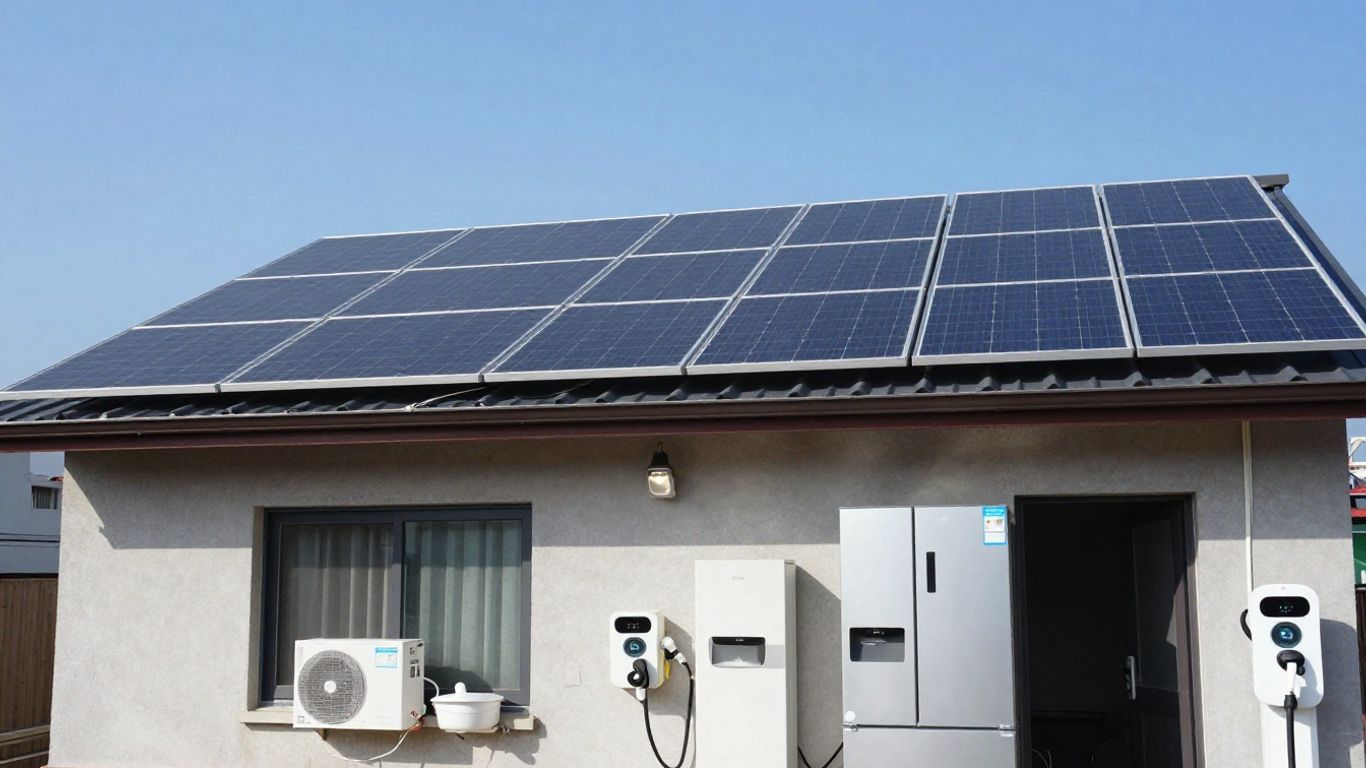
To make the most of your 3000W solar installation, simply installing the panels is not enough. You need to consider how they capture sunlight and how you use that energy. It’s a bit like having a garden: you need the right location, the right maintenance, and to know when to harvest.
The Importance of Panel Positioning and Orientation
Where you install your panels and the direction they face makes a huge difference. Ideally, they should be south-facing to capture maximum sunlight throughout the day. The tilt also matters; it depends on your region. In mainland France, an angle between 30 and 45 degrees is often recommended, but this can vary.
- Good positioning avoids shadows: Ensure no trees or buildings cast shadows on your panels, especially in winter when the sun is lower.
- South orientation is the most efficient: It maximises production throughout the day.
- Tilt adapts to latitude: An angle that is too flat or too vertical will reduce yield.
The Crucial Role of the Inverter in Energy Conversion
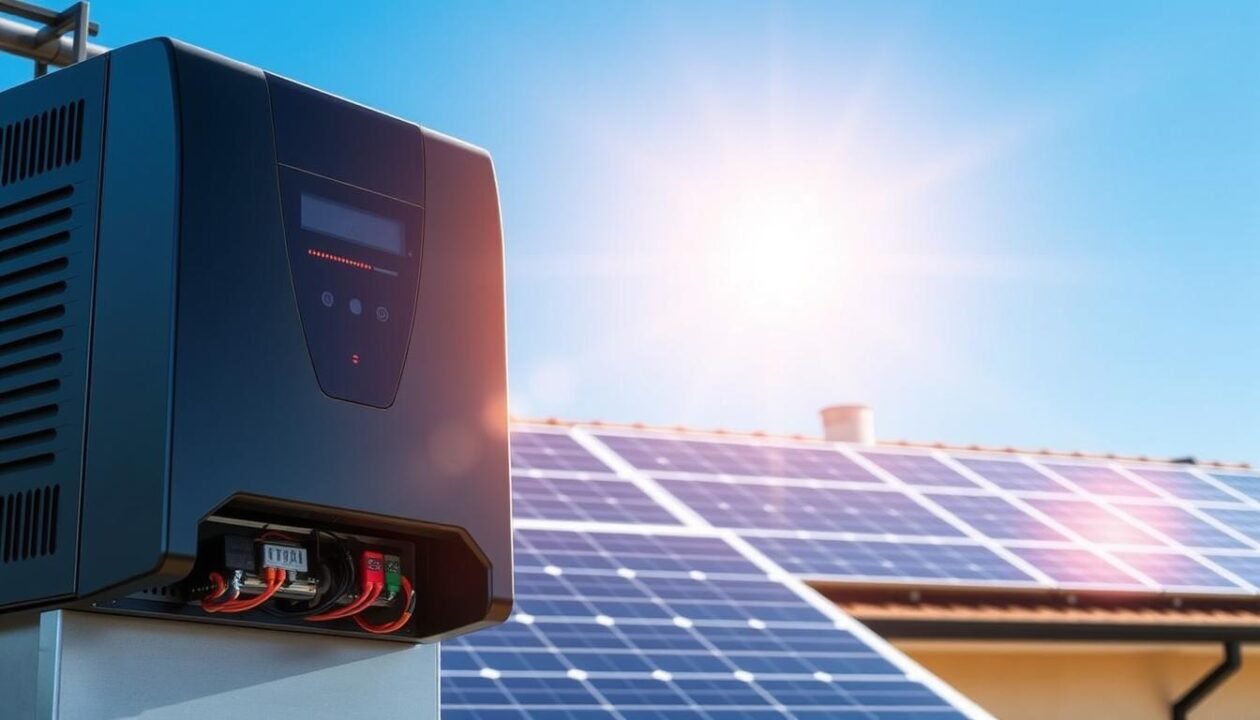
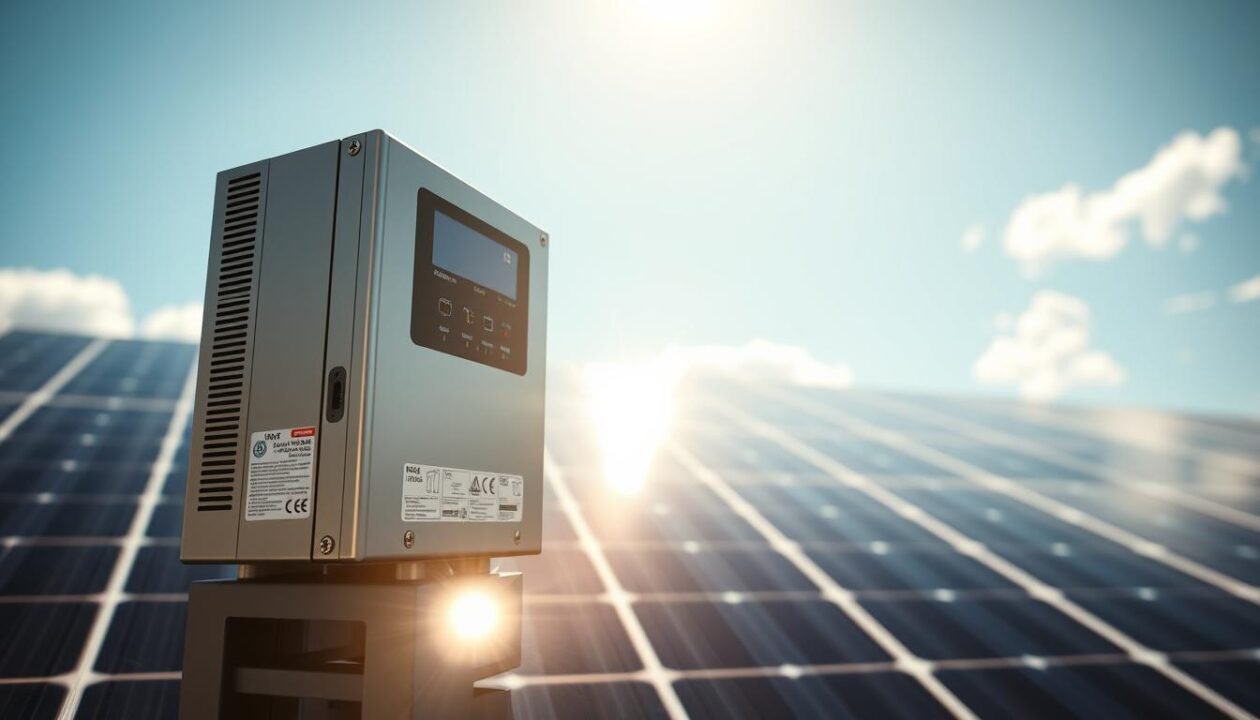
Solar panels produce direct current (DC), but your appliances run on alternating current (AC). This is where the inverter comes in. It converts DC to AC, which can be used by your home. Without it, the electricity produced by your panels would be unusable. Choosing an inverter suitable for the size of your installation is therefore very important for good energy conversion.
Benefits of Energy Storage with Batteries
The sun doesn’t shine at night or when it’s cloudy. To use solar energy when you need it, even outside of sunshine hours, storage is a solution. Batteries allow you to store electricity produced during the day for use in the evening or on cloudy days. This increases your autonomy and reduces your dependence on the traditional electricity grid. However, it should be noted that in winter, solar production is lower and heating needs are higher, making complete autonomy difficult with a simple solar installation.
Optimising your solar installation doesn’t stop at its installation. You need to consider its environment, its maintenance, and how you will use the energy produced. Good management maximises the benefits of your investment.
Factors Influencing Solar Energy Production
The amount of electricity your 3000W solar installation can produce is not a fixed value. Several factors come into play and can affect the yield of your panels. It is therefore important to understand them well to anticipate actual production.
Impact of Sunshine According to French Regions
Sunshine is the most obvious factor. It varies enormously from one region to another in France. For example, the South-East benefits from many more hours of sunshine per year than the North-West. An identical installation will therefore produce significantly more in sunny regions. Sunshine maps should be consulted to get a precise idea of this potential in your locality.
- Northern France: More moderate production.
- Southern France: Higher production.
Influence of Panel Orientation and Tilt
The orientation of your panels is paramount. Ideally, they should face South to capture maximum sunlight throughout the day. An East or West orientation remains interesting, as it allows production to be spread throughout the day, which may better match your consumption habits. A North orientation is generally to be avoided as it significantly reduces production.
Tilt also matters. In mainland France, an angle between 30 and 35 degrees is often optimal. However, this can be adjusted according to the latitude of your municipality and the natural slope of your roof. If your roof is flat, mounting systems allow this angle to be adjusted. Orientation generally has a greater impact on yield than tilt.
It is important to note that even an installation with less-than-ideal parameters can be profitable. The goal is to maximise the potential of your specific situation.
Differences in Yield Between Types of Solar Panels
There are several types of solar panels. The most common are monocrystalline and polycrystalline. Monocrystalline panels are generally more efficient, offering higher yields, meaning they produce more electricity for the same surface area. Polycrystalline panels are slightly less efficient but often more affordable. The choice of panel type can therefore influence the overall production of your 3000W installation. Also consider the impact of the environment around your panels, such as trees that might grow and create shade over time. Regular maintenance, such as a simple annual cleaning with fresh water, is also recommended to prevent dust or bird droppings from reducing solar capture. For a successful installation, it is advisable to check the structure of your roof before starting.
Concrete Examples of Appliance Combinations Powered
A 3000W solar installation offers considerable flexibility for powering various everyday appliances. It’s not just about running a single energy-intensive appliance, but about being able to combine multiple uses, especially if you optimise your consumption during sunshine hours.
Usage Scenario for Everyday Appliances
During the day, when your system is producing electricity, you can easily run appliances like the refrigerator and freezer, which are constant consumers. A typical refrigerator consumes between 100 and 300W, and a freezer in the same range. In parallel, you could run your washing machine (which can consume between 500 and 1500W during its cycle) or your dishwasher (often between 1200 and 2400W, but be careful not to run them simultaneously if other power-hungry appliances are on). LED lighting (around 10W per bulb) and powering your electronic devices like a laptop (50-100W) or a television (50-150W) are easily added to this list. The goal is to concentrate the use of the most power-hungry appliances during peak solar production hours.
Here’s an idea of a possible combination for a sunny day:
- Refrigerator and freezer (continuous operation)
- Washing machine (one cycle)
- Laptop and television
- LED lighting
Combination for Large Household Appliances
For larger appliances, a 3000W installation allows them to be run, but often one at a time, or in combination with less energy-intensive appliances. For example, you could use induction hobs (which can reach 2000 to 3000W) or an electric oven (around 2000W). However, it is not recommended to run them at the same time as a dishwasher or tumble dryer, which are also very power-hungry. If you have a tumble dryer, its consumption can range from 1800 to 5000W, so it is best to use it alone and during peak sunshine hours. Good management of your electricity consumption is key to maximising the use of your installation.
Powering a Heat Pump and Ancillary Equipment
A heat pump (HP) can represent significant consumption, often between 1500 and 3000W depending on the model and operating mode. A 3000W installation can therefore potentially power a heat pump, especially if it is used as a supplement or if its consumption is managed intelligently. It would then be advisable to run it during peak solar production hours. In addition, you could power outdoor lighting or low-power ancillary equipment. It is important to note that simultaneous use of a heat pump and other very energy-intensive appliances such as an oven or cooking hobs could exceed your system’s instantaneous production capacity, unless you have a battery storage system.
It is essential to consult the energy labels of appliances to know their actual consumption, as instantaneous power does not always reflect average consumption over the period of use. Adapting appliance usage to sunshine hours is the best strategy for successful self-consumption.
Limitations and Prospects of a 3000W Solar Installation
Difficulties in Achieving Complete Electrical Autonomy
Although a 3000W installation is a major asset for reducing your electricity bill, it is unlikely to allow you to achieve total electrical autonomy. Solar energy production is intermittent by nature; it depends directly on weather conditions and the season. Furthermore, household consumption varies greatly, sometimes unpredictably. Therefore, you should expect to have to draw from the conventional electricity grid during less sunny days or during peak consumption periods.
Possibility of Selling Surplus Electricity Produced
When your installation produces more electricity than you consume, this surplus can be fed into the public grid. This is an excellent way to make your initial investment profitable and to actively participate in green energy production. The conditions for purchasing this surplus are defined by specific contracts, and it is advisable to inquire about the current rates. This process allows you to value every kilowatt-hour produced beyond your immediate needs.
Future Prospects for Domestic Solar Energy
The future of domestic solar energy looks promising. Technologies continue to advance, making solar panels increasingly efficient and durable. Manufacturers report very low annual performance losses, often between 0.2% and 0.7% [f88d]. At the same time, installation costs tend to decrease, making this solution increasingly accessible. The integration of battery storage systems is also improving, offering new possibilities for better management of energy produced and consumed. Self-consumption, supplemented by the sale of surplus, is positioning itself as an increasingly relevant energy strategy for households concerned about their budget and environmental impact.
Estimating the Annual Production of a 3000W Installation
Average Production According to Geographical Areas
The amount of electricity a 3000W solar installation can produce each year varies quite a bit depending on where you live in France. Basically, the further south you are, the more sunshine you get, and therefore the more energy your installation will produce. It’s quite logical, isn’t it?
Here’s a general idea of what you can expect:
- Northern France: Count between 2550 and 3000 kWh per year.
- Central France: Production can increase to between 3000 and 3500 kWh annually.
- Southern France: You could reach between 3500 and 4200 kWh per year, or even more in some very sunny regions.
These figures are averages, of course. The tilt and orientation of your panels play a *huge* role in capturing sunlight. A well-designed installation is key to maximising your production.
Comparison with Average Household Electricity Consumption
So, is 3000W enough to cover a house’s needs? In France, a household consumes on average around 4770 kWh per year, excluding heating. A 3000W installation can therefore cover a good portion of your needs, say between 50% and 80%, depending on your location and actual consumption. This can really help reduce your electricity bill.
It is important to note that household consumption is not constant. It fluctuates depending on the appliances used and the time of day. A 3000W installation is therefore more suitable for covering basic needs and certain energy-intensive appliances used during sunshine hours.
Calculating Production for Different French Cities
To give you a more concrete idea, let’s look at some examples in different cities:
- Lille (North): A 3000W installation could produce around 2700 kWh per year.
- Lyon (Centre): We could expect a production of around 3075 kWh annually.
- Marseille (South): Production could rise to 3690 kWh per year.
These figures clearly show the impact of the geographical area. If you are considering an installation, it is always a good idea to look at the specifics of your region. Also consider looking at available grants for a solar installation.
It should be kept in mind that these estimates are based on ideal conditions. Shadows cast by neighbouring trees or buildings, as well as the cleanliness of the panels, can reduce actual production.
Conclusion
So, we’ve seen that this 3000W solar panel isn’t just a gadget. It can really help power quite a few appliances at home, from the fridge to the TV, and even the dishwasher if you’re careful. It’s clear that it won’t cover all needs, especially for heating, but it can significantly reduce the electricity bill. And if you consider adding a battery, you can store energy to use later, when the sun isn’t shining. It requires some thought to install and orient it correctly, but in the end, it’s a good way to save money and be a bit more energy independent, while also doing your bit for the planet. It’s a serious option to consider for those who want to go green.
Frequently Asked Questions
What can a 3000W solar panel concretely power?
A 3000W (or 3 kWp) solar panel can power several everyday appliances. Think of your refrigerator, television, laptop, and even some more power-hungry appliances like a washing machine or dishwasher, but not necessarily all at the same time. It covers a good portion of a home’s basic needs.
Can I heat my house with a 3000W solar panel?
Unfortunately, heating an entire house with a 3000W system is very difficult, especially if you use electric radiators. Heating consumes a huge amount of energy, far more than an installation of this size can produce. However, with a heat pump, it becomes more feasible as it is more efficient.
How many panels are needed for 3000W?
Generally, a single panel does not produce 3000W. Standard panels are between 300 and 500W. So, to reach 3000W, you need to assemble between 6 and 10, depending on their individual power.
Is the orientation of the solar panel important?
Absolutely! For your panels to produce the maximum amount of electricity, they should ideally be placed facing south, with nothing casting shade on them, and with a slight tilt. It’s like aiming at the sun to get the most light possible.
What happens if a panel is in the shade?
If a panel is hidden by shade, it doesn’t prevent the others from working well. This is an advantage: shade on one panel doesn’t stop the entire installation’s production.
Can the energy produced by solar panels be stored?
Yes, that’s an excellent idea! To use solar electricity even when there’s no sun (at night, for example), you can store it in batteries. This allows you to use much more of the energy you produce yourself.
What do you do with surplus electricity if you produce more than you consume?
If your panels produce more electricity than you use, you have the option to sell it to the electricity grid. This is a way to make your installation even more profitable and earn a little money.
Can a 3000W installation make a house completely self-sufficient in electricity?
It is difficult to achieve complete autonomy with a 3000W installation. Production depends on the sun, which is not constant, and a house’s consumption can be high. However, it can cover a large part of your needs and significantly reduce your electricity bill.