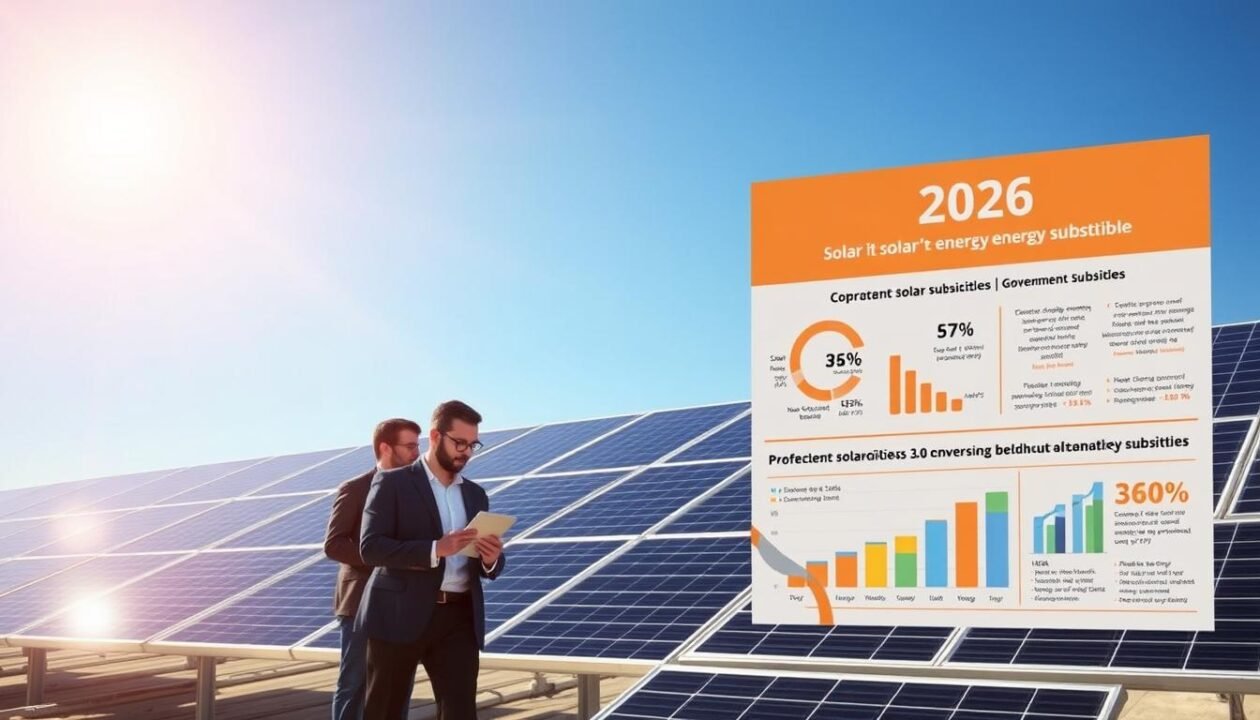
Considering installing solar panels for your 100 m² home and wondering what budget to allocate? This is an excellent step towards reducing your electricity bills and participating in the energy transition. The cost of solar panels for a 100m² house can vary considerably depending on several factors. This article guides you through the elements that make up the total cost, from technical specifications to available financial aid, to help you budget for your project with peace of mind.
Key Takeaways
- The total cost of a solar installation for a 100 m² house generally ranges between €6,000 and €24,000, depending on the chosen power output (3 to 9 kWp).
- Peak power (kWp) is a determining factor in the price, influenced by the number of panels and the required roof area.
- The cost of installation, whether it’s an overlay or integrated into the building, as well as the choice of additional components like batteries, impacts the final budget.
- Government aid, such as the self-consumption bonus and a reduced VAT rate, can significantly lower your investment amount.
- The sizing of the installation should be based on your annual electricity consumption to ensure optimal profitability and avoid unnecessary additional costs.
Understanding the Price of Solar Panels for a 100 m² House
When considering the installation of solar panels for a 100 m² house, the total budget is a central question. It is not a fixed cost, as several elements influence the final amount. Thinking about solar energy means first thinking about an investment that, while significant initially, promises long-term savings.
Factors Influencing the Total Installation Cost
The price of a photovoltaic installation for a 100 m² house depends on several variables. The total desired power output, expressed in kilowatt-peak (kWp), is a determining factor. The higher the power output, the greater the number of panels required, and thus the overall cost. The complexity of the installation also plays a role: a roof that is difficult to access or has a particular configuration may require more time and materials for installation. The type of panels chosen, their brand, and the quality of ancillary components (inverter, cabling, mounting system) also impact the budget. Finally, the cost of labour, which varies by region and professional, must be taken into account.
The Role of Peak Power (kWp) in the Budget
Peak power (kWp) is the unit of measurement that defines the capacity of a solar installation to produce electricity under optimal conditions. For a 100 m² house, the required power output is generally between 3 and 9 kWp, depending on your annual electricity consumption. A 3 kWp installation, for example, will cost less than a 9 kWp installation. It is therefore essential to accurately assess your needs to choose the appropriate power output and manage your budget. A 9kWp installation can cost between €18,000 and €27,000, depending on the options installing a 9kW solar panel system.
Impact of Roof Area on Price
The available area on your roof is a key element in determining the feasibility and cost of your solar project. A 100 m² house may offer sufficient roof space, but it must be ensured that it is well-exposed to the sun and not too shaded by trees or neighbouring buildings. The required area will depend directly on the chosen power output and the size of the panels. For example, a 6 kWp installation may require approximately 26.5 m² of surface area, while a 9 kWp installation will require nearly 39.6 m². A larger roof allows for a more powerful installation, potentially more profitable in the long run, but represents a larger initial investment.
Budget Estimation for a 3 to 9 kWp Solar Installation
The cost of a photovoltaic solar installation for a 100 m² house generally falls within the range of 3 to 9 kWp. This choice of power output will depend directly on your annual electricity consumption. It is therefore essential to accurately assess your needs before proceeding.
Price Range for a 3 kWp Power Output
For a 3 kWp installation, the budget to consider is usually between €6,000 and €10,500. Such an installation can produce approximately 5,000 kWh per year, which can cover a significant portion of the needs of an average household. It is important to note that for installations of 3 kWp and less, a reduced VAT rate of 10% applies, which can reduce the initial cost. Above this threshold, the VAT reverts to 20%.
Average Cost for a 6 kWp Installation
If your needs are greater, a 6 kWp installation represents an average investment ranging from €9,500 to €17,000. This type of installation requires a more substantial roof area. For example, with 425 Wp panels, approximately 14 panels would be needed to cover 26.6 m² of roof, compared to 20 panels (38 m²) if you opt for 300 Wp modules. Choosing more powerful panels helps limit the occupied space and the weight on the roof structure.
Investment for a 9 kWp Power Output
For a house with high electricity consumption, a 9 kWp installation may be necessary. The budget for this type of project ranges between €13,000 and €24,000. A 9 kWp installation requires a roof area of approximately 40 m² if using 425 Wp panels, compared to 57 m² with 300 Wp panels. It is recommended to have a solar assessment carried out by a professional to precisely determine the power output suitable for your situation and avoid oversizing that could harm the profitability of your solar project.
There is no point in installing a very powerful system if you do not need it. A well-sized installation can lead to up to 60% energy savings. Installing more power than necessary risks making the payback period longer.
Here is a summary table of price estimates for different power outputs:
| Power Output | Price Range (including installation) |
|---|---|
| 3 kWp | €6,000 – €10,500 |
| 4.5 kWp | €8,000 – €13,000 |
| 6 kWp | €9,500 – €17,000 |
| 9 kWp | €13,000 – €24,000 |
These figures are estimates and may vary depending on the quality of the panels, the installer, and the specific characteristics of your roof. Don’t forget to inquire about available government aid, such as the self-consumption bonus, which can significantly reduce the total cost of your photovoltaic installation.
The Cost of Installing Solar Panels
Beyond the price of the panels themselves, the labour for their installation represents a significant portion of the total budget. It is therefore important to fully understand the factors influencing this cost.
Price Difference Between Overlay and Integrated Installation
There are primarily two methods for installing solar panels on a roof: overlay installation and integrated installation. The former involves fixing the panels onto a metal structure placed directly on the existing roofing. This is generally the most economical and quickest option to implement. Integrated installation, on the other hand, replaces a part of the roof covering with the solar panels themselves. Although more aesthetically pleasing due to its discretion, this method is technically more complex and therefore more expensive. For a controlled budget, overlay installation is often preferred.
Average Price per Square Metre of Installed Solar Panel
The cost of installation is often calculated per square metre. On average, the price for installing one square metre of photovoltaic solar panel, including installation, is estimated to be around €1,000. This rate can vary depending on the complexity of the site, the region, and the chosen installer. For a 100 m² house, this can represent a substantial budget, hence the importance of requesting multiple quotes.
Importance of Using an RGE Certified Installer
To benefit from government aid, such as the self-consumption bonus or the reduced VAT rate, it is essential to use a certified RGE (Reconnu Garant de l’Environnement – Recognised Environmental Guarantor) professional. This certification attests to the quality of the work carried out and the installer’s expertise. Choosing an RGE craftsman not only ensures you are eligible for financial aid but also guarantees that the installation is carried out to the highest standards, thus ensuring its performance and longevity. Remember that qualified professionals can help you optimise your project, for example, by advising you on the best configuration for your 100m2 house.
The choice of installer is as important as the choice of panels. An experienced professional will be able to guide you towards the most suitable solution for your needs and budget, while respecting current standards.
Additional Components and Their Impact on Price
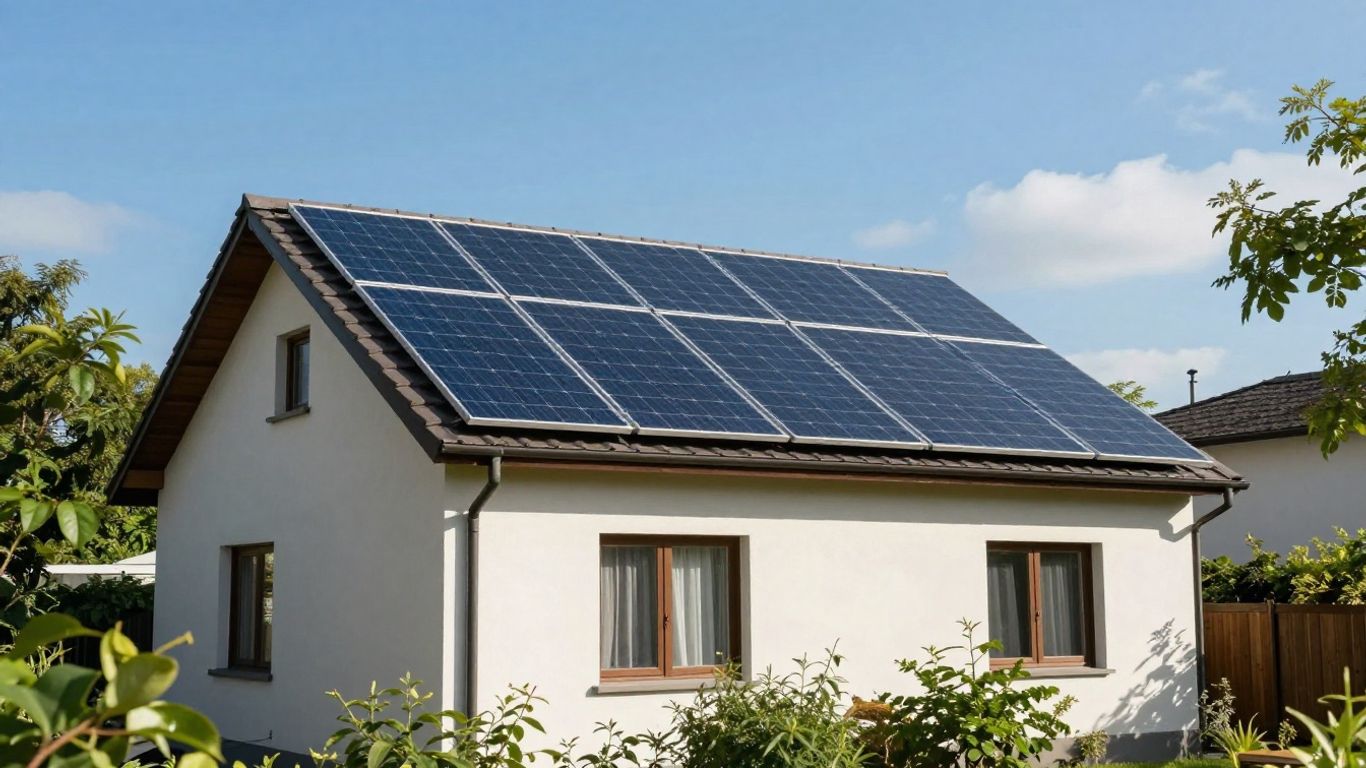
Beyond the panels themselves, several other elements are included in the total cost calculation of a solar installation. It is important not to overlook them to have a clear picture of the budget to be allocated.
Price of the Inverter and Cabling
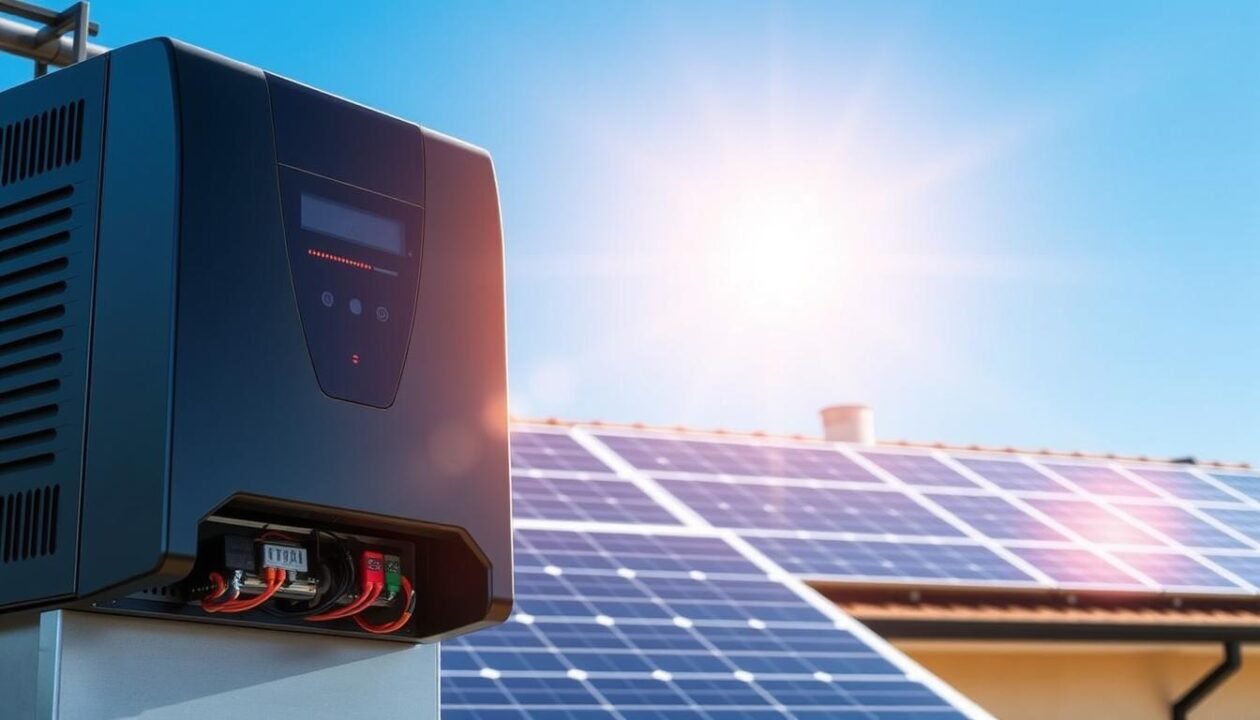
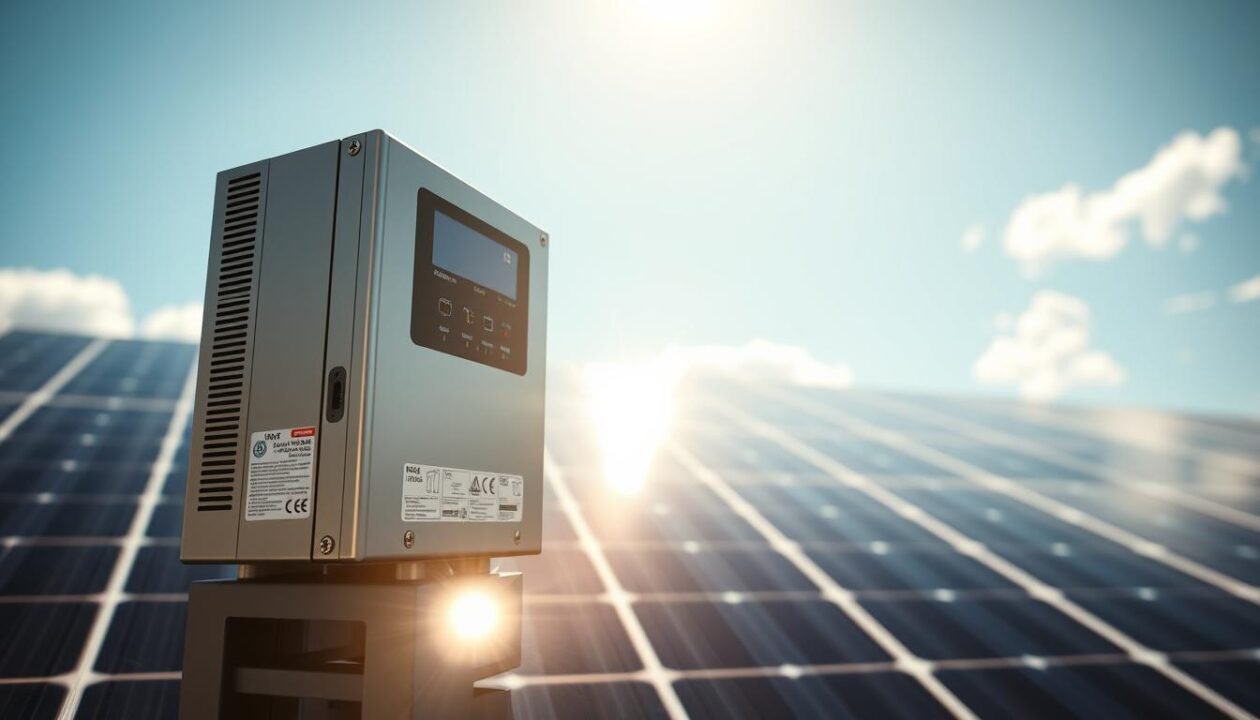
The inverter is the brain of your photovoltaic installation. It converts the direct current produced by the panels into alternating current usable by your home. Its price varies depending on its technology (centralised, string, micro-inverters) and its power output. Cabling, although less expensive individually, represents a set of wires and connectors needed to link all components. The quality of these elements is paramount for the performance and longevity of your system. A more efficient inverter and good quality cables may represent an additional initial cost, but they contribute to better energy production and less maintenance in the long run. You should expect to pay an average of €1,500 to €3,000 for a good quality inverter for a 100 m² house.
Cost of Storage Batteries for Autonomy
If you are considering greater energy autonomy, adding storage batteries becomes an option to consider. These systems allow you to store excess electricity produced during the day for use in the evening or on less sunny days. The cost of batteries is significant and depends on their capacity (expressed in kWh) and their technology (lithium-ion being the most common). A storage battery can represent an additional investment of €5,000 to €15,000 or more, depending on the desired capacity. This allows for reduced dependence on the electricity grid and optimised self-consumption.
The Role of the Energy Manager
The energy manager, sometimes called an Energy Management System (EMS), is a component that optimises your home’s electricity consumption and production. It can intelligently control your appliances, decide whether to store energy in batteries or feed it back into the grid. Although its cost is generally lower than that of batteries (a few hundred euros), it plays a significant role in the overall profitability of your installation. By helping to better utilise the energy produced, it contributes to reducing your electricity bills and accelerating the return on investment of your solar project. It is often included in high-end self-consumption kits but can also be added separately. The estimated cost for a 3 kWp installation, after deducting aid, is around €6,500.
It is essential to consider all these additional components when establishing your budget. A complete solar installation is not limited to just the panels; the inverter, cabling, and potentially batteries and an energy manager, are all elements that influence the final cost and performance of your photovoltaic system.
Government Aid to Reduce the Price of Solar Panels
Installing solar panels represents an investment, but fortunately, several government aid schemes are available to reduce the bill. These aids aim to encourage the energy transition and make solar energy more accessible to homeowners.
The Self-Consumption Bonus
If you choose to consume part of the electricity you produce (self-consumption) and sell the surplus, you can benefit from the self-consumption bonus. This is a one-off financial aid for installations up to 9 kWp. Its amount is calculated based on the power output of your installation and is revised quarterly. For example, for an installation up to 3 kWp, the bonus can reach approximately €1,530.
Benefit from a Reduced VAT Rate
For homes completed more than two years ago, a reduced VAT rate of 10% can apply to the installation cost. This is a significant aid that reduces the total cost of your project. Please note that this reduced rate is generally applicable for installations with a power output of 3 kWp or less.
Available Financial Aid Schemes
In addition to the self-consumption bonus and reduced VAT, other aids can complement your project. There are guaranteed purchase tariffs by EDF OA for the electricity you sell back, ensuring you an income over 20 years. The amounts vary depending on the power output of your installation. Furthermore, local aid may be available, so it is advisable to inquire with your local council or department. It is essential to use an RGE (Reconnu Garant de l’Environnement) certified installer to be eligible for most of these financial aids.
It is important to thoroughly research the eligibility criteria for each aid, as they can vary. Good upfront planning will allow you to maximise savings on your solar project.
To help you gain clarity and benefit from the best conditions, organisations like EDF Solutions Solaires can assist you with your applications and offer solutions tailored to your situation. The price of solar panels in 2026 can be significantly reduced thanks to these schemes, making the investment even more attractive for your solar project.
Sizing of the Solar Installation for a 100 m² House
For a 100 m² house, sizing your solar installation is a key step. It’s not just about covering your roof area, but primarily about meeting your specific energy needs. A well-sized installation optimises your production and profitability.
Estimating Your Annual Electricity Consumption
First and foremost, it is essential to know your average annual electricity consumption. Check your electricity bills from previous years. This will give you a precise idea of the amount of energy you use. Take into account all electrical appliances, heating, hot water, and even any electric vehicles or swimming pools. This estimate is the basis for calculating the required power output.
Calculating the Required Power Output in kWp
Once your annual consumption is known, you can determine the peak power output (kWp) of the installation you need. This power output will depend on several factors, including your geographical location (sunlight varies) and the tilt of your roof. Generally, for a 100 m² house, a power output between 3 and 9 kWp is often considered. For example, an annual consumption of 4500 kWh might require an installation of approximately 4.5 kWp.
Determining the Number of Solar Panels Required
The number of solar panels will depend on the individual power output of each panel and the total calculated power output. Modern photovoltaic solar panels have a nominal power output that varies, often between 400 and 500 Wp. For a 4.5 kWp installation with 500 Wp panels, approximately 9 panels would be needed. The available roof space must also be considered. A common estimate for a 100 m² house suggests between 6 and 24 solar modules, depending on the chosen power output. It is important not to underestimate or overestimate your needs to avoid unnecessary costs or insufficient production. The goal is to achieve a balance for optimal energy autonomy.
Here is a table to help you visualise:
| Power Output (kWp) | Number of Panels (for 500 Wp/panel) | Approximate Area Required (m²) |
|---|---|---|
| 3 kWp | 6 panels | 10.8 m² |
| 4.5 kWp | 9 panels | 16.2 m² |
| 6 kWp | 12 panels | 21.6 m² |
| 9 kWp | 18 panels | 32.4 m² |
It is always recommended to consult a professional for precise sizing, as each project is unique. They will be able to carry out a personalised study taking into account all the specific elements of your home and its environment. For a 100 m² house, the number of solar panels can vary, but a range of 6 to 24 modules is often observed.
The Price of Solar Panels According to Their Technology
Advantages of Monocrystalline Solar Panels
When we talk about solar panels, there are several types. The most common are monocrystalline and polycrystalline panels. Monocrystalline panels are made from a single silicon crystal. They are generally more expensive to purchase, but they offer better efficiency. This means they produce more electricity over the same area compared to polycrystalline panels. For a 100 m² house, if roof space is limited, opting for monocrystalline panels can be a good idea to maximise energy production. They are also often more durable.
Efficiency and Profitability of Different Technologies
The efficiency of a solar panel is its ability to convert sunlight into electricity. Monocrystalline panels have an efficiency of around 22%, while polycrystalline panels are around 19%. There are also newer technologies like thin-film panels, which are cheaper but produce less electricity and their performance degrades faster. For a 100 m² house, you need to carefully consider what will be most profitable in the long run. Higher efficiency, even if it costs a bit more initially, can lead to greater energy savings and faster payback of the installation. The nominal power of each panel must also be considered. For example, a 300 Wp panel will require more space than a 400 Wp panel to achieve the same total power output. The choice of technology therefore directly impacts the number of panels needed and the roof area to be covered. To obtain an accurate quote, it is advisable to request quotes for solar panels from several installers.
Nominal Power of a Photovoltaic Solar Panel
The nominal power of a solar panel, often expressed in Watt-peak (Wp), indicates its maximum production capacity under ideal conditions. Panels ranging from 300 Wp to over 400 Wp are available on the market. The higher the nominal power of a panel, the fewer panels you will need to reach the total power output desired for your home. For example, for a 3 kWp installation, approximately 10 panels of 300 Wp will be needed, but only 7 panels of 425 Wp. This choice directly impacts the total installation cost and the space required on your roof. It is important to correctly size your installation to match your actual consumption. An oversized installation may struggle to ensure the profitability of your solar panels. To help you choose, you can explore the various available financial aids, such as the self-consumption bonus.
The choice of solar panel technology is an important decision that influences the initial cost, energy production, and long-term profitability of your photovoltaic installation. It is essential to consider efficiency, nominal power, and durability to make the best choice for your 100 m² home.
Profitability and Payback of Solar Investment
Average Payback Period
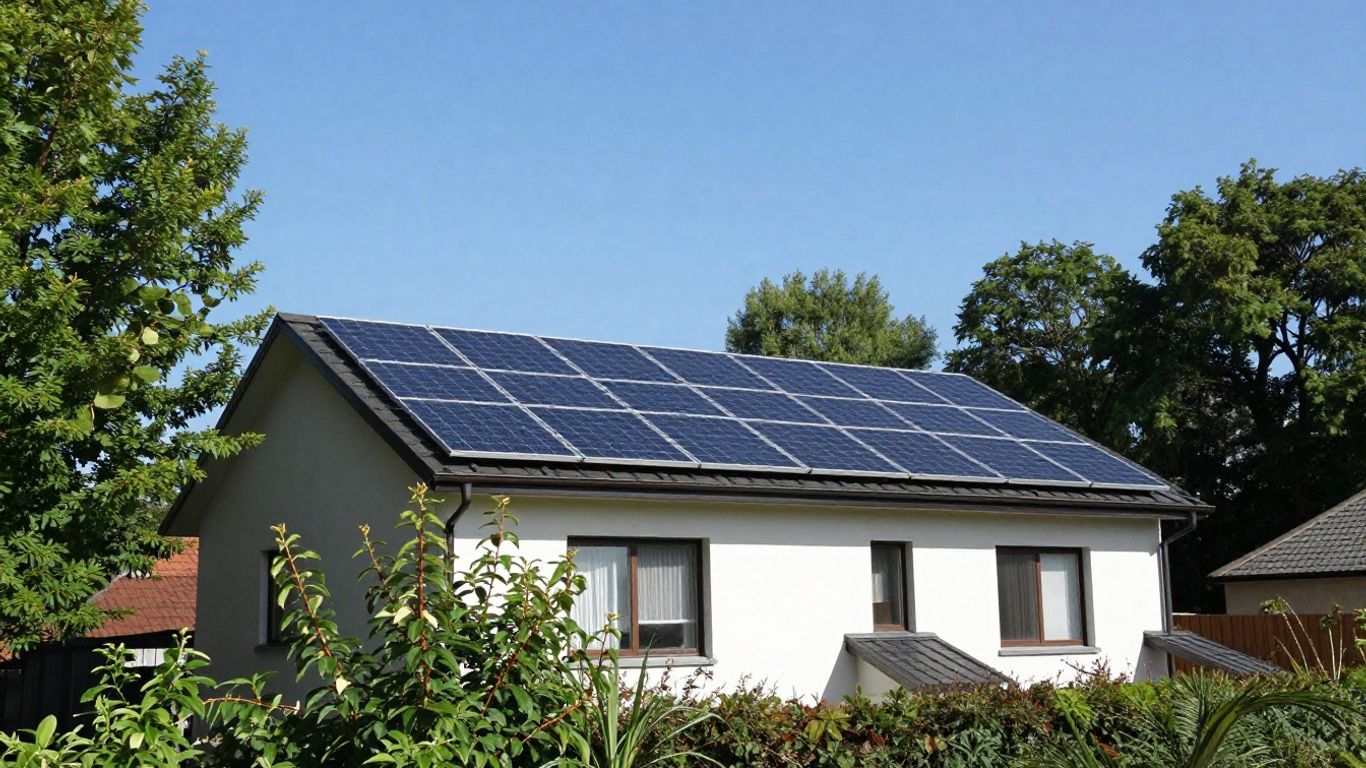
The return on investment for solar panels installed on a 100 m² house depends mainly on your region, the roof’s exposure, and your consumption habits. On average, the payback period for a solar installation is around 12 to 15 years. This period can be reduced if you optimise your self-consumption or take advantage of favourable resale tariffs. The actual savings are generally observed from the first year:
| Installation Size | Estimated Cost (including installation) | Annual Savings | Payback Period |
|---|---|---|---|
| 3 kWp | €7,000 – €9,000 | €400 – €500 | 12 to 14 years |
| 6 kWp | €11,000 – €14,000 | €700 – €900 | 12 to 15 years |
| 9 kWp | €16,000 – €20,000 | €1,000 – €1,400 | 13 to 16 years |
Many households see their electricity bills decrease from the first few months, making this type of investment attractive, even if not located in the sunniest region of France.
Optimising Production for Quick Profitability
A few actions and tips can help increase the profitability of your solar project:
- Avoid sources of shade (trees, chimneys) near the panels to maximise production throughout the year.
- Adapt the installed power output to your consumption, particularly by checking the roof orientation and the tilt of the modules.
- Prioritise using electrical equipment during the day to maximise the use of your own production.
- Consider a self-consumption bonus that applies for the first five years, thus reducing the purchase cost of the installation see solar panel profitability.
Impact of Self-Consumption with Surplus Sale
Adopting partial self-consumption with surplus sale allows for faster profitability of the entire system than self-consumption alone. You directly consume the energy produced to offset your needs, then sell the remainder at a guaranteed rate over 20 years (e.g., €0.1339/kWh for power up to 9 kWp).
The advantages:
- An annual supplementary income from sales.
- A secure long-term purchase price associated with an EDF OA contract.
- A reduction in energy bills that can reach 70% in some cases.
By combining savings on bills, government bonuses, and income from selling surplus electricity, the profitability of solar panels is now within reach for the majority of homeowners with high-performance solar systems.
Cost of a Solar Installation for an Autonomous Home
Number of Panels to Cover 100% of Needs
For a 100 m² house aiming for complete energy autonomy, meaning not connected to the electricity grid, the number of solar panels required is significantly higher. An installation capable of meeting all your annual electricity needs must be planned. This can translate into a setup of 20 to 40 solar panels, depending on your specific consumption and the efficiency of the chosen panels. The goal is to produce enough energy during sunny periods to compensate for times when production is low or non-existent.
Necessity of a Storage Battery
Energy autonomy implies being able to use the electricity produced even when the sun is not shining, particularly at night or during cloudy weather. This is where the storage battery comes in. It allows you to store excess energy produced during the day to release it when demand exceeds instantaneous production. Without this component, total autonomy is not achievable. The cost of these batteries represents a significant portion of the total installation budget.
Comparison with a Grid-Connected Installation
A solar installation designed for total autonomy is a more substantial investment than a standard grid-connected installation. The initial cost is higher, not only due to the larger number of panels but also, and especially, due to the need to integrate a high-performance storage system. Furthermore, the payback period is generally longer for an autonomous installation, as there is no sale of surplus electricity to the grid to offset expenses. However, it offers complete energy independence, which can be a sought-after advantage by some homeowners. It is important to accurately assess your needs and budget before embarking on such a project. For an idea of prices, some autonomy kits are available around €200.00.
Complete energy autonomy for a 100 m² house requires meticulous planning, a higher initial investment, and the essential integration of a battery storage system. The number of panels required is greater than for a standard installation, aiming to cover 100% of annual needs.
Connecting Solar Panels to the Grid
Once your solar panels are installed, they need to be connected to the electricity grid. Whether you plan to consume all your production or sell the surplus, this connection is a mandatory step. Fortunately, for individuals producing electricity for their own consumption with surplus resale, connection costs are generally covered by Enedis. This means there are no additional expenses to anticipate on this front for your project.
Coverage of Connection Costs by Enedis
This is good news: in most cases of self-consumption with surplus resale, Enedis covers the costs related to connecting your solar installation to the public grid. This greatly simplifies the overall budget of your project. You just need to ensure that your installation complies with current standards to be eligible for this coverage.
Installation of a Second Electricity Meter
If you opt for selling the surplus of your solar electricity production, a modification of your current electrical installation will be necessary. In practice, this often involves installing a second electricity meter. This meter will be used to accurately measure the amount of electricity you feed back into the grid, and which will therefore be sold to an operator. This point is important to anticipate in the overall quote.
Impact on the Total Installation Cost
Although connection costs are often covered by Enedis, other work may sometimes be required. For example, if your house is not located in the immediate vicinity of the connection point, civil engineering work such as digging a trench may be necessary. These interventions, if required, will add to the cost of your installation. It is therefore essential to discuss all these aspects thoroughly with your installer to get an accurate estimate of the total budget. Do not forget that the inverter and cabling are also elements that are included in the total cost calculation, and their quality can influence the longevity and performance of your system. For a safe installation, a DC isolator is essential on the circuit between the panels and the inverter [e7cb]. Furthermore, ensure that the chosen inverter is certified according to the required standards, and check if a municipal permit is necessary for your project [905d].
Grid connection is a technical step that ensures the connection of your solar production to the general electrical system. It allows either to feed back surplus energy or to benefit from an electricity supply when your production is insufficient.
Here are some points to consider regarding the connection:
- Coverage by Enedis: In most cases of self-consumption with surplus resale, Enedis covers the connection costs.
- Second meter: An installation for surplus resale often requires a second meter to measure the electricity fed into the grid.
- Ancillary work: Additional work (trenches, etc.) may sometimes be necessary and impact the total cost.
To Conclude on Your Solar Project
Installing solar panels for a 100 m² house represents a definite investment, but one that can prove very profitable in the long term. Costs vary considerably, between €6,000 and €24,000, depending on the chosen power output and the type of installation. Don’t forget to look into government aid, such as the self-consumption bonus or reduced VAT, as it can really help lower the bill. The most important thing is to correctly size your installation based on your actual needs. A professional can help you gain clarity. Ultimately, it’s a step towards energy independence and a gesture for the planet, so it’s worth considering seriously.
Frequently Asked Questions
What is the average cost to install solar panels on a 100 m² house?
The budget for installing solar panels on a 100 m² house generally ranges between €6,000 and €24,000. This price includes the panels themselves, the inverter that converts the current, and the labour for installation. For a small 3 kWp installation, expect rather between €6,000 and €10,500. For a larger 9 kWp installation, the budget can go up to €24,000.
How are solar panel prices calculated?
The price depends on several factors. The total power output of the installation, measured in kilowatt-peak (kWp), is a key factor. The more electricity you want to produce, the more power you will need, and thus the higher the cost will be. The area of your roof is also important, as it determines how many panels can be installed. Finally, the quality of the materials and the complexity of the installation influence the final price.
What government aid is available to reduce the cost of solar panels?
The government offers several aids to help you finance your solar project. There is, for example, the self-consumption bonus, which provides financial assistance per kilowatt-peak installed. In addition, the VAT rate can be reduced to 10% for installations of 3 kWp or more, which lowers the bill. There are also other financial aid schemes to explore.
Is the installation of solar panels included in the total price?
Yes, the total price quoted generally includes the installation of solar panels. It is important to verify that installation by a professional is included in the quote. The cost of installation can vary, particularly between a simple roof installation (overlay) and a more discreet integration into the roof (integrated into the building), the latter often being more expensive.
What is the impact of storage batteries on the cost of a solar installation?
Adding storage batteries increases the total cost of your solar installation. These batteries are used to store electricity produced during the day so that you can use it in the evening or when there is no sun. If you are aiming for complete energy autonomy, investing in batteries is necessary, but this represents a significant additional cost.
How do I know how many solar panels I need to install for my 100 m² house?
To determine the number of solar panels needed for your 100 m² house, you first need to estimate your annual electricity consumption. Then, calculate the total power output (in kWp) you need to cover this consumption. Finally, divide this power output by the power output of each panel to know how many modules you need. Your roof area must also be taken into account.
What is kWp and how does it influence the price?
kWp stands for kilowatt-peak. It is a measure that indicates the maximum power a solar panel can produce under ideal conditions. The higher the kWp of your installation, the more electricity it will produce, but the higher its cost will be. Installations for a 100 m² house are often between 3 and 9 kWp.
Is it profitable to install solar panels in France?
Yes, installing solar panels in France is generally profitable. The time required to recoup your investment, known as the payback period, is on average 12 years. This period can be shorter if your installation is well-oriented (ideally south-facing) and if you consume part of the electricity produced (self-consumption), which allows you to save on your bill.