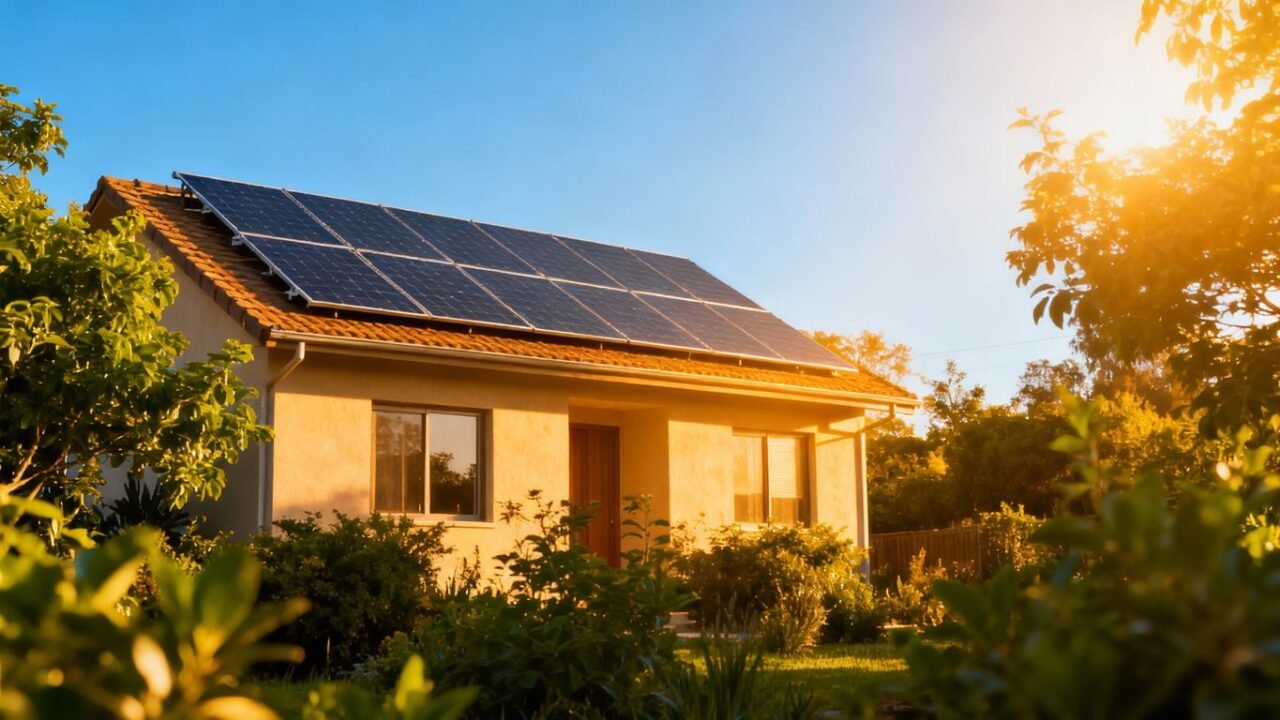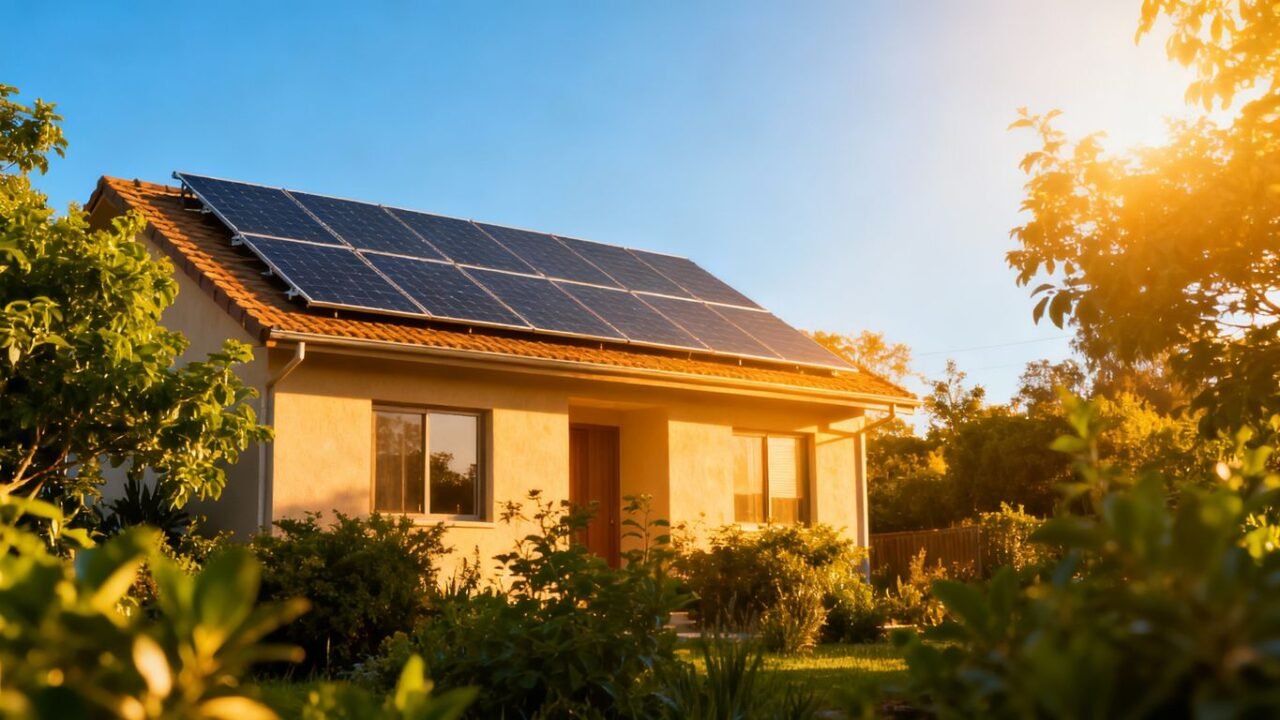
The idea of making your home energy-independent is a bit like wanting to regain control. No more rising bills, power outages that cut everything off, and that constant dependence on the grid. We hear a lot about self-sufficient homes, especially with the sun giving us free energy. But is it really as simple as we think, especially here in Quebec, with our harsh winters? We’ll take a closer look, without getting lost in complicated terms. The goal is to understand what being self-sufficient really means and if it’s within everyone’s reach.
Key Takeaways
- A self-sufficient home produces its own energy, reducing or eliminating the need for the traditional grid. Self-consumption, which involves using your own production, is a step towards this independence.
- Before producing energy, you must first reduce your consumption. This involves good insulation, efficient windows, and low-consumption appliances.
- Photovoltaic solar is a popular option, but supplements like wind or geothermal can be considered depending on the location. Generators serve as a reliable backup.
- Storing produced energy, particularly with batteries, is essential for using it when the sun isn’t shining. Hot water can also serve as supplementary storage.
- In Quebec, total self-sufficiency is a challenge due to the climate and high heating needs. Partial self-sufficiency, which ensures the operation of essential appliances during outages, is often a more realistic and economical solution.
Understanding the Concept of a Self-Sufficient Home
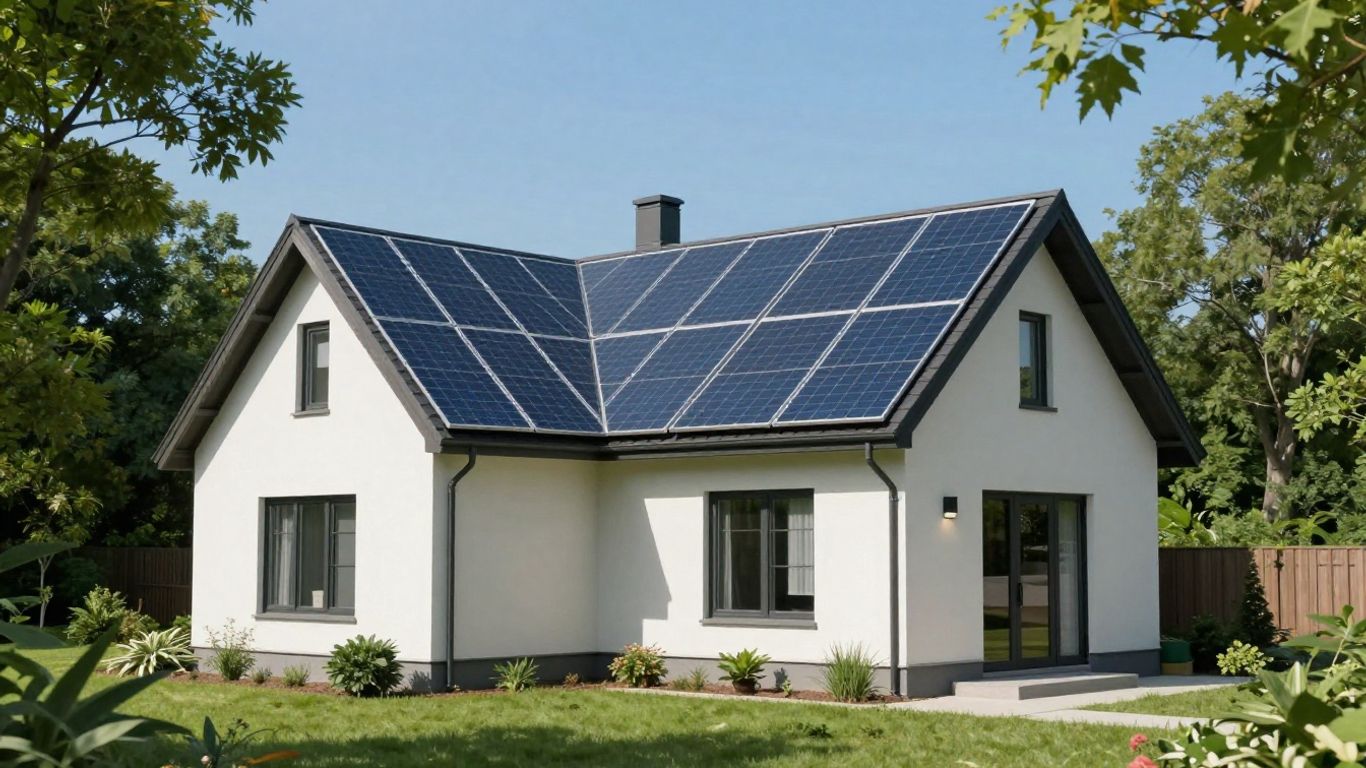
The idea of a home that manages its own energy, it’s a dream, isn’t it? No longer depending on suppliers, being protected from power outages, producing your own electricity… On paper, it’s very attractive. But concretely, what does it really involve? It’s important to fully grasp this concept before embarking on projects involving solar panels or batteries.
Defining Residential Energy Self-Sufficiency
When we talk about a self-sufficient home, we often think of a home that has no connection to the public electricity grid. That’s the ideal, but it’s also the most complex level to achieve. In reality, residential energy self-sufficiency can take many forms. It’s not always about a total and permanent disconnection from the grid. Sometimes, the goal is simply to have a reliable backup energy source in case of problems.
Distinguishing Self-Sufficiency from Self-Consumption
There’s a notable difference between self-sufficiency and self-consumption. Self-consumption is when you produce your own electricity, for example with solar panels, and you use it directly in your home. It’s an excellent way to reduce your bills and your environmental impact. However, this doesn’t mean you are completely self-sufficient. You can still be connected to the grid and even depend on it to compensate for times when your production is insufficient. Self-sufficiency goes further: it aims to be able to operate without the grid, at least for some of your needs, and ideally, for an extended period.
The Different Levels of Energy Self-Sufficiency
Energy self-sufficiency is not an all-or-nothing concept. There are several stages:
- Partial Self-Sufficiency: The goal is to be able to power the most important appliances (refrigerator, basic lighting, essential heating system) during a power outage. The rest of the house may be out of service.
- Targeted Self-Sufficiency: This involves meeting specific needs at certain times. For example, ensuring the power supply for a pump or a communication system for a determined duration.
- Total Self-Sufficiency: The home operates independently of the public electricity grid, 365 days a year. This requires significant energy production and storage.
Understanding these distinctions is the first step. It helps avoid aiming for an unrealistic goal and better adapt the technical solution to your actual needs and budget. Total self-sufficiency is possible, but it involves considerable compromises and investments, especially in a climate like Quebec’s.
The Foundations of a Self-Sufficient Home
For a home to one day claim energy self-sufficiency, we must first ensure that the building itself is as efficient as possible. It’s a bit like trying to fill a leaky bucket: if you don’t fix the holes, you’ll waste a lot of water (energy) unnecessarily. The idea isn’t to live in the cold or darkness, but rather to be smart in design and renovations.
Prioritising Building Energy Efficiency
Before even thinking about solar panels or batteries, the first and most important step is to reduce your home’s energy needs as much as possible. This involves a thorough analysis of your home’s performance. We need to identify where energy is escaping. A well-designed home consumes less, which greatly simplifies the task of making it self-sufficient. Think about it: the less energy you need, the less you need to produce and store. It’s a simple but powerful logic.
Optimising Insulation and Ventilation
Insulation is key to keeping heat inside in winter and coolness in summer. We’re talking about the building envelope: walls, roof, floor, not forgetting windows and doors. Good insulation prevents heat loss through conduction and convection. Then there’s ventilation. A very well-insulated home absolutely must be well-ventilated to ensure good air quality and prevent moisture problems. The ideal is to opt for a controlled mechanical ventilation system with heat recovery (HRV). This system renews indoor air while recovering some of the heat from the extracted air to warm the incoming fresh air. This is a significant energy saving, especially during the cold months. Installing photovoltaic solar panels can be an excellent idea, but it will be all the more effective if the house consumes little.
Choosing Low-Consumption Appliances
Once the building envelope is optimised, we need to look at the appliances we use daily. Household appliances, lighting, heating and cooling systems represent a significant portion of a home’s consumption. Opting for high-energy-efficiency certified appliances (like those with the ENERGY STAR label) can make a considerable difference. For example, replacing an old, energy-guzzling refrigerator with a recent low-consumption model can halve, or even more, the electricity demand of that appliance. The same applies to lighting: switching to LED bulbs consumes much less than traditional bulbs. Every action counts to reduce the overall load of the home’s energy system. The goal is to minimise the power drawn by the various appliances, especially during peak consumption periods. A 9kW solar panel system can cover a large part of the needs, but it’s always better to reduce these needs upstream.
Renewable Energy Production Technologies
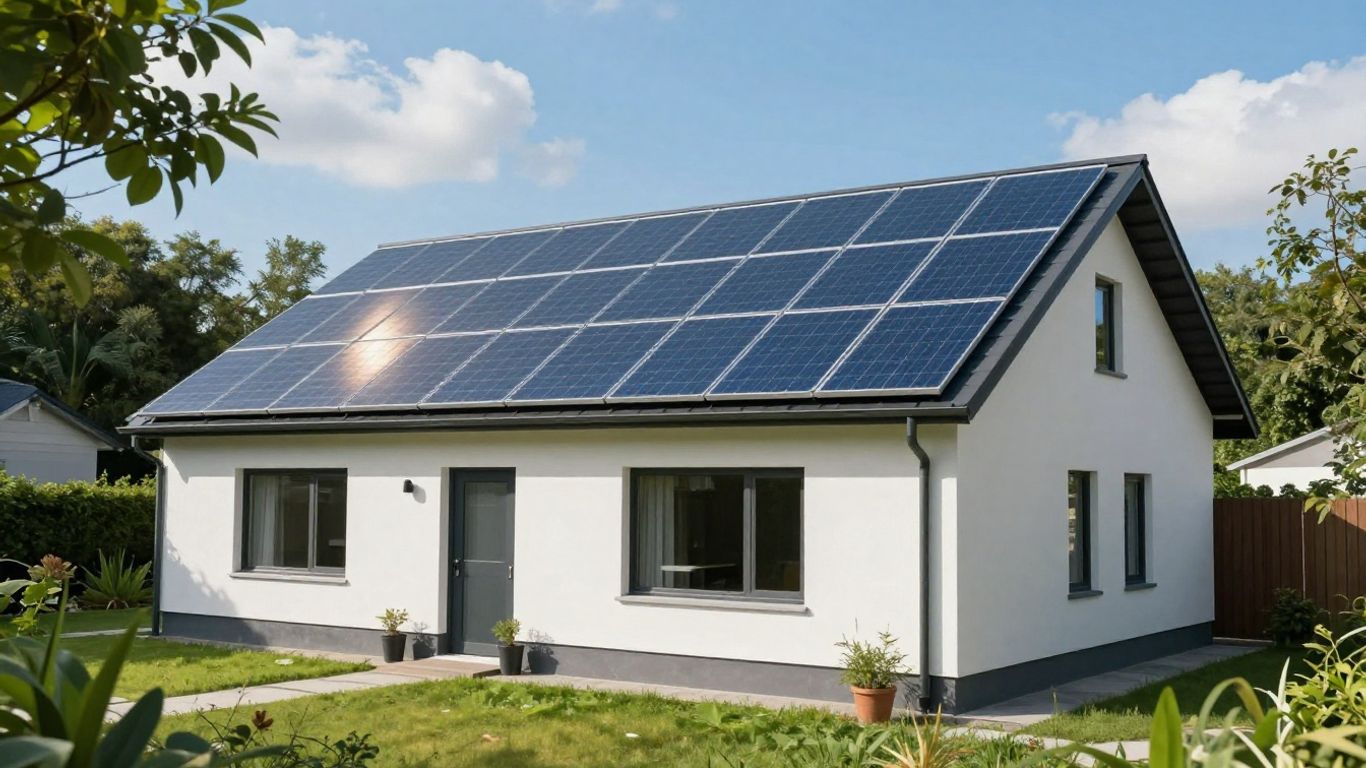
For a home to become energy-independent, we naturally need to think about how to produce that energy. Fortunately, there are several renewable options that can help us achieve this. Let’s be honest, it’s a bit like choosing the right tools for a project: you need to find what best suits your situation.
The Potential of Photovoltaic Solar Panels
Solar panels are probably the first thing that comes to mind when talking about renewable energy at home. They convert sunlight into electricity. For them to work well, you ideally need a south or southwest orientation and to consider the sunshine in the area where you live. In Quebec, a 10 kW system can produce a good amount of electricity over a year, enough to cover a large part of a normal home’s needs. It’s a solution with a long lifespan, often 25 to 30 years, and it’s becoming increasingly accessible, much like plug-and-play solar kits.
The Contribution of Domestic Wind Energy
If you live in an area with a lot of wind, a small wind turbine could be a good idea. It can complement solar, especially in winter when the sun is less present. In Quebec, winter winds can really help compensate for this drop in sunshine. You just need to check local regulations regarding height and noise before proceeding. This is a technology that can last 20 to 25 years.
The Efficiency of Geothermal Energy for Heating and Cooling
Geothermal is a bit different. It uses the stable temperature of the ground to heat your home in winter and cool it in summer. The initial investment may seem high, but the efficiency is really there. It consumes less energy than traditional heating systems, which can make a big difference on bills in the long run. Furthermore, these systems can last a very long time, sometimes 50 years.
Here’s a small comparison table to give you an idea:
| System | Estimated Initial Cost | Annual Production (kWh) | Lifespan (years) |
|---|---|---|---|
| Photovoltaic Solar (10 kW) | $25,000 – $35,000 | 11,000 – 13,000 | 25-30 |
| Domestic Wind (5 kW) | $20,000 – $30,000 | 8,000 – 12,000 | 20-25 |
| Geothermal (complete) | $30,000 – $45,000 | 15,000 – 20,000 | 25-50 |
Choosing the right combination of these technologies is key to reliable renewable energy production tailored to your home.
Ensuring Energy Continuity with Generators
Even with the best solar and storage technologies, there are times when the energy produced is not enough. This is where a generator comes in, acting as insurance for your self-sufficiency. It ensures that your home remains powered, regardless of weather conditions or grid outages.
The Role of Generators in a Self-Sufficient System
A generator is not there to replace renewable sources, but to supplement them. Think of it as a reliable backup. When the sun doesn’t shine for several days, or your batteries are depleted, the generator takes over. It can also compensate for peak demand, thus avoiding overloading your batteries or having to install an oversized solar system. Integrating a generator, often propane or natural gas powered, ensures a readily available energy source, which is particularly important in the Quebec climate.
Choosing the Right Type of Generator
For a self-sufficient home, the choice of generator depends on several factors. The size, measured in kilowatts (kW), is paramount. A 20 to 25 kW generator is often sufficient for a typical single-family home in Quebec, but you need to consider your actual consumption and interaction with your other systems. The type of fuel is also a consideration: propane offers good availability, while natural gas can be more convenient if you are already connected. It is advisable to consult specialists for precise sizing.
Generator Integration and Operation
Generator installation must be carried out by certified professionals. It must be safely connected to your electrical system, often via an automatic transfer switch. This system detects power outages and starts the generator in seconds, switching your home’s power supply to it. Once the grid power is restored, the switch returns the power to the grid and shuts down the generator. Regular maintenance, including periodic checks and oil changes, is necessary to ensure its longevity and reliability. A well-maintained generator can last 15 to 25 years. Annual maintenance of solar panels, for example, is part of a preventive program that ensures the reliability of the entire self-sufficient system.
Adding a generator to your energy self-sufficiency system is not a weakness, but a smart strategy for maximum resilience. It bridges the gaps of intermittent sources and provides you with peace of mind, especially during critical periods of the year.
Energy Storage: A Necessity
For a home to be truly self-sufficient, it’s not enough to produce its own electricity. It must also be able to store it for times when production is low or non-existent. Think about it: the sun doesn’t shine at night, and very cloudy days can significantly reduce your solar panel production. This is where energy storage comes into play.
Battery Storage Solutions
Batteries have become the most common solution for storing electricity produced by renewable sources. Technologies have evolved significantly, and lithium-ion batteries, like those found in electric cars or domestic systems from reputable brands, offer good energy density and a respectable lifespan. They allow you to store excess solar energy produced during the day for use in the evening, at night, or during periods of low sunshine. The sizing of these battery banks is a key step, as you need to be able to cover the home’s needs during periods without production, while also considering the battery’s depth of discharge to avoid premature wear.
Storing Solar Energy in the Water Heater
Another approach, often more economical for certain uses, involves using surplus solar electricity to heat water. Instead of sending excess electricity to expensive batteries, it can be used to power a heating element in a hot water tank. The stored solar energy is thus converted into heat in the water, ready to be used for showers or dishes. This is a smart way to utilise produced energy, especially if you have significant hot water needs. It allows for a reduction in the size of the battery bank needed for overall self-sufficiency.
Correctly Sizing Your Battery Bank
Choosing the right storage capacity is a balancing act. First, you need to accurately assess your electricity consumption, especially during periods of lowest production (e.g., winter months in Quebec). Then, you need to consider the duration for which you want to be able to operate without external production (one day, two days, more?). Manufacturers offer tools to help with this calculation, but it’s often wise to consult a professional. An undersized bank will not provide the expected self-sufficiency, while an oversized bank represents an unnecessarily high investment cost. You also need to consider the battery’s charge and discharge power so that they can meet the peak demand of your appliances.
Energy storage is the essential link that transforms an energy-producing home into a truly self-sufficient home, capable of managing its resources even when natural conditions are not optimal.
Here are some points to consider for sizing:
- Average Daily Consumption: How many kWh do you consume in 24 hours?
- Desired Days of Autonomy: How many days without production do you want to be able to last?
- Depth of Discharge (DoD): What is the battery’s actual usable capacity (often 80-90% for lithium-ion)?
- Peak Power: What is the maximum power the storage system must be able to provide instantly?
The Challenges of Total Self-Sufficiency in Quebec
The idea of a completely self-sufficient home in terms of energy, it’s appealing, isn’t it? No longer depending on the grid, avoiding outages, producing your own electricity… On paper, it sounds like freedom. But in Quebec, the reality is a bit more complex. We need to ask the right questions: is it really achievable, at what cost, and for what uses? Between the dream of complete self-sufficiency and the actual needs of a home here, there’s a gap that needs to be understood.
The Impact of Climate and Seasonality
We know Quebec winters: long, cold, and with little sunshine. Yet, it’s precisely during this period that our electricity consumption skyrockets, especially for heating. Producing enough solar energy when sunshine is scarce, and storing enough to get through the darkest months, is a major challenge. The sun is our ally, but it’s not always there when we need it most. Therefore, we must plan for robust systems that take these seasonal variations into account. Thinking about energy self-sufficiency in Quebec means first thinking about our climate.
Managing Power Demand from Appliances
A home doesn’t just consume energy over time; it also demands power at specific moments. Think about when several appliances are running at the same time: the oven, the washing machine, the water heater, perhaps even an electric car charging station. These demand peaks, called peak power, impose significant technical limitations. A self-sufficient system must be able to provide this instantaneous power, which requires more substantial sizing for both production and storage. Therefore, wise choices must be made about appliances used simultaneously.
Constraints Related to Winter Storage
Producing energy is one thing, but storing enough of it for several days, or even weeks, is another. The volume of batteries required for complete self-sufficiency, especially in winter, quickly becomes very high. These batteries represent a significant cost and require dedicated space. Furthermore, their performance can be affected by low temperatures. Therefore, a balance must be struck between the desired level of self-sufficiency and realistic storage capacity, especially if aiming for total independence during the coldest months. For those considering this lifestyle, it is useful to consult resources on residential energy self-sufficiency.
Total self-sufficiency is technically possible, but it often involves significant compromises on daily usage and a substantial financial investment. For the majority of Quebec households, a partial self-sufficiency approach, focused on resilience and covering essential needs, represents a more realistic and affordable solution.
Partial Self-Sufficiency: A Realistic Approach
The idea of a home completely independent of the electricity grid may seem attractive, but for most households, aiming for partial self-sufficiency represents a more pragmatic and achievable strategy. It involves ensuring that fundamental needs are met, even in the event of an outage, without necessarily seeking to eliminate all dependence on the grid. This approach provides increased security while controlling system costs and complexity.
Identifying Essential Loads to Power
The first step is to list the appliances and systems whose operation is essential for comfort and safety. This generally includes:
- Refrigeration appliances (refrigerator, freezer).
- Basic lighting in main rooms.
- Communication systems (internet router, telephone).
- An auxiliary heating source or maintaining a minimum temperature.
- Essential pumps (well, central heating system).
It is important to accurately assess the consumption of each appliance to correctly size the backup system. The goal is not to run all energy-intensive appliances simultaneously, but to ensure the continuity of vital functions.
Prioritising Critical Circuits for Resilience
Once the essential loads are identified, it is necessary to determine which electrical circuits in the house are most important to keep operational. This may involve separating circuits
Assessing the Relevance of Self-Sufficiency for Your Home
Before diving headfirst into installing solar panels or a battery system, it’s wise to take a moment to assess whether energy self-sufficiency truly meets your needs and situation. It’s not a one-size-fits-all solution, and what works for one neighbour won’t necessarily work for you. You need to honestly look at what you consume and what you’re willing to do.
Analysing Your Actual Energy Needs
The first, and perhaps most important, step is to understand precisely how much energy your household consumes and when. It’s not just about looking at your monthly bill. You need to go further. Think about the power drawn by your appliances: when the oven, heat pump, and water heater are running at the same time, the demand is much higher than when you’re just using a lamp. A detailed analysis of your consumption, ideally with the help of a professional, will give you a clear picture of your habits. This will help you determine the appropriate *sizing* of your solar and storage system, thus avoiding unnecessary over-investment or, conversely, an undersized system that wouldn’t meet your expectations. Knowing what percentage of your needs you could cover with solar panels is key information for evaluating your solar potential.
Understanding Investment and Maintenance Costs
Energy self-sufficiency represents a significant initial investment. The cost varies greatly depending on the level of self-sufficiency targeted, the size of your home, and the technologies chosen. You need to consider not only the price of solar panels and batteries, but also that of inverters, charge controllers, and potentially a backup generator. Don’t forget the installation costs by qualified professionals. Beyond the purchase, maintenance is a factor not to be overlooked. Solar panels require periodic cleaning, batteries have a limited lifespan (often 10 to 15 years) and will need to be replaced, and generators require regular maintenance. You also need to budget for fuel costs for the latter. Realistic budget planning must include these recurring expenses to avoid unpleasant surprises.
Determining the Level of Self-Sufficiency Adapted to Your Situation
Total self-sufficiency, while appealing, is not always the most practical or cost-effective solution for the majority of households, especially in Quebec with its harsh winters. It is often more sensible to aim for partial self-sufficiency. This could mean:
- Ensuring power for essential appliances like the refrigerator, basic lighting, communication devices, and some heating.
- Prioritising critical circuits that ensure your safety and minimal comfort in case of an outage.
- Designing a system that can operate autonomously for several hours, or even a few days, to get through grid outages without too much inconvenience.
This approach reduces your dependence on the grid and increases your resilience, while controlling system costs and complexity. It’s about finding the right balance between your desires for independence and the reality of your consumption and budget. The goal is to achieve coverage of your solar needs, for example, by calculating the ratio between your annual production and your consumption, as suggested by a simple calculation method.
Assessing the relevance of energy self-sufficiency must be a personalised process. It involves an honest analysis of your consumption habits, a clear understanding of the costs associated with investment and maintenance, and a realistic definition of the level of energy independence you wish to achieve. It is often more advantageous to aim for a well-designed partial self-sufficiency rather than a total self-sufficiency that is difficult to maintain.
The Benefits of a Self-Sufficient Home
Reducing Dependence on Traditional Grids
Choosing a self-sufficient home means choosing to regain control of your energy supply. No more feeling at the mercy of electricity suppliers and price fluctuations. By producing your own energy, mainly thanks to the sun, you significantly reduce your dependence on the public grid. This offers you peace of mind, especially in a context where power outages can occur more frequently due to climatic events or aging infrastructure. It’s a step towards greater personal *autonomy* and increased resilience for your home.
Protecting Against Price Hikes
Energy costs continue to rise, impacting household budgets. A self-sufficient home, by producing its own electricity, effectively protects against these unpredictable increases. Once the initial investment for solar panels and the storage system is made, the energy produced is free. This translates into substantial savings on your electricity bills in the long term. Think of it as an investment that pays off, year after year, by stabilising your energy expenses. It’s a sound financial strategy for your home’s future.
Contributing to Greenhouse Gas Emission Reduction
One of the most significant advantages of a self-sufficient home is its positive impact on the environment. By using renewable energy sources like solar, you reduce your carbon footprint. Locally produced, clean energy avoids the emission of greenhouse gases often associated with energy production from thermal power plants. It’s a concrete way to participate in the fight against climate change and build a more sustainable future for generations to come. Every kilowatt-hour produced by your solar panels is a small victory for the planet. A self-sufficient home is a step towards a more ecological lifestyle.
Conclusion
Energy self-sufficiency with solar is attracting more and more homeowners, and we understand why. Being able to produce your own electricity, reduce your bills, and gain independence is tempting. But in reality, every home is different, and you need to carefully weigh the advantages and constraints before getting started. Solar is a great solution, especially when combined with other systems and when you adapt your consumption. For some, aiming for partial self-sufficiency is more than enough and already provides real peace of mind. For others, total self-sufficiency requires significant investment and careful daily management. What matters is knowing your needs well and building a project that suits your situation. Ultimately, energy self-sufficiency is not an unattainable dream, but rather a thoughtful process, to be adapted according to your priorities and lifestyle.
Frequently Asked Questions
What is an energy self-sufficient home?
An energy self-sufficient home is a home that produces all the electricity it needs itself, without relying on the public electricity grid. It uses renewable energy sources like the sun or wind, and stores energy to be able to use it when there is no sun or wind.
What is the difference between self-sufficiency and self-consumption?
Self-consumption is when you produce your own electricity (e.g., with solar panels) and use it directly. Self-sufficiency goes further: it’s being able to operate all year round without ever needing electricity from the grid, even during an outage.
Why want a self-sufficient home?
Living in a self-sufficient home means no more electricity bills, protection against price increases, and a contribution to the environment by using clean energy. It’s also a security measure in case of power outages.
What are the technologies for producing your own energy?
The most common technologies are photovoltaic solar panels, which convert sunlight into electricity. You can also use small wind turbines if you live in a windy area, or geothermal energy to heat and cool the home using the earth’s heat.
Is energy storage important?
Yes, storage is very important! Since the sun doesn’t shine at night and there can be windless days, you need to be able to keep the energy produced during the day to use it later. Special batteries are generally used for this.
Is total self-sufficiency easy to achieve in Quebec?
Total self-sufficiency is more complicated in Quebec because of winter, which is long, cold, and has less sunshine. Furthermore, our homes consume a lot of energy in winter for heating. Therefore, very efficient production and storage systems are needed, which is expensive.
What is partial self-sufficiency?
Partial self-sufficiency is a more realistic approach for most homes. Instead of aiming for complete independence from the grid, we ensure we have enough energy to run the most important appliances (like the fridge, lighting, essential heating) in case of an outage. It’s a way to be more resilient without investing huge sums.
What are the advantages of a self-sufficient or semi-self-sufficient home?
The main advantages are reduced energy costs, greater independence from electricity suppliers, better protection against power outages, and a positive contribution to the environment. It can also increase your home’s value.