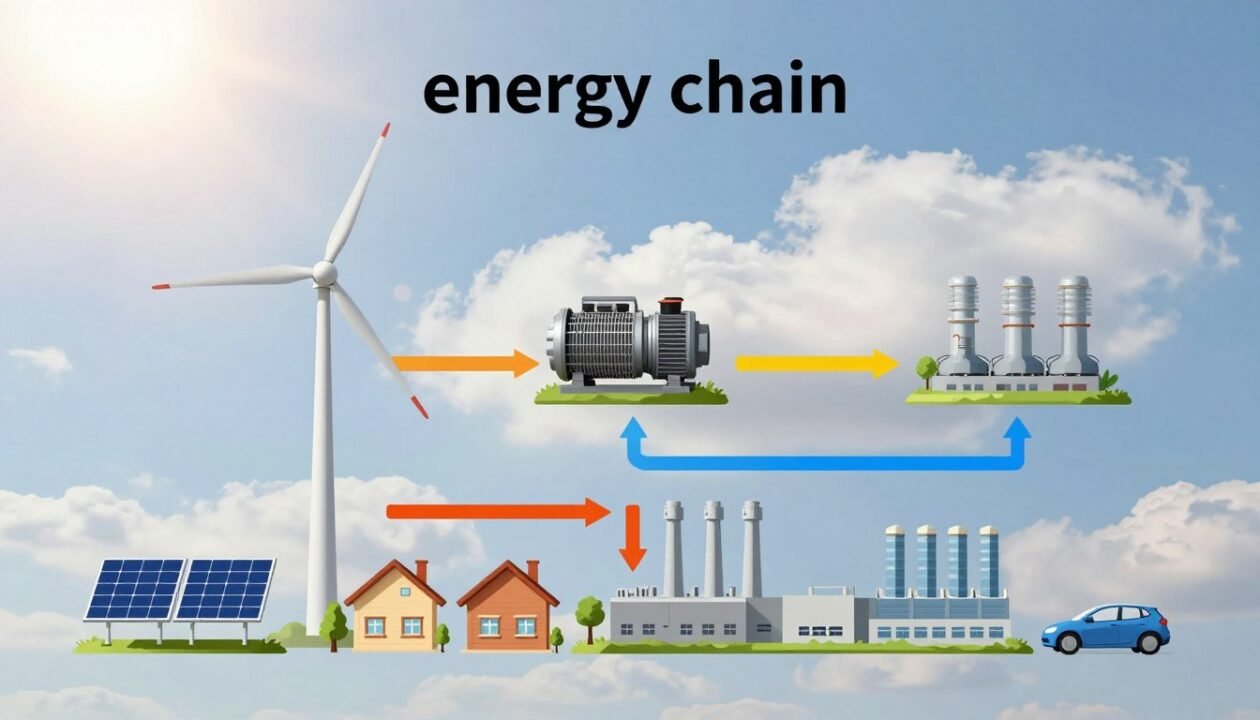
The sun, an inexhaustible source of energy, offers enormous potential for electricity generation. The photovoltaic panel, a key player in this energy transition, directly transforms light into usable current. Understanding how it works is the first step for anyone wishing to embark on the path of solar energy. This article explores the fundamental principles governing solar electricity production, from physical basics to current technologies, including the various components of an installation.
Key Points
- The photovoltaic panel converts sunlight into electricity through the photoelectric effect in semiconductor materials.
- A typical photovoltaic installation includes modules, an inverter to convert the current, and other essential equipment.
- The photovoltaic cell, composed of doped layers (n-type and p-type), uses the movement of electrons under the effect of photons to generate current.
- Silicon-based technologies, such as monocrystalline and polycrystalline cells, dominate the market, but innovations like thin films are progressing.
- The efficiency of a solar panel indicates the proportion of light energy converted into electricity and depends on several factors such as cell technology and installation conditions.
Understanding How a Photovoltaic Panel Works
The Physical Phenomenon Behind Solar Electricity
At the heart of solar electricity production lies a fascinating physical phenomenon: the photoelectric effect. Discovered in the 19th century, it explains how certain materials can generate an electric current when exposed to light. Imagine light particles, called photons, striking the surface of a special material. These photons carry energy. When they encounter the atoms of the material, they can transfer this energy to the electrons orbiting these atoms. If the photon’s energy is sufficient, it can dislodge an electron from its orbit. It is this movement of freed electrons that creates an electric current. This direct conversion of light into electricity is the very foundation of photovoltaic technology.
Semiconductor Materials at the Core of the Technology
For the photoelectric effect to work effectively, materials with very specific properties are needed. These are semiconductor materials. The most commonly used is silicon, the same element found in sand. But for it to become a good conductor of electricity under the effect of light, it must be treated. This is called doping. This treatment involves introducing small amounts of other elements into the silicon’s structure. This creates two types of materials: ‘n’-type (with an excess of electrons) and ‘p’-type (with a lack of electrons, or ‘holes’). When these two types of materials are brought into contact, a special zone forms, called a p-n junction. It is at this point that the electric current will be generated when light strikes the cell.
Direct Conversion of Light into Electricity
The photovoltaic panel, as a whole, is designed to maximise this conversion. Once photons have freed electrons through the photoelectric effect in the semiconductor cells, the cell’s structure guides these electrons. They are forced to flow through an external electrical circuit before returning to their original position. It is this continuous flow of electrons that we call electric current. This current is initially direct current (DC). To be usable by our household appliances, it will then need to be converted into alternating current (AC) by a device called an inverter. The efficiency of this direct conversion depends on many factors, such as the quality of the materials, the cell design, and the sunlight conditions. Photovoltaic solar farms are large-scale examples of this technology in action.
Essential Components of a Photovoltaic Installation
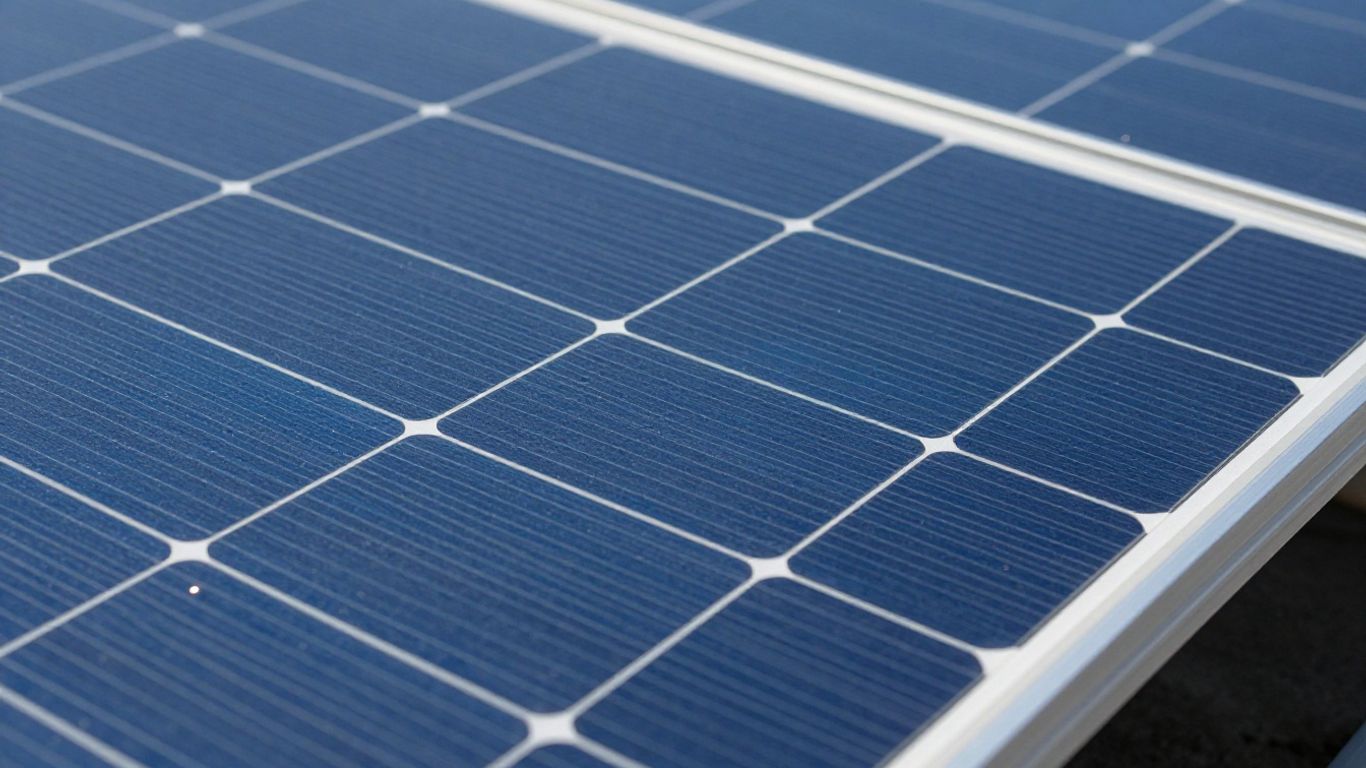
A photovoltaic installation, although seemingly simple, is actually an assembly of several elements that work together to transform sunlight into usable electricity. Each part plays a specific role in this conversion chain.
The Role of Photovoltaic Modules
Modules, often called solar panels, are the heart of any installation. It is at this level that the magic happens: sunlight is captured and converted into direct current through the photoelectric effect within the cells that make them up. The quality and technology of the modules directly influence the amount of energy produced. It is important to note that modules represent the first stage of conversion, and therefore the first source of potential energy loss if their efficiency is not optimal.
Current Conversion by the Inverter
The current produced by the panels is direct current (DC). However, most of our electrical appliances and the electrical grid operate on alternating current (AC). This is where the inverter comes in. This device is essential for converting DC to AC. Its selection is just as important as that of the panels, as an ill-suited inverter can limit the overall production of the installation. There are different types of inverters, such as central inverters, micro-inverters, or power optimisers, each with its advantages depending on the site configuration.
The Importance of Equipment Choice
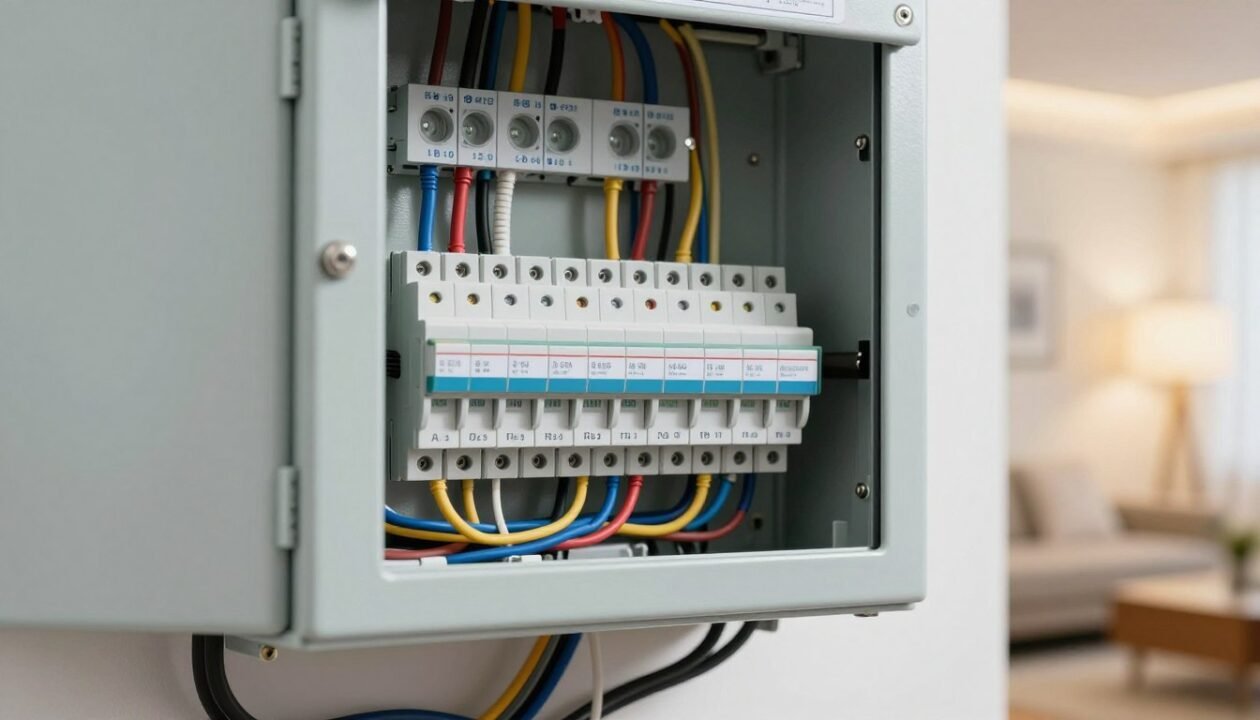
Beyond the panels and the inverter, a photovoltaic installation includes other elements, often grouped under the term « Balance of System » (BOS). This includes cables, connectors, mounting systems, and protective devices such as fuses, circuit breakers, and surge protectors. Each of these components must be carefully chosen to ensure the safety, reliability, and long-term performance of the entire system. A poor choice, for example, cables of insufficient cross-section, can lead to significant energy losses and even pose risks. A well-designed installation, even with average efficiency panels, can outperform a poorly equipped installation with high-end panels. Therefore, considering the entire production chain is essential to maximise the benefits of your solar project, whether for solar installation for self-consumption or for electricity resale.
Here is an overview of the key components and their functions:
- Photovoltaic Modules: Conversion of solar light into direct current.
- Inverter: Transformation of direct current into alternating current.
- Mounting System: Ensures the stability and orientation of the panels.
- Cabling and Connectors: Transport of electric current.
- Electrical Protections: Securing the installation (circuit breakers, surge protectors, etc.).
The overall efficiency of a photovoltaic installation does not depend solely on the performance of the panels themselves. The quality and compatibility of all components, from the first solar cell to the grid connection point, play a decisive role in the system’s final efficiency.
The Operating Principle of a Photovoltaic Cell
At the heart of every solar panel lies the photovoltaic cell, that small technological marvel that directly transforms sunlight into electricity. It is a fascinating process based on well-established physical principles.
Harnessing the Photoelectric Effect
It all starts with the photoelectric effect, a phenomenon discovered a long time ago. Basically, when light particles, called photons, strike certain materials, they can release electrons. It’s a bit like light giving electrons a boost to get them moving. This movement of electrons is precisely what we call an electric current. Without this effect, there would be no solar electricity.
The Structure of Doped Cells (n-type and p-type)
For this photoelectric effect to work effectively, solar cells use semiconductor materials, most often silicon. But this silicon is not used as is. It is treated, or ‘doped’, to create two distinct layers with different electrical properties:
- The n-type layer: Atoms with one more electron than silicon are added. This creates an excess of electrons, hence the ‘n’ for negative.
- The p-type layer: Here, atoms with one fewer electron are added. This creates ‘holes’, which are like absences of electrons, giving a positive character, hence the ‘p’.
When these two layers are brought into contact, a special zone forms at their interface, called a p-n junction. This is where the magic happens.
The Movement of Electrons Under the Effect of Photons
When photons from the sun strike the cell, they ‘hit’ the silicon atoms in both layers. If a photon has enough energy, it can dislodge an electron from an atom. This freed electron then begins to move. Thanks to the n-type and p-type layers and the p-n junction, there is a sort of electrical ‘slope’ that guides these freed electrons. They are pushed to cross the junction and flow into an external circuit. It is this continuous flow of electrons that generates the electric current we use. This current is initially direct current, which will then be converted into alternating current by an inverter to power our household appliances. Advances in thin films and organic photovoltaics are opening up new possibilities for making this conversion even more efficient and accessible.
Different Solar Cell Technologies
The landscape of solar cell technologies is quite varied, but one family of materials largely dominates the market. This is silicon, which powers the vast majority of photovoltaic panels found today.
The Dominance of Silicon-Based Technologies
Silicon is the material of choice for manufacturing solar cells, accounting for over 95% of global installations. Its abundant availability and well-understood semiconductor properties make it a logical choice. Continuous advances in purification and crystallisation techniques have led to constant improvements in efficiency and reductions in production costs over the years. We are also seeing a notable improvement in the average efficiency of silicon-based panels, rising from around 14% in the early 2010s to nearly 20% today.
Monocrystalline and Polycrystalline Cells
Within silicon-based technologies, two main categories stand out: monocrystalline and polycrystalline cells.
- Monocrystalline Cells: They are made from a single crystal of pure silicon. This process gives them a highly ordered atomic structure, which translates into better efficiency in converting light into electricity. They are often recognisable by their uniform black colour and cut corners.
- Polycrystalline Cells: Made from a silicon block composed of multiple crystals, their structure is less homogeneous. Although their efficiency is generally slightly lower than that of monocrystalline cells, their production cost is more affordable. They have a bluish appearance with visible crystal patterns.
The choice between these two technologies often depends on a trade-off between the desired performance and the budget allocated to the installation.
Innovations in Thin Films and Organic Photovoltaics
Facing the potential limitations of silicon, research is actively exploring other avenues. So-called « thin-film » technologies use much smaller amounts of semiconductor materials, sometimes only a few micrometres thick. These technologies can be based on silicon, but also on other materials such as cadmium telluride (CdTe) or copper indium gallium selenide (CIGS).
At the same time, organic photovoltaics, using semiconductor polymers (essentially plastics), are attracting growing interest. These materials are lightweight, flexible, and potentially very inexpensive to produce. Although their real-world efficiency is still being improved compared to silicon technologies, their flexibility opens up new possibilities for architectural integration. Research is also being conducted on concentrated photovoltaic (CPV) systems that use optics to focus light onto small, high-efficiency cells, thus reducing the amount of semiconductor material needed.
The Efficiency of a Photovoltaic Solar Panel
When we talk about solar panels, efficiency is a term we hear often. But what does it mean exactly? In simple terms, the efficiency of a photovoltaic panel is the proportion of solar energy it receives that it manages to convert into usable electricity. The higher this figure, the more efficient the panel. Current panels have varying efficiencies, but generally, values between 7% and over 20% are found.
Definition of Photovoltaic Efficiency
Efficiency is a bit like a panel’s grade on an exam: it measures its ability to convert sunlight into electric current. It is expressed as a percentage. For example, a panel with 18% efficiency means it converts 18% of the solar energy that reaches it into electricity. The rest is either reflected or lost as heat. It is a key measure for comparing the performance of different models.
Factors Influencing Electricity Production
Several elements play a role in the amount of electricity your installation will produce. The orientation and tilt of your roof are important; a south-facing orientation with a slope of about 30 to 35 degrees is often ideal. Shade, even partial, can have a notable impact. Temperature must also be considered, as panels are less efficient when it is very hot. The type of cells used (monocrystalline, polycrystalline) also influences overall efficiency. To optimise, it is good to check the roof structure and assess potential shading throughout the day and seasons. Even an installation with less-than-perfect conditions can be profitable.
The Impact of Efficiency on Overall Production
Higher efficiency means you will produce more electricity with the same panel area. This can be particularly interesting if you have limited roof space. For example, for a 9kW installation, choosing panels with better efficiency can cover a larger portion of your energy needs. It can also impact the return on investment of your project. Monocrystalline panels, for instance, generally offer higher efficiency than polycrystalline ones, but their cost is also higher. Therefore, a balance between performance and budget must be found for your solar project.
The performance of a solar panel is not static. It changes over time, with weather conditions, and the immediate environment. Good installation design, taking these factors into account, is therefore essential to maximise energy production in the long term.
The Operation of a Self-Consumption Installation
Photovoltaic self-consumption is the idea of producing your own electricity using solar panels installed at home and consuming it directly. It is a practice that is gaining popularity, and for good reason: it allows you to reduce your electricity bill while contributing to the energy transition. Basically, when the sun shines, your panels produce direct current. This electricity then passes through an inverter, which converts it into alternating current, the type you use to run your household appliances. The main goal is to consume as much of the energy you produce yourself as possible.
Producing and Consuming Your Own Electricity
The principle is simple: during the day, when your solar panels are producing at full capacity, the generated electricity directly powers your home. This means you use less electricity from the public grid, resulting in a reduction in your overall billed consumption. It should be noted that, on average, a typical installation can cover about 30% of a household’s needs. To optimise this share, it is advisable to adapt your consumption habits, for example, by running the washing machine or dishwasher during peak sunlight hours. Energy management systems can help to better visualise and control this production and consumption.
Savings on the Electricity Bill
The most tangible benefit of self-consumption is the savings realised. By consuming your own solar electricity, you buy less energy from the traditional supplier. The amount of savings depends on several factors, including the size of your installation, your consumption profile, and the price of grid electricity. Furthermore, there are grants such as the self-consumption bonus, which helps to reduce the initial cost of the installation. For example, for a 6 kWp installation, the bonus can amount to several hundred euros.
Injecting Surplus into the Grid
What happens when you produce more electricity than you consume? This is where surplus management comes in. The excess electricity is automatically injected into the public distribution grid. This surplus can be sold to a specialised organisation, such as EDF OA (Obligations d’Achat), which will pay you for this energy. The purchase tariffs vary according to the power of your installation. It is also possible to store this surplus in domestic batteries for later use, for example at night or on less sunny days, thus increasing your self-consumption rate. The choice between selling the surplus and storing it depends on your objectives and budget. To better understand the energy flow, it is useful to consult a photovoltaic electrical diagram.
Here is an overview of the options for managing surplus:
- Selling Surplus to EDF OA: Unconsumed electricity is sold at a fixed rate.
- Battery Storage: Energy is stored for later use, reducing reliance on the grid.
- Selling Surplus to Another Supplier: Some companies offer contracts to buy back your surplus.
Self-consumption with surplus sale is often more financially advantageous in the long term, especially with rising electricity prices, compared to selling the entire production.
The Difference Between Solar and Photovoltaic Panels
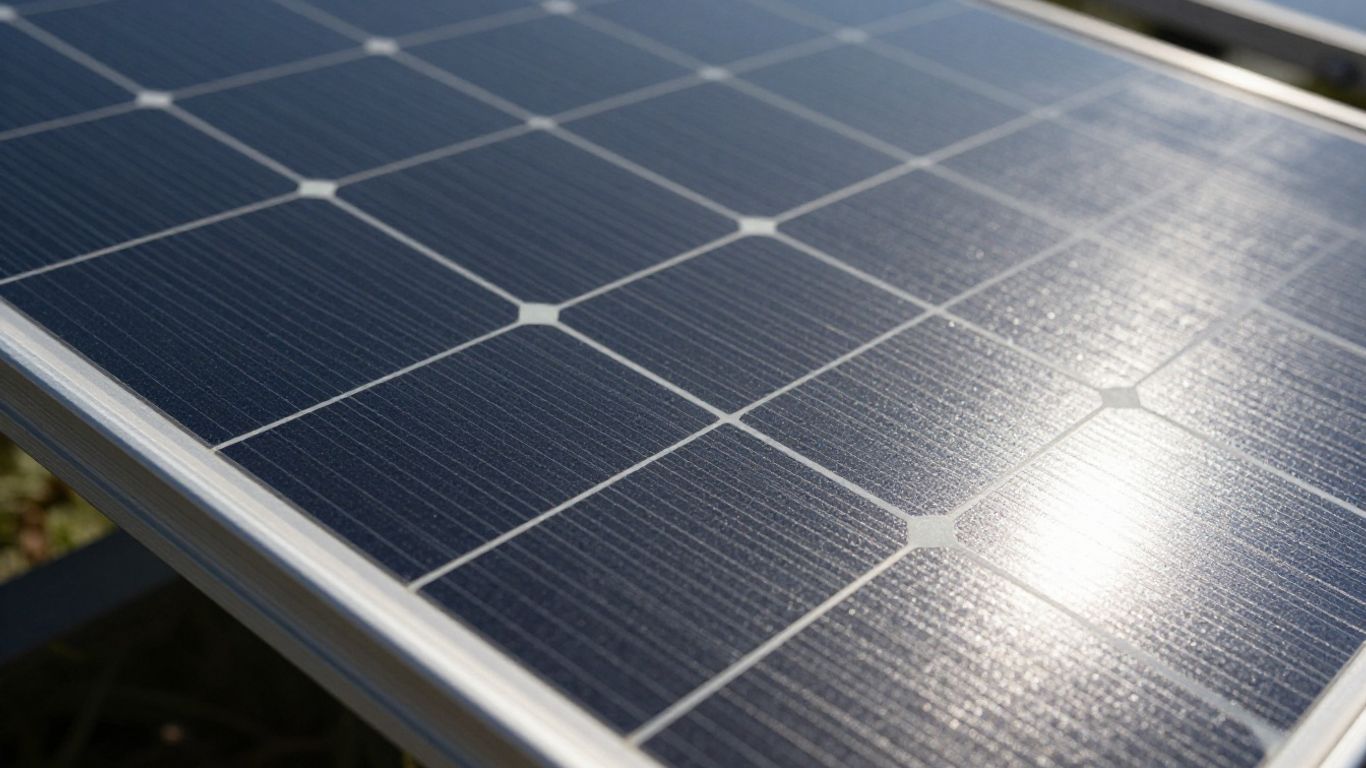
It is common to confuse the terms « solar panel » and « photovoltaic panel ». However, these are two distinct, though related, concepts. The term « solar panel » is actually a more general term that encompasses different technologies for capturing solar energy. The photovoltaic panel, on the other hand, is a specific technology within this category.
The Photovoltaic Panel: Electricity Producer
The photovoltaic panel is designed to directly convert sunlight into electricity. It uses semiconductor cells, generally silicon-based, which generate a direct current when exposed to photons. This direct current is then converted into alternating current by an inverter to be usable by our domestic appliances or injected into the electrical grid. It is this electricity generation capability that makes photovoltaic panels so popular for self-consumption and renewable energy production. Photovoltaic panels convert light into electricity thanks to the photoelectric effect.
The Thermal Panel: Hot Water Producer
Unlike the photovoltaic panel, the solar thermal panel does not produce electricity. Its role is to capture the sun’s heat to heat a heat transfer fluid. This fluid then circulates to a storage tank where it transfers its heat to the domestic hot water. This is known as a solar water heater. These systems are therefore dedicated to producing hot water, whether for domestic needs or for heating.
The Aerovoltaic Panel: Dual Production
The aerovoltaic panel, sometimes called a hybrid panel, combines the two previous functions. It produces both electricity thanks to photovoltaic cells and hot air thanks to a ventilation system located under these cells. The heated air can be recovered to contribute to the heating of a building, while the electricity produced is used as in a conventional photovoltaic installation. This technology therefore offers a dual valorisation of solar energy.
In summary, here are the main distinctions:
- Photovoltaic Panel: Produces electricity.
- Thermal Panel: Produces hot water.
- Aerovoltaic Panel: Produces electricity AND hot air.
When we talk about solar panels in the context of home energy production, we are most often referring to photovoltaic panels, as they are the most widespread and offer a good compromise between cost and performance. The choice of installation will depend on your specific needs, whether it is to reduce your electricity bill or to produce hot water. It is important to be well-informed before making your choice, as the costs and benefits vary depending on the technology.
Practical Aspects of the Photovoltaic Panel
Peak Power (Wp) for Qualifying an Installation
When talking about photovoltaic panels, we often hear about peak power, expressed in Watts peak (Wp). This is a standardised measure that allows for comparison of the performance of different panels under ideal test conditions. Basically, it is the maximum power a panel can produce under perfect sunlight. But be careful, in real life, conditions are never ideal. The actual power of your installation will depend on many things: the orientation of your panels, their tilt, the ambient temperature, and even the presence of shaded areas. Therefore, peak power should be seen as a reference point, not a guarantee of daily production. For a well-designed installation, it is possible to design installations of various sizes.
Lifespan and Reliability of Panels
Photovoltaic panels are designed to last. We generally talk about a lifespan of 25 to 30 years, or even more for some models. Manufacturers often offer performance guarantees over this period, ensuring that they will still produce a certain percentage of their initial power after 25 years. It is a proven technology, and the reliability of silicon modules, for example, is recognised. Of course, like any equipment, they can be subject to degradation, but technological advances have considerably improved their robustness and longevity.
Recycling of Photovoltaic Panels
Once panels have reached the end of their useful life, their recycling becomes an important issue. Fortunately, the photovoltaic sector has anticipated this. There are well-established collection and recycling channels, particularly in France. Most of the materials that make up a panel, such as glass, aluminium, and silicon, can be recovered and reused. This is a positive aspect for the environment, as it limits the extraction of new resources and reduces waste. The recycling of photovoltaic panels is also perfectly managed and carried out in France.
The choice of equipment is a key step for a successful installation. Peak power must be considered to get an idea of the potential, but also reliability and lifespan for a sustainable investment. Do not forget that recycling is a reality that is well managed today.
Here are some points to consider for an installation:
- Peak Power (Wp): Standardised performance indicator.
- Lifespan: Generally 25 to 30 years, with performance guarantees.
- Reliability: Proven technology, especially for silicon panels.
- Recycling: Existing channels for recovering end-of-life materials.
It is important to be well-informed before embarking on a solar installation.
The Historical Evolution of Photovoltaics
The history of photovoltaic solar energy is marked by scientific discoveries and technological advancements that have gradually led to the boom we know today. This journey, far from being linear, testifies to persistent scientific curiosity and adaptation to global energy needs.
The Discovery of the Photovoltaic Effect
It all began in 1839, when the French physicist Edmond Becquerel, then 19 years old, observed a surprising phenomenon. While experimenting with an electrochemical cell made of platinum electrodes in an acidic solution, he noticed that a slight electric voltage appeared when the cell was exposed to sunlight. This was the first demonstration of what would later be called the photoelectric effect, an observation that would be further explored by other scientists over the decades. This initial discovery laid the theoretical groundwork for converting light into electricity.
The First Solar Cells and Panels
It wasn’t until the late 19th century that the first attempts at realisation appeared. In 1877, W. G. Adams and R. E. Day discovered the photovoltaic effect of selenium. Shortly after, in 1883, Charles Fritts built the first rudimentary solar panel by coating selenium plates with a thin layer of gold. Although their efficiency was extremely low, these devices marked an important step. Later, in 1905, Albert Einstein published his theory on the photoelectric effect, explaining the underlying physical mechanism, for which he would receive the Nobel Prize in Physics in 1921. However, the true birth of modern photovoltaic electricity is often attributed to 1954, when researchers at Bell Telephone Laboratories developed a silicon cell with an efficiency of 6%.
Major Scientific Advancements
The following decades saw continuous improvement in technologies. The oil crises of the 1970s stimulated research and development in renewable energies, including photovoltaics. The United States launched the first satellite powered by solar cells in 1959, demonstrating the potential of this technology for space applications. Global installed capacity has grown exponentially, from a few megawatts in the 1970s to hundreds of gigawatts today. The dramatic decrease in production costs, as shown in the table below, has made photovoltaics increasingly accessible and competitive.
| Year | Price per Watt-peak ($) |
|---|---|
| 1975 | 125.83 |
| 1980 | 34.80 |
| 1990 | 11.49 |
| 2000 | 6.17 |
| 2010 | 2.32 |
| 2020 | 0.34 |
| 2022 | 0.26 |
Research continues to explore new avenues, such as thin films or organic photovoltaics, to further improve efficiency and reduce costs, while closely examining energy storage to compensate for the intermittency of solar production. The goal is to make this clean energy source even more efficient and integrated into our daily lives. The physical phenomenon behind solar electricity is now at the heart of many innovations.
Conclusion
So, we have explored how photovoltaic panels work, from the cell that captures light to the inverter that makes the electricity usable. It is a technology that directly transforms the sun into current, without complicated intermediate steps. We have seen that it can help reduce electricity bills, and it’s good for the planet too, as it’s a renewable energy. There are other types of solar panels, such as thermal ones for hot water or hybrid ones, but photovoltaics remain the most common. It is a reliable technology that lasts a long time, and its recycling is well managed. In short, it’s an interesting way to produce your own energy.
Frequently Asked Questions
How does a solar panel produce electricity?
A solar panel, also called a photovoltaic panel, uses special materials called semiconductors. When sunlight hits these materials, it releases small particles called electrons. These electrons start to move and create an electric current, much like water flowing through a pipe.
What is the photoelectric effect?
The photoelectric effect is the phenomenon that allows solar panels to produce electricity. Basically, sunlight (photons) gives enough energy to the electrons in the panel’s material for them to escape and start moving, thus creating a current.
What is the difference between a photovoltaic panel and a thermal panel?
It’s simple: a photovoltaic panel makes electricity using sunlight. A thermal panel uses the sun’s heat to heat water. It is also often called a solar water heater.
What is ‘Watt peak’ (Wp)?
Watt peak, or Wp, is a unit used to measure the maximum power a solar panel can produce under ideal conditions, such as when the sun is shining brightly and there is no shade. It helps to compare different panels or to determine the size of an installation.
What does ‘self-consumption’ mean for a solar panel?
Self-consumption means you produce your own electricity with your solar panels and consume it directly at home. This helps to reduce your electricity bill because you buy less energy from the supplier.
Why do we say solar panels have ‘efficiency’?
The efficiency of a solar panel is the amount of electricity it manages to produce compared to all the solar energy it receives. No panel converts 100% of light into electricity; efficiency indicates what proportion it manages to convert. The higher it is, the better!
What is an inverter in a solar installation?
The electricity produced by solar panels is direct current, similar to that from batteries. However, our household electrical appliances run on alternating current. The inverter is the magical device that transforms the direct current from the panels into alternating current usable throughout the house.
How long do solar panels last and what happens to them afterwards?
Solar panels are designed to last a very long time, often 30 to 40 years, or even more! They remain reliable for many years. Furthermore, there are organised channels for recycling them at the end of their life, in order to recover valuable materials and protect the environment.