In 2026, solar roofing is no longer just an option; it’s an increasingly logical solution for many. Electricity prices continue to rise, and finding ways to produce your own energy is becoming a priority. Technologies have made giant leaps, making installations more efficient and simpler to implement. Whether you’re thinking about reducing your bills or doing your bit for the planet, solar on your roof is seriously worth considering.
Key Takeaways
- Solar roofing is a direct response to rising electricity costs, offering increased energy independence.
- Technological advancements, particularly in storage and panel performance, make the investment more profitable in 2026.
- Self-consumption, complemented by storage or selling surplus energy, optimises the profitability of your solar installation.
- The choice of technology (monocrystalline, TOPCon, HJT) and precise sizing are essential for optimal performance.
- Financial aid still exists, but it’s important to get well-informed and follow the administrative procedures to benefit fully.
Why is solar roofing an essential solution in 2026?
The surge in electricity tariffs
In 2026, the continued rise in electricity prices makes energy autonomy more attractive than ever. Kilowatt-hour tariffs are constantly increasing, making every watt produced on your own roof all the more valuable. It’s a concrete way to protect yourself against these unpredictable increases and stabilise your budget. Producing your own energy is becoming a necessity for many households and businesses looking to secure their expenses. Solar roofing is establishing itself as a direct response to this major economic concern.
The maturity of storage solutions
Storage batteries have made enormous progress. They have become more affordable, more efficient, and safer, particularly thanks to advances in technologies like Lithium Iron Phosphate (LFP). These systems allow you to store surplus energy produced during the day for use in the evening or at night, or even during power outages. This storage capacity significantly improves the autonomy and efficiency of your solar installation. The integration of batteries transforms your solar system into a truly independent and reliable energy source.
Simplification of installations
Installation solutions are now much simpler and quicker to implement. « Ready-to-install » kits have considerably reduced the cost and complexity of installation. Although connection to the electrical panel may require professional intervention, many steps have been simplified. Furthermore, technologies are evolving for better aesthetic integration and easier maintenance. It is even possible to install some components yourself, thereby reducing installation costs. The goal is to make solar accessible to as many people as possible, without excessive complications. Optimising orientation and tilt remains a key point for maximising production based on your location.
The economic and ecological advantages of solar roofing
Reducing energy dependence
Installing solar panels on your roof is a giant leap towards energy autonomy. In 2026, with volatile electricity prices, producing your own energy is becoming a most judicious economic strategy. You will significantly reduce your electricity bill, sometimes by up to 60%, by directly consuming the energy your panels generate during daylight hours. It’s a concrete way to regain control over a portion of your current expenses. This local production makes you less vulnerable to fluctuations in the energy market.
Contributing to the ecological transition
Beyond savings, choosing solar is a strong gesture for the planet. Photovoltaic energy is clean energy that produces no greenhouse gases during operation. Compared to fossil fuels, its carbon footprint over its entire life cycle is much more favourable. By adopting solar, you actively participate in reducing CO2 emissions and combating climate change. It’s an investment that makes sense, for your home and for future generations. Solar energy is an inexhaustible resource.
Enhancing property value
A solar roof is not just a generator of savings and an ally for the environment; it’s also an asset for your property. A well-integrated photovoltaic installation can improve your home’s energy performance, reflecting positively on its Energy Performance Certificate (EPC). This makes your property more attractive on the real estate market, whether for sale or rent. Furthermore, technological advancements now allow for aesthetic integrations that harmonise perfectly with your home’s architecture. It’s an investment that increases the value of your assets.
Here’s an overview of potential benefits:
- Reduced electricity bill: Up to 60% savings possible.
- Positive environmental impact: Reduction in CO2 emissions.
- Property value enhancement: Improved EPC and increased property attractiveness.
- Energy autonomy: Less dependence on energy suppliers.
Installing solar panels is a process that combines immediate economic advantages with long-term ecological benefits, while also increasing your property’s value.
Understanding how a solar roof works
Installing solar panels on your roof is a bit like installing a small personal power plant. But how does it work exactly? Don’t worry, we’ll break it down together.
The principle of the photovoltaic effect
At the heart of each solar panel are cells, usually made of silicon. When sunlight hits these cells, it releases electrons. It’s as if photons (light particles) give electrons a little nudge, setting them in motion. This movement of electrons is what constitutes electric current! This phenomenon is called the photovoltaic effect, and it’s the basis of all solar electricity production. The current produced is direct current (DC), the same as in your car battery, for example.
The essential role of the inverter
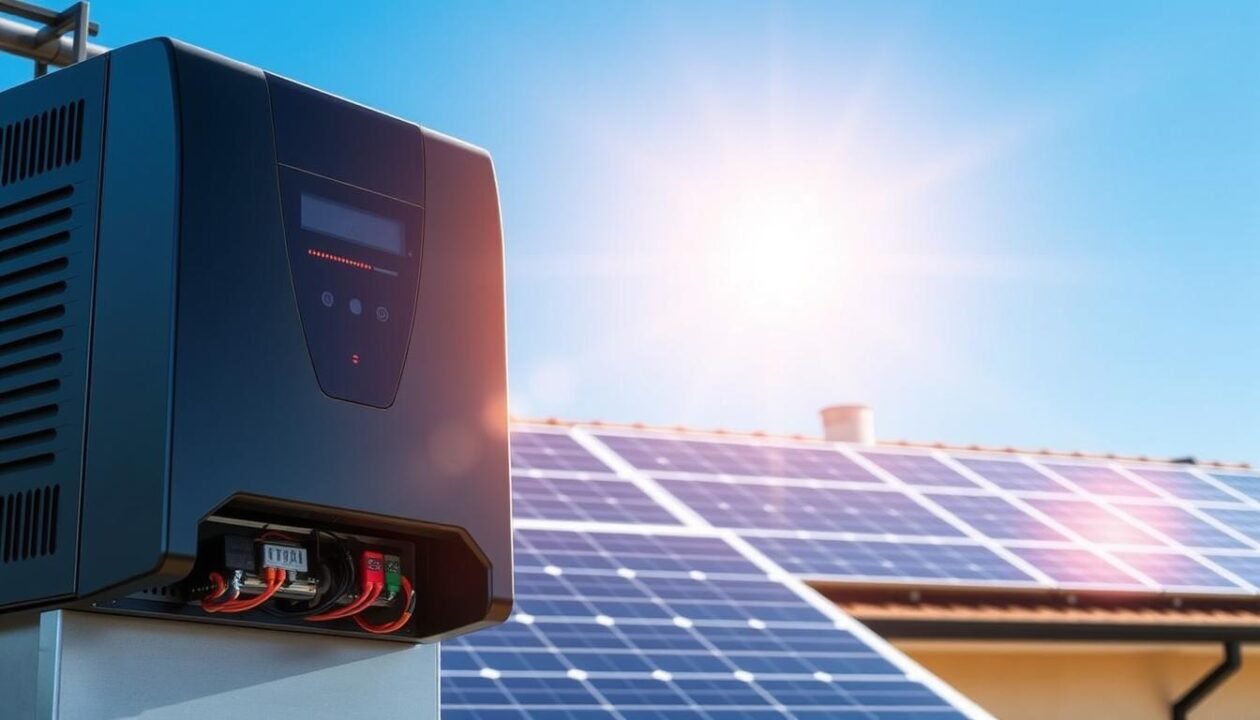
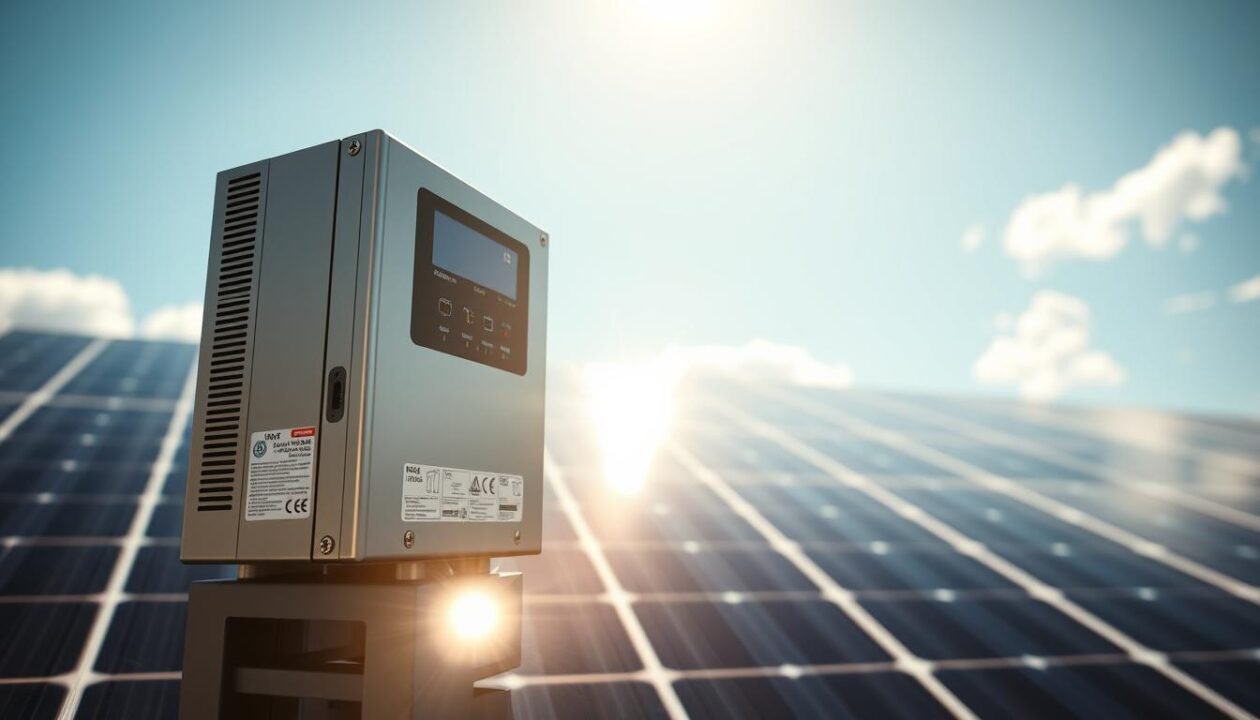
So, you have direct current. Great! But your electrical appliances at home run on alternating current (AC). This is where the inverter comes in. It’s like the translator for your solar installation. It takes the direct current produced by the panels and converts it into alternating current, which can be used by your washing machine, television, or computer. There are several types of inverters:
- Central inverter: A single unit manages all the production for the installation. This is often the most economical solution.
- Micro-inverters: A small inverter is placed behind each panel. The advantage? If one panel is in shade or less efficient, it doesn’t significantly impact the production of the others. This is an interesting option for roofs with partial shading.
The basics of modern self-consumption
In 2026, the main objective when installing solar panels is self-consumption. The idea is simple: consume as much of the electricity you produce yourself as possible. When your panels produce more electricity than you are consuming at a given moment, you have two options:
- Store the surplus: You can store it in a home battery for later use, for example, in the evening when the sun is no longer shining. This is an excellent way to increase your energy autonomy.
- Sell the surplus: If you don’t store it, the unused electricity is fed into the public grid. You can then sell it to an energy supplier, which earns you some money.
Self-consumption significantly reduces your electricity bill. By producing your own energy, you become less dependent on fluctuations in market electricity prices. It’s an investment that becomes more profitable each year.
To optimise this self-consumption, energy management systems can be added. For example, they can automatically activate certain appliances (like a water heater) when solar production is high. This allows for even greater use of locally produced energy, sometimes up to 60% of the total production consumed on-site. Installing solar panels on a well-oriented roof can generate clean energy for 25 to 30 years [df90].
Solar panel technologies available in 2026
Monocrystalline, a proven standard
Monocrystalline panels remain a safe bet in 2026. They are valued for their good efficiency, generally between 20% and 23%. This is a very relevant option, especially if you have limited roof space. It’s a mature, reliable, and proven technology that offers a good balance between performance and cost.
TOPCon and HJT innovations for increased performance
The year 2026 sees the rise of TOPCon (Tunnel Oxide Passivated Contact) and HJT (Heterojunction) technologies. These next-generation cells push the boundaries of efficiency, reaching up to 25%. They also stand out for better energy production even in low light conditions, such as on cloudy days. Furthermore, their degradation over time is slower, ensuring long-term, sustainable performance.
Bifacial panels and full black for specific uses
For those looking to maximise production, the bifacial panel is an excellent option. It captures light on both sides, which can increase the overall yield of the installation, particularly in configurations like carports or ground-mounted systems where reflected light is significant. For homeowners concerned about aesthetics, the full black panel offers discreet and elegant integration on modern roofs. It combines performance and design without compromise. These technological advancements allow for the selection of solar panels suited to a wide variety of needs and constraints.
The choice of solar panel technology is an important decision that directly impacts the performance and profitability of your installation. It is advisable to carefully assess your specific needs and site characteristics before making your selection.
Choosing the right power for your solar installation
Sizing your project according to your consumption
Choosing the appropriate power for your solar installation is a key step. It’s not about oversizing or undersizing your needs, but about finding the right balance for optimal efficiency. The first thing to do is look at your annual electricity consumption. You’ll find this on your electricity bills. This is the basis for calculating the necessary power. For example, if you consume 12,000 kWh per year and your installation’s estimated yield is 900 kWh per kilowatt-peak (kWp), you will need approximately 13.3 kWp of installed power. This is a first estimate for sizing your project.
Recommendations for individual homes
For an individual home, needs vary considerably. Here are some guidelines to help you:
- For a small house or flat (2-3 people): a power of 3 kWp is often sufficient. This requires about 12 to 15 m² of panel surface area.
- For a standard house (4 people, with air conditioning): aim for around 6 kWp. You’ll need to allow for approximately 25 to 30 m² of panels.
- For an all-electric house (with heat pump, electric vehicle): a power of 9 kWp or more will be necessary, requiring over 40 m² of panels.
These figures are averages, of course. They can change depending on your lifestyle and your equipment.
Adapting power to specific needs
Beyond basic consumption, consider specific uses. For example, if you plan to install a heat pump or purchase an electric vehicle, your electricity demand will increase. This must be anticipated during the sizing process. Similarly, if you have a workshop with energy-hungry machinery, this must be taken into account. The goal is to have an installation that covers your current and future needs. Once the total power is defined, you need to calculate the number of panels. If you need 6 kWp and each panel is 375 Wp, you will need 16 panels (6000 Wp / 375 Wp = 16). This is the final step to estimate the number of panels.
It’s important not to rush. A personalised study by a professional will help you refine these calculations and avoid costly mistakes. They can also advise you on the most suitable technologies for your situation and budget.
The importance of location and tilt for optimal performance
For your solar roof to produce the maximum amount of electricity, you really need to pay attention to two things: where you put it on the roof and at what angle. It’s not just about looking good; it has a direct impact on the amount of energy you’ll recover.
Prioritise a south-facing orientation for maximum production
The ideal is to have your panels facing directly south. This is where the sun shines the longest during the day, especially in summer. If south isn’t possible, don’t panic. South-east or south-west orientations also work very well. In fact, with modern panels, even an East or West orientation can be interesting, especially if you want to better match production with your daily consumption. You just need to study your situation carefully. A south orientation with a 0° tilt is much better than a north orientation with a 30° tilt, for example. Optimal exposure is truly key.
Optimising tilt to capture solar energy
The angle of your panels is also very important. Generally, an angle between 30 and 35 degrees is good for capturing sunlight throughout the year. This provides a good balance between summer production, when the sun is high, and winter production, when it is lower. Of course, this can be adjusted if you want to prioritise one season over another, but for general use, this angle is a good starting point. You need to think of the tilt as how the panel will
Financial aid and support schemes in 2026
The self-consumption bonus
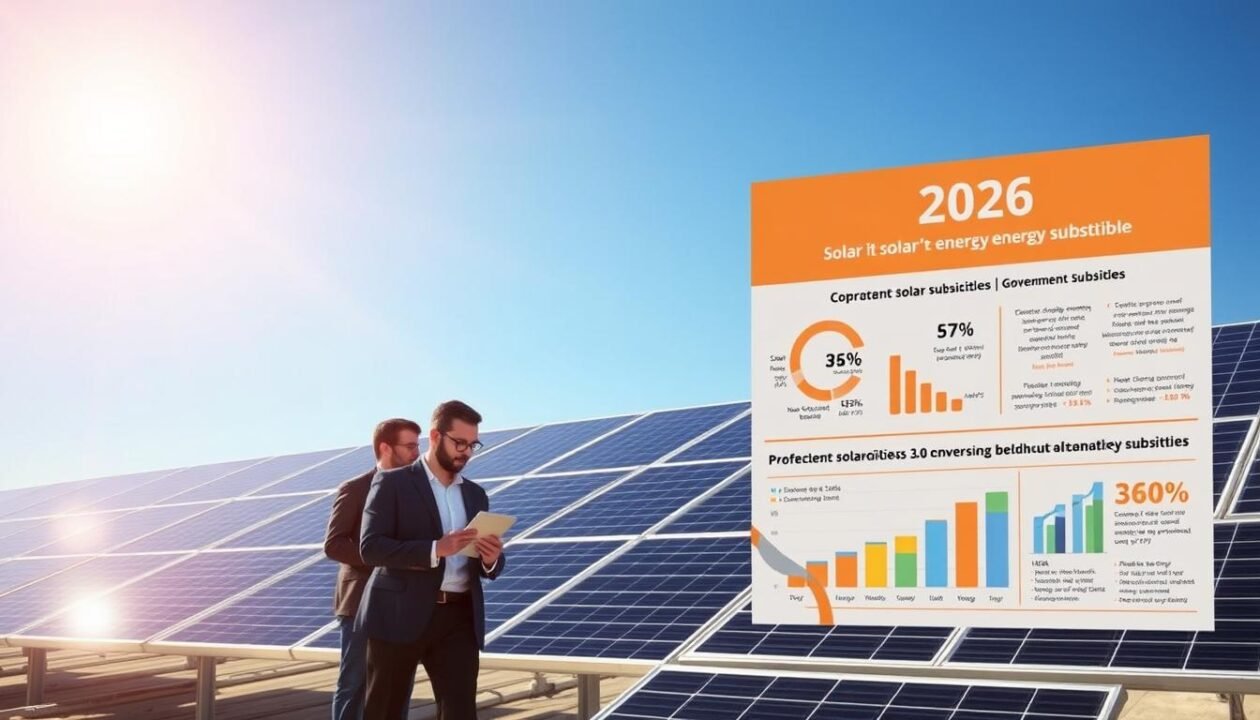
In 2026, the government continues to encourage domestic solar energy production through the Self-Consumption Bonus. This financial aid is paid over a five-year period and its amount is calculated based on the total power of your photovoltaic installation. It’s a welcome boost to make your project even more profitable from the outset. Eligibility conditions and precise amounts are generally announced each year, so it’s advisable to stay informed of the latest updates.
The obligation to purchase for selling surplus
For those who produce more electricity than they consume, the Obligation to Purchase (OA) is a key scheme. Managed by EDF OA, this system allows you to sell your unused surplus electricity at a fixed rate, guaranteed by contract for 20 years. This ensures a stable and predictable income stream, contributing to the overall profitability of your solar installation. This mechanism is essential for securing long-term investment.
Local and regional subsidies
Beyond national aid, many regions and municipalities offer complementary subsidies. These local schemes may target specific aspects, such as the purchase of storage batteries or the installation of solar systems on particular structures (e.g., photovoltaic carports). It is therefore strongly recommended to inquire with your local council or regional council to find out about the aid available in your area. This support can sometimes make a significant difference to the total cost of your project. For example, some local authorities offer specific aid for low-income households, making access to solar energy more equitable. You can discover the aid available in 2026, including a bonus of up to €180/kWp and a reduced VAT of 5.5% on solar solutions.
MaPrimeRénov’ and ANAH aid
It is important to note that for 2026, ANAH aid for solar panels will primarily be channelled through the MaPrimeRénov’ scheme. This programme, which already finances many energy renovation works, will cover thermal and hybrid solar panels. The conditions for eligibility and the amounts of aid will depend on your income. This is excellent news for those planning a comprehensive renovation of their home and wishing to integrate a solar solution. The procedures for benefiting from MaPrimeRénov’ are generally centralised and can be supported by specialised advisors.
All of these financial aids aim to make investment in solar more accessible and attractive. It is essential to be well-informed about the eligibility criteria and administrative procedures before starting your project to make the most of it.
Profitability and return on investment of a solar roof
Installing solar panels represents an initial investment, it’s true. But let’s face it: with the constant rise in electricity tariffs, it has become one of the safest and most profitable investments for homeowners. We are talking about a solution that allows you to produce your own energy, thereby reducing your dependence on suppliers and, consequently, your bills. The return on investment has significantly shortened in recent years.
A profitable investment in the face of rising prices
Electricity is getting more and more expensive, that’s a fact. Every year, we see an increase that weighs on household budgets. Faced with this reality, producing your own energy is becoming a very relevant economic strategy. A well-sized installation can cover a significant portion of your needs, saving you up to 60% on your electricity bill. It’s a concrete way to regain control of your energy expenses. Solar energy is establishing itself as a sustainable and economical solution for the future.
Shortened return on investment period
There was a time when we talked about 15, or even 20 years, to amortise a solar installation. Today, things have changed considerably. Thanks to the decrease in equipment costs and the increase in electricity prices, the return on investment period is now shorter. It is estimated that it takes an average of 7 to 10 years for your installation to pay for itself. This figure can even drop to 4 or 5 years if you opt for a kit installation and carry out some of the work yourself. This is a strong argument for taking the plunge.
The impact of DIY installation
Using an RGE-certified professional is often necessary to benefit from state aid, such as the self-consumption bonus. However, if your main objective is to minimise the initial cost as much as possible, the ready-to-install (DIY) kit option is an interesting alternative. By taking charge of the installation yourself, you save on labour costs, which can represent a significant portion of the total budget. Of course, it requires some time and know-how, but the clear instructions and available technical support make this option increasingly accessible. Don’t forget that registration with Enedis remains mandatory, regardless of the installation method chosen. Investing in solar is one of the best decisions you can make for your wallet and for the planet one of the best decisions.
Self-consumption is key. Producing your electricity and consuming it directly is the most effective way to reduce your bills and maximise the profitability of your solar installation. The surplus can be sold, but the primary objective remains to consume what you produce.
Here’s an overview of potential savings and return on investment periods:
| Expense item | Estimated saving | Return period (average) |
|---|---|---|
| Electricity bill | Up to 60% | 7-10 years |
| DIY installation | – | 4-5 years |
| Sale of surplus (credit) | Additional income | – |
Integration of storage batteries in 2026
Benefits of a battery for autonomy
In 2026, adding a battery to your solar installation is no longer a luxury, but a logical evolution to maximise your energy independence. Imagine being able to use the electricity you produced during the day, even after the sun has set. This is exactly what a battery allows. It stores surplus energy not immediately consumed, thus offering you a reliable and continuous power source. This reduces your dependence on the public grid, especially during peak hours when tariffs are highest. It’s a step further towards true energy self-sufficiency.
Technological advancements in batteries
Lithium batteries, particularly those using Lithium Iron Phosphate (LFP) technology, have become safer and more efficient. They offer a longer lifespan, measured in charge and discharge cycles, which is a key factor for long-term profitability. Storage capacities vary, ranging from a few kilowatt-hours (kWh) for standard needs to more substantial systems for all-electric homes. It is important to choose a capacity suited to your consumption to avoid oversizing or, conversely, insufficient storage. Manufacturers now offer solid warranties, often for 10 years or a defined number of cycles, ensuring a sustainable investment. To give you an idea, storage capacity can range from 2 to 10 kWh, depending on your specific needs [d778].
Continuing to power up during power outages
One of the most concrete advantages of a battery, especially with a hybrid inverter, is the continuity of electricity supply in the event of a grid outage. Without a battery, your solar system shuts down for safety reasons as soon as the grid fails. With a correctly configured battery, your home can continue to be powered by stored energy. This is a significant comfort, particularly appreciated in areas prone to power interruptions or for essential appliances like the refrigerator or heating systems. This allows you to remain autonomous and not suffer the inconveniences of a power outage.
Mistakes to avoid when installing a solar roof
Installing a solar roof is an exciting project, but there are a few pitfalls to avoid to ensure everything goes smoothly. One might think it’s simple, but a small mistake can be costly.
Neglecting orientation and tilt
It’s a bit like trying to grow plants without sun. The orientation of your panels is super important. South is ideal for capturing maximum solar energy. But be careful, an East-West orientation can also be interesting for spreading your electricity production throughout the day, which is quite good for self-consumption. The tilt also matters; you need to find the right angle so that the sun hits the panels for the longest possible time during the year. Too flat, rainwater doesn’t drain well; too steep, you lose efficiency in winter. You need to find the right balance.
Choosing quality and guaranteed equipment
We sometimes see attractive offers with ‘no-name’ panels. It’s tempting, but for an investment that needs to last 25 years or more, it’s better to opt for recognised brands. A good warranty is proof that the manufacturer has confidence in its product. Look closely at the warranties on panel power and on the equipment in general. Good equipment is also a guarantee of safety for your installation. Consider looking at the essential components for a solar installation to fully understand what you are buying.
Forgetting mandatory administrative procedures
This is often the least fun part, but it’s essential. Even before laying the first panel, you often need to file a prior declaration with the town hall. Then, there’s the agreement with Enedis for grid connection. And don’t forget the Consuel certificate, especially if you’re connecting the installation to the electrical panel. Without these papers, your installation might not be compliant, and this can cause problems, particularly with your insurance. It’s a bit tedious, but it’s better to do everything by the book to avoid unpleasant surprises. You also need to consider managing potential shading, such as from a tree or a chimney, which can reduce the production of an entire string of panels if you haven’t opted for micro-inverters. This is a detail that can have a big impact on your overall yield. Also, think about choosing the right power for your installation by anticipating your future needs, such as buying an electric car, for example. A well-thought-out project is a project that lasts and brings you satisfaction in the long term. You really need to consider all the elements of a complete solar installation before starting.
So, ready for solar in 2026?
There you have it, we’ve covered it all. In 2026, installing solar panels really seems like a good idea. Prices have dropped, technologies are better, and frankly, with the cost of electricity, it quickly becomes profitable. It’s not just for the planet, although that’s a plus; it’s mainly for your wallet. Think about it, it’s worth looking into seriously. We hope this article has helped you see things more clearly.
Frequently Asked Questions
Why is it the right time to install solar panels in 2026?
In 2026, it’s the ideal time because electricity prices are constantly rising, making solar energy more profitable than ever. Furthermore, batteries for storing electricity are more efficient and affordable, and solar kits are simpler to install.
What are the advantages of having a solar roof?
Installing solar panels allows you to produce your own electricity, which reduces your bills. It’s also an important gesture for the planet as you are using clean energy. Additionally, it can increase your home’s value.
How does a solar panel work?
A solar panel captures sunlight using special cells. This light is converted into electricity (direct current). Then, a device called an inverter changes this current so it can be used by your electrical appliances at home (alternating current).
What types of solar panels are best in 2026?
Monocrystalline panels are a safe bet. For even more performance, especially when there’s little sun, TOPCon and HJT technologies are excellent. Bifacial panels produce electricity from both sides, and ‘full black’ panels are very discreet and aesthetically pleasing.
How do I know what power of solar panels to choose?
You need to look at how much electricity you consume each year. For a small house, 3 kWp is often sufficient. For a larger or all-electric house, you’ll need more, such as 6 kWp or even 9 kWp and above.
Are the roof’s location and tilt important?
Yes, it’s very important! The ideal is to have a roof facing south to capture as much sun as possible. A tilt of around 30 to 35 degrees is also often best. You also need to be mindful of shadows caused by trees or neighbouring buildings.
Are there any aids for installing solar panels?
Yes, in 2026, there are aids such as the self-consumption bonus which gives you money for 5 years. You can also sell the surplus electricity you don’t consume. Some regions or towns also offer additional aid.
Is installing a battery necessary?
A battery is not mandatory, but it is very useful. It allows you to store the electricity produced during the day to use it in the evening or at night, making you even more independent from the electrical grid. It also provides security in case of a power outage.