VAT recovery on photovoltaic panels is a topic of increasing interest for individuals looking to make their solar investment profitable. Between administrative procedures, strict conditions to be met, and recent regulatory changes, it’s not always easy to navigate. This article provides a clear guide to understanding how VAT recovery on photovoltaic panels works, the steps to follow, and the points to be aware of.
Key Takeaways
- VAT recovery on photovoltaic panels is reserved for installations with a capacity exceeding 3 kWp and requires opting for the simplified real tax regime.
- It is mandatory to use a certified installer and connect the installation to the public grid to be eligible.
- VAT rates vary depending on the installation’s capacity, with changes planned for 2025 for installations up to 9 kWp.
- The VAT refund process involves specific formalities with the tax authorities, often with the help of an accountant.
- Other aids such as the self-consumption bonus or tax exemption on income can be complementary or, in some cases, more advantageous.
Understanding VAT Recovery on Photovoltaic Panels
Definition of VAT on Solar Panels
Value Added Tax (VAT) is an indirect tax applied to most goods and services in France, including the purchase and installation of photovoltaic panels. When an individual has solar panels installed, they pay VAT directly on the installer’s final invoice, at a rate dependent on the installed capacity.
Understanding how VAT works is the first step in assessing whether VAT recovery is relevant for a domestic solar project.
Tax Implications for Individuals
Installing photovoltaic panels is not just about electricity production; it also involves specific tax obligations. Here’s what that entails:
- The sale of solar electricity between individuals and EDF (or another authorised buyer) is considered a commercial activity.
- If you sell the energy produced, you must declare this income to the tax authorities.
- Depending on the chosen tax regime (micro-BIC or simplified real), VAT recovery is not automatic and requires additional steps.
- Generally, only projects exceeding 3 kWp capacity and with a commercial orientation can claim VAT recovery.
Main Advantages of VAT Recovery
The ability to recover VAT on the purchase and installation of photovoltaic panels represents a significant boost for the project owner, but it’s not without its drawbacks.
Major Advantages:
- Recover 20% of the invested amount (excluding taxes) provided all conditions are met.
- Reduce the overall cost of the installation and accelerate project amortisation.
- Facilitate a faster return on investment, especially for significant installations.
| Installation Capacity (kWp) | Applicable VAT Rate | VAT Recoverable? |
|---|---|---|
| ≤ 3 | 10% (5.5% from 10/2025) | No (for typical individuals) |
| > 3 | 20% | Yes (under conditions) |
Some individuals may hesitate: taking advantage of this tax benefit often involves more complex administrative procedures and accounting management over several years.
Eligibility Conditions for VAT Recovery
To be able to recover VAT on your photovoltaic panel installation, simply wanting it isn’t enough. There are very specific criteria to meet. It’s a bit like applying for financial aid; you have to fit the requirements. If you thought you could recover VAT on any installation, think again. The rules are in place to regulate the scheme and ensure that aid goes to the right projects.
Minimum Installation Capacity Required
The first thing to check is the capacity of your system. To be eligible for VAT recovery, your installation must have a capacity exceeding 3 kilowatts-peak (kWp). If your system is smaller, you will not be able to benefit from this scheme. This is a fairly strict condition, but it targets installations that have a more significant impact.
Requirement for a Certified Professional
Next, the installation must be carried out by a professional. And not just any professional! They must be certified, often by a state-recognised body, such as the RGE (Reconnu Garant de l’Environnement) label. This guarantees that the work will be done to a high standard and according to current regulations. Using a non-certified tradesperson carries the risk of not being able to recover VAT, as well as having a less efficient, or even dangerous, installation.
Obligation to Connect to the Public Grid
Finally, your installation must be connected to the public electricity grid. This means you cannot claim VAT recovery for a completely off-grid installation that is not connected to any network. This connection is necessary if you plan to sell the surplus electricity you produce, which is often the case to benefit from VAT recovery. The connection is an administrative step carried out with your network operator, such as Enedis.
It is important to note that these conditions are cumulative. Failing to meet even one can exclude you from the VAT recovery scheme. It is therefore advisable to gather information in advance and ensure that your project meets all these criteria before proceeding.
Different VAT Rates Applicable According to Installations
The VAT rate applied to the purchase and installation of photovoltaic panels is not uniform. It varies mainly according to the installation’s capacity and its use. Understanding these distinctions is essential for anticipating costs and optimising VAT recovery.
Reduced Rate for Small Capacities
For solar installations with a capacity of 3 kilowatts-peak (kWp) or less, a reduced VAT rate of 10% may apply. This measure aims to encourage the adoption of renewable energy solutions for standard domestic needs. It is important to note that the application of the reduced rate is subject to specific conditions, particularly that the installation is carried out by a certified professional and has been used for residential purposes for at least two years.
Standard Rate for Installations Exceeding 3 kWp
As soon as the capacity of your photovoltaic installation exceeds 3 kWp, the applicable VAT rate reverts to the standard rate, which is 20%. This rate opens up the possibility of recovering VAT, provided that the eligibility criteria mentioned previously are met, particularly the choice of the simplified real tax regime and the sale of surplus electricity.
| Installation Capacity | Applicable VAT Rate | Conditions for VAT Recovery |
|---|---|---|
| Less than or equal to 3 kWp | 10% (reduced) | Not applicable (installation for simple self-consumption) |
| Greater than 3 kWp | 20% (standard) | Yes, under conditions (Simplified Real Regime, sale of surplus, etc.) |
Changes to Rates in 2025 and Beyond
The tax landscape for photovoltaic installations is subject to change. Although current rates are well-established, it is always prudent to stay informed about potential legislative modifications. Public authorities sometimes adjust these rates to align with national energy transition objectives and to support the development of self-consumption. Therefore, it is recommended to consult the most recent information from the relevant authorities or your installer to anticipate any future changes that could impact the cost of your project.
The distinction between VAT rates is a key element in the financial planning of a solar installation. For small installations intended for self-consumption without energy sales, the reduced rate simplifies the initial investment. In contrast, for larger projects aiming for significant production and potential resale, the standard 20% rate becomes the gateway to VAT recovery, a process that requires careful attention to administrative and tax procedures.
Tax Regimes Compatible with VAT Recovery on Photovoltaic Panels
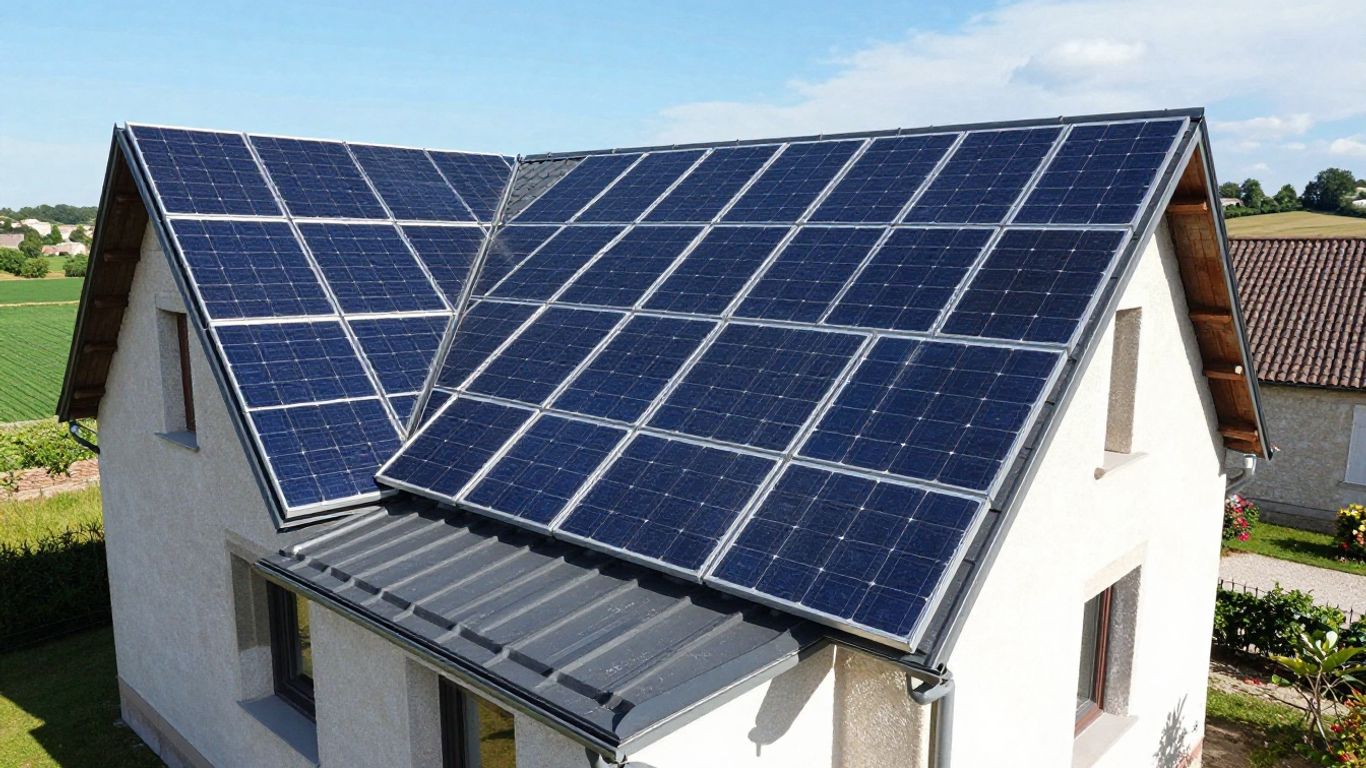
To be able to recover VAT on your photovoltaic installation, it is essential to choose the correct tax regime. Indeed, the sale of electricity produced, even surplus, is considered a commercial activity. This requires you to declare this income. Two main options are available if your installation’s capacity exceeds 3 kWp: the simplified real regime (RRS) and the micro-BIC regime.
Choice Between Simplified Real Regime and Micro-BIC
The choice between these two regimes depends mainly on the amount of your annual income from electricity sales. The micro-BIC regime is administratively simpler, with an automatic flat-rate deduction on your declared income. However, it does not allow for VAT recovery. This is where the simplified real regime becomes relevant.
| Tax Regime | Annual Income (electricity sales) | VAT Recovery | Administrative Complexity |
|---|---|---|---|
| Micro-BIC | Up to €70,000 | No | Low |
| Simplified Real (RRS) | Over €70,000 (or choice) | Yes | Medium to High |
Specifics of the Simplified Real Regime (RRS)
Opting for the simplified real regime is key to recovering 20% VAT on the purchase and installation of your solar panels. This regime allows you to deduct your actual expenses, including the VAT paid. However, it requires more rigorous accounting management. You will need to keep more detailed accounts and potentially engage an accountant to assist you with your administrative procedures. This may represent an additional cost, but the savings made on VAT can often offset these expenses.
Consequences on VAT Recovery
The main consequence of choosing the simplified real regime is eligibility for VAT recovery. If you meet all other conditions (installation capacity, grid connection, contract with EDF OA, etc.), you can claim a refund of the VAT paid. It is important to understand that this recovery is not automatic; it requires specific declarations to the tax authorities. An error in these procedures could lead to a refund refusal or penalties.
The choice of tax regime is a decisive step. It should not be taken lightly, as it directly impacts your ability to recover VAT and the complexity of your administrative management. An in-depth analysis of your situation is recommended before making a decision.
Administrative Procedures for VAT Recovery
VAT recovery on a photovoltaic installation follows a precise administrative process. It involves a series of steps where every detail counts to ensure an adequate refund. Managing this file is often more complex than one might imagine, due to the tax complexities associated with your new status as an electricity producer.
Steps After Solar Panel Installation
- Declare the completion of works to the town hall if not already done during the prior authorisation request.
- Gather all invoices for equipment and installation, clearly marked as subject to VAT.
- Verify the installation and its compliance with the visit from CONSUEL (National Committee for the Safety of Electricity Users).
- Register your status as an electricity producer, which generally involves creating a professional entity, as explained by the registration procedure.
The procedures, although seemingly simple on paper, require impeccable organisation once the installation is validated by the professional and the network operator.
Declaration to the Tax Authorities
- Register as an operator under the simplified real regime (RRS) or, in some cases, the normal real regime.
- Create a professional account on www.impots.gouv.fr, which is essential to access VAT declarations.
- Submit periodic VAT declarations. The first declaration must include invoices for the purchase of panels and accessories, as well as installation costs.
Here is a summary table of the steps with the tax authorities:
| Step | Party Involved | Frequency |
|---|---|---|
| Registration for RRS or normal | Producer | Upon creation |
| Opening of professional account | Producer | One-time |
| Submission of VAT declaration | Producer/Expert | Quarterly or Annually |
VAT is a word that constantly recurs in all exchanges, as all amounts and supporting documents must be aligned to avoid blocking the refund.
Role of the Accountant in the Process
- Advice on the appropriate legal structure for your situation (sole proprietorship or company).
- Preparation and verification of accounts, particularly the consolidation of invoices related to the photovoltaic installation.
- Transmission of declarations via EDI (Electronic Data Interchange).
- Follow-up of communications with the tax authorities and management of any follow-up requests.
The involvement of an accountant is not mandatory but is highly recommended, especially for those who wish to simplify management or avoid costly errors. Their support often provides the necessary peace of mind given the multitude of steps and tax obligations.
Submitting the VAT Refund Request
Once your photovoltaic installation is completed and the eligibility conditions are met, the next step is to formalise your VAT refund request. This administrative procedure, although sometimes perceived as complex, is essential to realise the expected savings. There are two main methods for submitting this request, depending on your tax declaration method.
EDI and EFI Procedures for Declarations
For professionals who have opted for Electronic Data Interchange (EDI) for their electronic declarations and payments, the submission of the VAT credit refund request can be managed by your accountant. The accountant, mandated by you, will be responsible for sending the necessary files. If, however, you use Electronic Form Interchange (EFI), the procedure is carried out directly from your professional account on the tax website. You will access the « My Services » section, then « Declare » and « VAT ».
Using Appropriate Official Forms
In your EFI account, after selecting the relevant activity, you will find a section dedicated to VAT credit refund requests. You will then need to enter the reference period and choose the appropriate form for your tax situation. For companies subject to the normal real regime, form no. 3519 is generally used for requests during the year. Companies subject to the simplified real regime (RRS) will use form no. 3517 for their annual request, although a provisional request via form no. 3519 is possible under certain conditions, particularly if the credit amount is at least €760.
It is important to accurately identify your tax regime and the nature of your request (one-off or annual) to select the correct form. An error in choosing the form can lead to delays or rejection of your request.
Refund Deadlines and Tracking
Once your request has been submitted, a processing time by the tax authorities is to be expected. Deadlines can vary depending on the time of year and the complexity of the file. It is advisable to keep a copy of all submitted documents and to track the status of your request via your professional account. If you have engaged an accountant, they will also be able to inform you about the progress of the file. The cost of a solar installation can vary, but VAT recovery is one of the schemes that reduces the initial budget.
- Precise identification of your tax regime (Simplified Real or Normal Real).
- Choice of the appropriate form (3519 for provisional request or normal real regime, 3517 for simplified real annual request).
- Verification of specific conditions for provisional requests by companies in the simplified real regime.
- Keeping of supporting documents for installation and VAT payment.
Obligations When Selling Solar Electricity
Once your solar panels are installed and connected to the grid, you have the option to sell the electricity you do not consume. This process, known as selling surplus, involves certain administrative and tax responsibilities that are important to be aware of to optimise your project.
Declaring Income from Sales
How the income from selling your surplus electricity is treated for tax purposes depends on your installation’s capacity. For small installations, generally under 3 kWp, the income generated is often exempt from income tax and social security contributions. This is excellent news for individuals starting with self-consumption.
However, for larger installations, over 3 kWp, the situation changes. Income from selling surplus becomes taxable. A tax allowance is applied, but the remaining portion is subject to income tax, the rate of which depends on your personal tax situation, as well as social security contributions. It is therefore essential to anticipate this taxation to avoid any unpleasant surprises.
Subscribing to the Obligation to Purchase (EDF OA) Contract
To sell your surplus electricity, subscribing to an Obligation to Purchase (OA) contract is an essential step. This contract is generally offered by EDF OA, but other authorised buyers may also be involved. You will receive this contract after completing your connection request with the network operator (such as Enedis). It is crucial to read the terms of this contract carefully, as it sets the conditions for purchasing your excess production.
The OA contract has a fixed duration, often 20 years. During this period, the purchase tariff is guaranteed and revised periodically. It is important to note that this tariff may be less advantageous in the long term than the price of electricity you might buy from the grid, especially if energy prices increase. Remember to compare offers carefully and anticipate the end of this contract to plan the future of your installation.
Invoicing for Surplus Electricity
Invoicing for surplus electricity is an annual process. On the anniversary of your installation’s commissioning, you will need to read your meters. Then, via a dedicated customer area (often called
Impact of VAT Recovery on Project Profitability
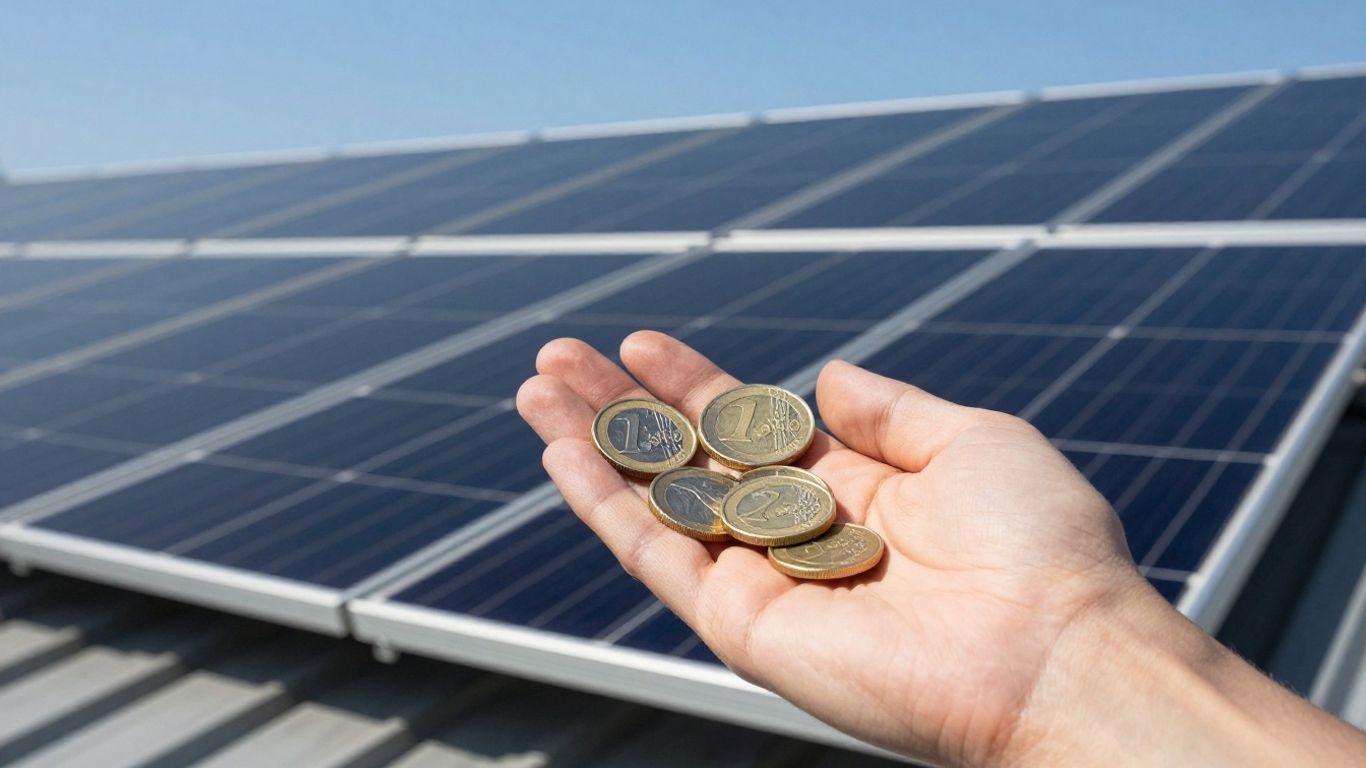
VAT recovery on the purchase and installation of photovoltaic panels can represent substantial savings, directly influencing the overall profitability of your solar project. Indeed, the standard VAT rate of 20% applied to these installations can be recovered under certain conditions, significantly reducing the initial cost of your equipment. This reduction in invested capital improves the return on investment (ROI) of your installation, as the break-even point is reached more quickly.
Comparison with Other Available Aids
It is important to consider VAT recovery within the broader landscape of available financial aids. Unlike one-off grants that decrease or change, VAT recovery, once conditions are met, offers a direct and certain financial advantage. It is distinct from schemes like the self-consumption bonus, which aims to encourage self-consumption by subsidising part of the installation. VAT recovery, on the other hand, affects the acquisition cost. Therefore, it is necessary to evaluate which aid is most relevant according to your situation and objectives. For example, if you opt for the simplified real regime, VAT recovery is possible, but it involves more in-depth accounting management. The benefit of VAT recovery must be weighed against the administrative complexity incurred. Solar aid has evolved significantly, and it is essential to obtain accurate information on the current schemes.
Management of Associated Additional Costs
Although VAT recovery is attractive, it may be accompanied by additional costs. The main one is related to the tax regime chosen to benefit from it: the simplified real regime (RRS). This regime, while allowing VAT recovery, requires more rigorous accounting. It is often necessary to engage an accountant to correctly manage declarations and optimise your tax situation. The accountant’s fees represent an additional cost to be included in the profitability calculation. Furthermore, selling the surplus electricity produced, often a condition for VAT recovery, involves administrative procedures and potentially processing fees with organisations like EDF OA.
Optimising Return on Investment
To maximise return on investment, several strategies can be combined with VAT recovery. Optimising self-consumption is paramount: directly consuming the electricity produced reduces your electricity bill, which is a direct financial gain. Installing a storage battery can help increase this self-consumption rate. Furthermore, selling surplus electricity at a guaranteed rate, such as that offered by EDF OA, provides additional income. It is therefore advisable to:
- Schedule your high-energy appliances to run during peak solar production hours.
- Consider installing a battery to store energy.
- Compare the electricity purchase tariffs offered by different buyers.
VAT recovery is just one piece of the profitability puzzle. A comprehensive approach, integrating the reduction of acquisition costs, optimisation of consumption, and valorisation of excess production, is necessary to ensure the financial success of your solar project.
Alternatives to VAT Recovery for Making Your Installation Profitable
Recovering VAT is neither automatic nor always the simplest solution to make a photovoltaic installation financially attractive. In reality, there are various options, sometimes less administratively burdensome, that can accelerate the return on investment. Below, discover the main alternatives to consider.
Self-Consumption Bonus: How it Works and Conditions
The self-consumption bonus is often the first serious alternative to VAT recovery. Primarily intended for rooftop installations, it is granted when a photovoltaic system with surplus sales is put in place. Recently, this bonus is paid in a single instalment by the electricity buyer, generally EDF OA.
- It applies to any new installation connected to the public grid.
- The amount depends on the installation’s capacity (up to 3 kWp, the maximum payment applies).
- It can be combined with the surplus purchase tariff.
| Total Capacity (kWp) | Bonus Amount €/kWp |
|---|---|
| ≤ 3 | 330 |
| >3 to ≤ 9 | 250 |
| >9 to ≤ 36 | 180 |
This bonus significantly reduces the initial cost and provides a boost to small producers wishing to self-consume.
Purchase Tariff for Surplus Electricity by EDF OA
When you consume part of your solar production and feed the rest into the grid, the unused electricity is purchased at a guaranteed tariff. This mechanism, known as an obligation to purchase, is operated by EDF OA:
- The tariff is set in advance and revised regularly.
- Contract duration of 20 years.
- Guarantees supplementary income, helping to reduce the energy bill.
For an overview of current rates or specific details, find more information on the photovoltaic purchase tariff and tax options for individuals.
Possible Tax Exemptions on Income
It is also possible, in certain cases, to benefit from tax exemption on income from the sale of photovoltaic electricity.
- Exemption applies when the installation capacity does not exceed 3 kWp, the electricity comes from a primary or secondary residence, and no professional activity is linked to this sale.
- The procedures are simple: simply tick the appropriate box when filing your tax return.
- The exempt income remains limited but represents an interesting saving for small producers.
By favouring these alternatives, it becomes more accessible for an individual to benefit from an amortised solar installation, even without going through the burdensome accounting required for VAT recovery.
In summary, there is no obligation to choose VAT recovery to effectively make your solar panels profitable. By leveraging the self-consumption bonus, selling surplus, or tax exemptions, it is entirely possible to achieve an attractive return on investment without complex procedures.
Limitations and Complications of VAT Recovery
While VAT recovery on a photovoltaic installation may seem attractive, it is important to recognise that it is not without its challenges. This mechanism, although potentially beneficial, introduces a layer of administrative and financial complexity that should not be underestimated. It is therefore essential to fully understand these aspects before embarking on this path.
Complexity of Accounting Management
Opting for VAT recovery generally involves placing yourself under the Simplified Real (RRS) tax regime. This regime, unlike micro-BIC, requires more rigorous accounting. You must closely track expenses and income, and above all, manage VAT declarations periodically. This can quickly become a headache if you have no accounting knowledge. Accounting management becomes a task in itself.
- Maintenance of a purchase and sales ledger.
- Regular VAT declarations (monthly or quarterly).
- Management of invoices and supporting documents.
- Accounting for fixed assets and depreciation.
For many individuals, this complexity can be discouraging. It is often necessary to engage an accountant to ensure everything is done correctly, which represents a significant additional cost. The accountant can help you navigate the intricacies of taxation and optimise your situation, but this comes at a price. The cost of a solar panel installation can vary, and the addition of fees for a professional accountant must be factored into the project’s overall budget [d7c1].
Risks in Case of Non-Compliance with Conditions
VAT recovery is subject to strict conditions. If any of these conditions are not met, the tax authorities may challenge the benefit of this recovery. This can lead to a tax reassessment, with the repayment of unduly received VAT, potentially increased by late payment interest and penalties. The conditions include, in particular, the installation’s capacity (over 3 kWp for 20% VAT recovery), the fact that it was carried out by a certified professional, and connection to the public grid.
It is imperative to ensure that all regulatory requirements are met before proceeding with the VAT recovery process. Even a minor error can have significant financial consequences.
Professional Support Recommended
Given the complexity of the procedures and the associated risks, it is strongly recommended to seek professional support. A qualified RGE (Reconnu Garant de l’Environnement) installer is an essential first step. For the administrative and tax aspects, the involvement of an accountant is often the best guarantee to avoid errors and optimise the process. Although this incurs a cost, this support can help avoid costly mistakes and ensure that you fully benefit from the tax advantages to which you are entitled. The installation itself, if well-planned, can be relatively simple, but the subsequent administrative part is often more arduous [ec26].
News and Legal Developments on Photovoltaic VAT
The year 2026 brings several new developments concerning the taxation related to the installation of photovoltaic panels. For project owners or those already equipped, it is becoming important to monitor upcoming measures to optimise their procedures and finances.
Recent Changes to Rates and Criteria
The major reform concerns the reduction of the VAT rate on small solar installations to 5.5%. Until now, installations with a capacity of 3 kWp or less benefited from a reduced rate of 10%, while those exceeding 3 kWp were subject to the standard rate of 20%. From now on, any system up to 9 kWp will benefit from the new 5.5% rate, a measure aimed at promoting the transition to cleaner energy.
| Installation Capacity | VAT Rate until 30/09/2025 | VAT Rate from 01/10/2025 |
|---|---|---|
| ≤ 3 kWp | 10% | 5.5% |
| > 3 kWp and ≤ 9 kWp | 20% | 5.5% |
The adjustment of rates is not insignificant: this reduction in tax cost is intended to make photovoltaic investment more affordable for households and small businesses.
For more details on the upcoming VAT reduction, consult this summary on the reduction of the rate to 5.5% in 2026.
Timeline of Upcoming VAT Reforms
The 2025 finance law and several decrees published in the Official Journal enact this new framework. Some key points to remember:
- The reduction to 5.5% will apply from 1 October 2025, for installations up to 9 kWp.
- The changes also concern the supply and installation of associated batteries.
- Professionals will also need to adjust their quotes, taking into account the application of the new rate on the contract signing date.
- Other criteria, particularly related to connection conditions and installer certification, remain unchanged for now.
Implications for Project Owners
The consequences are immediate for many individuals and small businesses:
- Financial gain: the initial investment is mechanically reduced.
- Simplification: fewer calculations, harmonised VAT on most domestic projects.
- Need for anticipation: depending on the signing date and completion of works, the applicable VAT rate may vary, requiring vigilance when committing to the project.
It is advisable, especially for installations close to the capacity limit or in the quoting phase, to inquire about the application procedures according to the official start date of the works in order to benefit from the most advantageous rate.
Also consult clarifications on regulatory impacts in the field of urban planning and declaration frameworks.
In summary, the recent evolution of the VAT rate on photovoltaic panels marks an important step, making these devices more accessible and facilitating the entry of individuals into clean energy production. However, it remains essential to stay informed about these measures, as tax criteria may continue to evolve according to national energy policy.
Conclusion: A Decision to Study Carefully
So, we’ve covered everything regarding VAT recovery on your solar panels. It’s not necessarily the easiest thing; there are conditions to meet and steps to follow, especially if you’re aiming for the 20% rate. The simplified real regime, for example, can be interesting for recovering this VAT, but be aware that it requires a slightly more in-depth management, possibly even the help of an accountant. You really need to weigh the pros and cons based on your situation. Don’t forget that there are other aids and options to make your installation profitable, such as the self-consumption bonus or the surplus purchase tariff. The important thing is to get well-informed and choose the most suitable solution for your solar project to be a complete success.
Frequently Asked Questions about VAT Recovery for Solar Panels
Who can recover VAT on their solar panels?
To be able to recover VAT on your solar panels, your installation must have a capacity exceeding 3 kilowatts-peak (kWp). Furthermore, you must have had your panels installed by a professional and have chosen to sell the surplus electricity you do not consume. Finally, your installation must be connected to the public electricity grid, and you must choose a specific tax regime called the ‘simplified real regime’.
What are the conditions for recovering VAT?
There are several conditions to meet. First, your panel capacity must be over 3 kWp. Then, the panels must be installed on the roof by a certified company. Your installation must also be connected to the general electricity grid. And, you must sign a contract to sell unused electricity. Lastly, you must choose the ‘simplified real’ tax regime.
What VAT rate applies to solar panels?
The VAT rate depends on your installation’s capacity. For installations of 3 kWp or less, a reduced rate of 10% may apply. If your installation is over 3 kWp, the standard rate of 20% applies. Be aware that changes are planned for 2025, where a 5.5% rate could apply for installations under 9 kWp.
How do I declare VAT recovery?
After having your panels installed, you must make a declaration to the tax services. If you use an accountant, they can handle these procedures for you. You will need to fill out specific forms to request the VAT refund.
Do I have to declare income from electricity sales?
Yes, absolutely. If you sell the electricity your panels produce, even if it’s just the surplus, this income must be declared to the tax authorities. The tax regime you choose (like the simplified real regime) will influence how you declare this income.
What are the benefits of recovering VAT?
The main benefit is reducing the total cost of your solar installation. By getting a refund for part of the money you paid for VAT, your project becomes more profitable more quickly. It’s significant financial aid to amortise the investment.
What are the alternatives for making my installation profitable if I don’t recover VAT?
If VAT recovery is not possible for you, there are other aids. You can, for example, benefit from the self-consumption bonus, which is a one-off payment. There is also the guaranteed purchase tariff by EDF OA for surplus electricity sold, which ensures you income for 20 years. Certain tax exemptions on this income are also possible under conditions.
Is managing VAT recovery complicated?
Yes, it can be a bit complicated, especially managing paperwork and declarations. You must strictly follow all the rules. That’s why it’s often recommended to get help from a professional, like an accountant, to be sure you don’t miss anything and that the request is made correctly.