Considering installing solar panels on the ground? It’s an interesting option, especially if your roof isn’t ideal for it. But can they really be installed anywhere? Let’s take a closer look. There are things to know before you start, like the space you have available, how much sun you get, and even local regulations. It’s not just a matter of sticking panels in the garden.
Key Points to Remember
- Installing ground-mounted solar panels requires sufficient space and good sun exposure. Orientation and tilt are important for capturing maximum energy.
- Before installing ground-mounted solar panels, you must check local regulations, especially for protected areas. Administrative procedures vary depending on the installation’s power output.
- Ground-mounted solar panels offer advantages such as easier maintenance and the ability to optimise their orientation. They are a flexible solution.
- You also need to consider the disadvantages: the ground space they occupy reduces available area, the risk of shading, and vulnerability to theft or damage.
- Various technical solutions exist for fixing panels to the ground, such as ballast trays or bracket fixings, each with its own specific characteristics regarding wind and space.
Prerequisites for Installing Ground-Mounted Solar Panels
Before you embark on installing ground-mounted solar panels, it’s essential to check certain points. These installations, while flexible, require careful planning to ensure their efficiency and compliance.
Space and Exposure Constraints
Available space is the first criterion to consider. You need to allow not only for the surface area required for the panels themselves but also for a safety and access perimeter for maintenance. Sun exposure is equally important; a clear, unshaded area is essential to maximise energy production. Trees, neighbouring buildings, or even elements of your own land can create shadows that will significantly reduce your panels’ yield. It is therefore advisable to conduct an annual solar study to identify the most suitable areas.
The Importance of Orientation and Tilt
To capture maximum solar energy, the orientation and tilt of the panels are paramount. Ideally, panels should face south to benefit from maximum sunlight throughout the day. The optimal tilt is generally around 30 to 35 degrees, which often corresponds to the installation’s latitude. However, adjustments may be necessary depending on the seasonality of your consumption or specific site constraints. A lower tilt, for example, can reduce wind resistance and the space needed between rows of panels, while still maintaining good performance. Ground-mounted solar panels can be installed for specific applications, such as powering small agricultural structures, where appropriate orientation and tilt are essential for stable energy production [f010].
Specifics Related to Terrain Type
The type of soil directly influences the method of fixing the panels. Loose or clay soil may require more robust foundations or heavier ballasting systems than rocky or stabilised soil would. The slope of the terrain must also be taken into account. A flat surface simplifies installation, whereas a sloping terrain may require structural adaptations to maintain the desired alignment and tilt of the panels. The presence of vegetation must also be anticipated; it is often recommended to install an anti-rhizome membrane or plan for regular maintenance to prevent grass or scrub from encroaching on the installation and creating shade.
Regulations and Administrative Procedures for Ground-Mounted Solar Panels
Power Thresholds and Declaration Obligations
The installation of ground-mounted solar panels is subject to precise rules, mainly related to the power of your installation and its height. For systems with a power output of 3 kWc or less, and if their height does not exceed 1.80 metres, no planning permission is generally required. This is a welcome simplification for those wishing to engage in self-consumption. However, it is always wise to check your local town planning scheme (PLU), as local specificities may exist. For installations exceeding 3 kWc, a prior declaration of works to the town hall becomes mandatory. Beyond 1 MWc, a building permit is required, which more often concerns large-scale professional projects.
It is essential to fully understand these thresholds to avoid any administrative problems. An undeclared installation could lead to penalties.
Protected and Heritage Areas
Installing ground-mounted solar panels in protected areas, such as near historical monuments or in listed sites, imposes additional constraints. In these cases, even for low-power (under 3 kWc) and low-height installations, a prior declaration of works is often required. It is therefore essential to contact your town hall’s planning department or the Architecte des Bâtiments de France (ABF) before starting any project. These regulations aim to preserve the landscape and architectural integrity of the sites.
Connection Procedures for Self-Consumption
For self-consumption installations, connection to the electricity grid is a key step. If you produce your own electricity, you will need to sign a self-consumption agreement with Enedis, the distribution network operator. This process, which can often be done online, formalises your project and allows for the management of electricity flows. For installations requiring a prior declaration, obtaining a certificate of conformity issued by Consuel is generally required before commissioning. This document guarantees that your installation complies with current safety standards. Once these steps are validated, your installation is ready to produce and consume your own solar energy, potentially by selling the surplus.
Advantages of Ground-Mounted Photovoltaic Installations
Accessibility and Ease of Maintenance
Installing ground-mounted solar panels greatly simplifies access for any intervention. Unlike roof installations, there is no risk of falling, making cleaning or repair operations much safer and more accessible. This also reduces potential costs related to worker safety. This ease of access is a major asset for regular panel maintenance.
Optimisation of Solar Orientation
One of the main benefits of a ground-mounted installation lies in its positioning freedom. You can precisely adjust the orientation and tilt of the panels to capture maximum solar radiation throughout the year. This flexibility allows for optimisation of energy production, unlike panels fixed to a roof whose angle is often predetermined. It is possible to adapt the configuration to maximise yield, taking into account the specificities of your land and local sunshine. This adjustment capability contributes to a better valuation of the electricity produced.
Flexibility for Modifications or Extensions
Ground-mounted solar systems offer great flexibility for the future. If you decide to expand your installation or modify its configuration, it is generally simpler than with roof-mounted panels. You can add more panels or move the entire system without the technical constraints associated with a building’s structure. This adaptability is particularly interesting if your energy needs evolve or if you wish to develop your solar project over time. It is a solution that allows for great freedom to adapt your system.
Ground installation allows for a tailor-made configuration, thus optimising solar energy production. Its flexibility facilitates future interventions, whether for maintenance or expansion, offering an evolving solution for your energy needs.
Disadvantages and Limitations of Ground-Mounted Solar Panels
Ground Space Constraints
Installing ground-mounted solar panels requires dedicating a portion of your land to this installation. This means that the space occupied can no longer be used for other activities, such as gardening, children’s play, or simply enjoying your outdoor space. You must therefore carefully consider the layout of your property so that this new installation does not become a daily inconvenience. The necessary space will depend on the size and number of panels, as well as the chosen support structure. You also need to allow sufficient space around them for easy maintenance and to avoid shading.
Risks of Solar Masking and Shading
One of the main challenges of ground-mounted solar panels is the risk of shading. Unlike roof installations, ground panels can be more easily obscured by surrounding elements. Consider trees, neighbouring buildings, or even your own house. Shadows cast on the panels can significantly reduce their electricity production. It is therefore crucial to choose a clear location and monitor the growth of vegetation around the installation. Poor planning can lead to a significant loss of yield. It may sometimes be necessary to prune trees or modify the environment to ensure optimal solar exposure. A prior solar study is therefore strongly recommended.
Safety, Exposure to Theft and Vandalism
Ground-mounted solar panels, being more accessible, can be more vulnerable to theft and vandalism. It is important to take security measures to protect your investment. This may include installing robust fixing systems, adding anti-theft devices, or even installing surveillance cameras. Furthermore, ground panels are more exposed to risks of physical damage, such as those caused by debris during gardening work (mowing, brush cutting) or by bad weather. Therefore, appropriate protection must be provided to minimise these risks. Regular maintenance, such as cleaning, is also easier, but vigilance is required regarding external risks that could affect the installation. For peace of mind, it is advisable to inquire about specific insurance for this type of installation. Connection procedures can also be more complex if you wish to sell your surplus electricity, sometimes requiring a certificate of conformity endorsed by CONSUEL.
It is essential to weigh these disadvantages against the potential advantages before embarking on a ground-mounted installation. Good planning and adequate security measures can help mitigate most of these limitations.
Technical Solutions for Ground Mounting
When opting for a ground-mounted solar installation, several methods are available for fixing the panels. The choice will depend on several factors, such as the terrain configuration, local weather conditions, and, of course, the desired aesthetic. It’s not just a matter of sticking in posts; there are well-thought-out systems to ensure stability and efficiency.
Ballast Trays: Advantages and Limitations
Ballast trays are a popular solution, especially for avoiding ground penetration. They consist of plastic or metal structures filled with heavy materials (gravel, concrete slabs) to hold the panels in place. The main advantage is that they require no foundations, which greatly simplifies installation and avoids administrative procedures related to earthworks. Furthermore, they are often designed for landscape installation, which can optimise ground space and reduce the height of the structures, thereby decreasing wind resistance. This is an interesting option for self-consumption.
However, this method has its limitations. The weight required to ensure good stability, especially in windy areas, can be considerable. Care must also be taken regarding potential shading that the structures themselves could create on neighbouring panels if the spacing is not calculated correctly. The tilt is often limited to around 15° to reduce wind resistance, which is slightly less optimal for annual production compared to a steeper tilt.
Bracket Fixings and Elevation
Another approach involves using bracket fixings. These systems generally allow for portrait installation and offer the possibility of a steeper tilt, often around 30°. A steeper tilt can improve annual yield, especially if maximum production is targeted. Brackets can be screwed directly into the ground if conditions permit, or fixed to concrete foundations for greater stability. They also allow for greater elevation from the ground, which can be useful for avoiding obstacles or improving ventilation under the panels.
The optimal tilt angle for solar energy production varies depending on latitude and season. A tilt that is too low or too high can reduce the overall efficiency of the system. It is therefore important to find a compromise adapted to your location and production goals.
However, it should be noted that steeper tilt angles increase wind resistance. In regions prone to strong winds, specific reinforcements, sometimes called « windsafe, » become essential to ensure the safety of the installation. The calculation of wind load is a crucial step in the design of these systems.
Wind Load Management and Protection
Regardless of the technical solution chosen, managing wind load is paramount for ground-mounted installations. Solar panels act like veritable sails, and a gust of wind can exert considerable forces on the structure. Manufacturers offer solutions to minimise this effect, such as deflectors or structural shapes that channel the wind. It is also recommended to provide physical protection against potential damage, whether accidental (debris projection during gardening) or intentional (vandalism).
Here are some points to consider for protection:
- Mounting Height: Lower mounting reduces wind exposure but can increase the risk of shading or ground-level damage.
- Tilt: A lower tilt reduces the surface area exposed to wind but can decrease energy production.
- Anchoring Systems: Ensuring that fixings are suitable for the soil type and local climatic conditions is fundamental. It may sometimes be necessary to consult a professional for the calculation of your electrical needs.
- Physical Barriers: In some areas, installing fences or low barriers can deter vandalism or limit damage caused by animals.
The choice of the right technical solution is therefore a balance between performance, safety, cost, and site constraints. It is always advisable to study these different aspects thoroughly before embarking on a ground-mounted solar installation project.
Comparison with Other Types of Photovoltaic Installations
Differences with Flat and Pitched Roofs
Installing ground-mounted solar panels presents notable differences compared to roof installations, whether flat or pitched. The main difference lies in accessibility and flexibility. Ground panels are generally easier to install and maintain, as they do not require climbing onto a roof. This can simplify cleaning or repair operations. Furthermore, orientation and tilt can be adjusted more precisely to optimise production, without being constrained by the building’s existing structure. Systems on flat roofs offer some flexibility for orientation but can pose challenges in terms of waterproofing and structural load. Pitched roofs, on the other hand, often have a predetermined orientation, although solutions like overlay solar tiles allow for some freedom. Yield can vary, but the main advantage of ground mounting is often ease of access and the ability to modify the installation more readily.
Pergolas, Carports, and Canopies as Alternatives
Pergolas, carports, and canopies constitute a category of installation in their own right, often driven by a need for shade or protection, in addition to energy production. Unlike ground panels that occupy a dedicated space, these structures integrate solar panels into a functional design. The advantage is that the structure itself can be designed to optimise the orientation and tilt of the panels, sometimes more aesthetically than a conventional ground installation. For example, a carport can be used to shelter a vehicle while charging its battery using solar energy. The disadvantage is the additional cost of the structure itself, which is added to the price of the panels. Landscape integration can be a major asset, transforming a constraint (need for shade) into a productive solution.
Yields and Electricity Valuation
The yield of a ground-mounted solar installation can be very competitive, as it is possible to precisely optimise the angle and orientation to capture maximum sunlight, often better than a roof with a fixed tilt. However, the risk of shading caused by surrounding obstacles or vegetation, which can reduce production, must be taken into account. The valuation of the electricity produced is similar to that of other installations: self-consumption, sale of surplus to a third-party supplier, or sale to EDF OA if the installation is carried out by an RGE professional. Ground panels, if intended for self-consumption without surplus sale, can simplify certain administrative procedures, but selling electricity, even partially, may require a certificate of conformity from Consuel, which increases the administrative burden.
Landscape and Aesthetic Integration of Ground-Mounted Solar Panels
Solutions to Limit Visual Impact
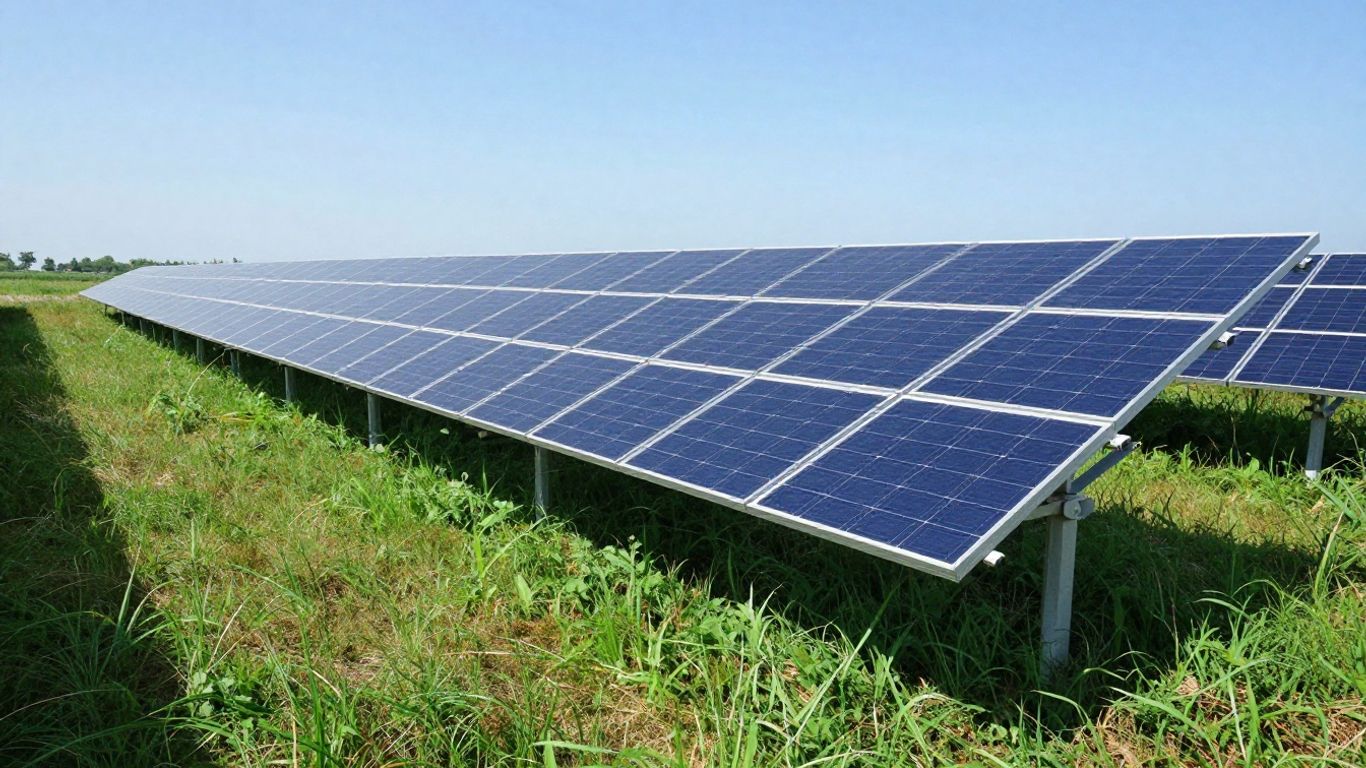
The installation of ground-mounted solar panels can sometimes raise questions about their integration into the landscape. Fortunately, several approaches can minimise their visual impact. One strategy is to choose discreet mounting structures, such as ballast trays that blend better with the immediate environment. Another option is to favour low-height installations, often under 1.80 metres, which reduces their overall visibility. It is also possible to use coverings or colours that blend into the surrounding scenery.
Protection of Vegetation Around Installations
The presence of ground-mounted solar panels requires special attention to surrounding vegetation. To prevent grass or other plants from growing under the panels and creating shade or hindering access, it is recommended to install a special mat. This mat limits plant growth while ensuring a certain permeability. The evolution of vegetation, such as trees that might grow and cast shadows on the panels over time, must also be considered. Thoughtful planning can prevent these problems and maintain optimal energy production. The idea is to find a balance between energy production and respect for the natural environment, allowing, for example, for dual land use, as in the case of certain pastoral activities coexistence with pastoral activities.
Requirements for Sensitive Areas
In areas considered sensitive, whether they are listed sites, historical monument perimeters, or remarkable landscapes, landscape integration requirements are stricter. Before any installation, it is imperative to consult the town hall to ascertain the specific constraints. In some cases, a prior declaration of works is mandatory, even for low-power installations. The aim is to preserve the visual and heritage integrity of these places while enabling the development of renewable energies. Ingenuity is therefore often required to find solutions that meet both aesthetic standards and energy needs.
Self-Consumption and Electricity Sales with a Ground-Mounted Installation
Specifics of Selling to EDF and Other Suppliers
Installing ground-mounted solar panels opens the door to self-consumption, meaning producing your own electricity to consume it directly. However, selling electricity produced from ground installations has specificities compared to roof installations. It is important to note that selling surplus electricity to EDF OA (Obligation d’Achat) is generally not possible for ground-mounted installations. This means that if you produce more than you consume, you cannot systematically sell this excess at the regulated tariff.
Nevertheless, other options exist to valorise your surplus production. You can consider selling your electricity to a third-party supplier at market price, or explore solutions like a « virtual battery ». The latter allows you to virtually store your surplus energy to re-inject it into your domestic network later, thus optimising your self-consumption. It should be noted that these administrative procedures can be more complex and often require a certificate of conformity endorsed by Consuel, which increases the process burden.
Configuration to Optimise Self-Consumption
To maximise self-consumption with a ground-mounted installation, several strategies can be implemented. The first is to correctly size your installation in relation to your consumption profile. A balance must be found: produce enough to cover your needs, but without massive overproduction, especially in summer, as winter production will be much lower. Using solar kits for self-consumption is an excellent starting point.
Here are some key points for successful optimisation:
- Consumption Analysis: Understanding your electricity consumption habits is essential. When do you consume the most? Which appliances are the most energy-intensive?
- Orientation and Tilt: Although ground installation offers great flexibility, optimising orientation (ideally south-facing) and tilt (around 30-35° for annual yield) remains essential.
- Energy Storage: Adding a physical battery or using a virtual battery can allow you to store surplus daytime production for use in the evening or on less sunny days.
- Appliance Management: If possible, shifting the use of certain energy-intensive appliances (washing machine, dishwasher) to hours of high solar production can improve self-consumption.
The main objective of self-consumption is to reduce your dependence on the traditional electricity grid by making the most of the energy you produce yourself. This requires careful planning and a good understanding of your energy needs.
Using Accessories and Energy Managers
To further optimise your ground-mounted solar installation, using accessories and energy managers can make a real difference. These tools allow for better control of your production and consumption.
- Smart Inverters: Some modern inverters include energy management functions, allowing you to prioritise self-consumption or manage battery storage.
- Smart Meters: They provide precise real-time data on your production and consumption, helping you identify key moments to adjust your usage.
- Home Automation Systems: Connected to your solar installation, they can automate the operation of certain appliances (heating, lighting) based on available solar production.
These technologies, although representing an additional investment, can significantly improve the profitability and efficiency of your ground-mounted solar project by maximising the use of the green electricity you generate.
Safety and Maintenance of Ground-Mounted Solar Panels
Prevention Against Theft and Vandalism
Ground-mounted solar panels, being more accessible, can unfortunately attract the attention of thieves or be victims of accidental damage, for example during gardening work. To reduce these risks, several measures can be considered. A discreet but effective fence around your installation can deter intruders. The use of robust, anti-theft fixings is also recommended. Also consider home insurance; check that it covers this type of outdoor equipment. Good visibility of your installation from your home can also have a deterrent effect.
Good Regular Maintenance Practices
Maintenance of ground-mounted solar panels is generally simpler than for those installed at height. Periodic cleaning helps maintain optimal performance. Here are some key points:
- Panel Cleaning: Use demineralised water and a soft brush, ideally in the early morning or late afternoon to avoid thermal shock. Avoid harsh detergents.
- Checking Fixings: Ensure that the support structures are still stable and well-anchored, especially after strong winds.
- Vegetation Monitoring: Trim surrounding trees or shrubs to prevent them from shading your panels, which would reduce their production.
- Cable Inspection: Check the condition of cables and connections to prevent any electrical problems.
Managing Risks Related to the Outdoor Environment
The outdoor environment presents specific challenges for ground-mounted solar panels. Debris projection, such as stones during mowing, can damage the panel surface. It is advisable to install a mat or vegetation protection in front of the modules to limit this risk. Similarly, particular attention must be paid to managing wind loads, especially if the panels are mounted on elevated structures. Adapted ballasting systems or solid anchors are essential to ensure the stability of the installation against bad weather. For a DIY installation, it is always good to consult guides on installing solar kits.
The accessibility of ground panels greatly facilitates their maintenance, but it also exposes them more to external risks. Careful planning and appropriate protective measures are therefore necessary to ensure the longevity and performance of your installation.
Plug-and-Play Solar Kits for Ground Mounting
Operation and Ease of Installation
Plug-and-play solar kits offer a simplified approach for those who wish to produce their own electricity, especially when a roof installation is not feasible. The core idea of these systems is their ease of connection: they plug directly into a standard electrical socket in your home. The energy produced then immediately powers your appliances, reducing your consumption from the grid. It is a solution that aims to be accessible, even without being a DIY expert. Installation can often be done in just a few minutes, and some kits come with a 25-year warranty, which is quite reassuring for a long-term investment. You can find kits starting at affordable prices, and they promise savings on your electricity bill.
Power Limitations and Use Cases
It is important to note that these plug-and-play kits have power limitations. Generally, they are designed for power outputs of 3 kWc or less. Beyond this power, more complex administrative procedures, such as a prior declaration of works to the town hall, may become necessary, especially if the panels exceed 1.80 m in height. These kits are therefore particularly suitable for partial self-consumption, aiming to reduce a portion of your daily electricity consumption. They are not designed to power an entire house autonomously, but rather to supplement your supply. The ground space occupied is also a factor to consider; you must ensure you have a clear, well-exposed area.
Adaptability in Collective or Individual Housing
The adaptability of these kits will depend on your housing configuration. In a detached house, ground installation is often easier, provided you have a garden or sufficient outdoor space. For collective housing, such as apartments in a co-ownership, ground installation is generally impossible, unless you have a private terrace or balcony large enough and the co-ownership rules allow it. In this case, you must check the specific rules carefully. It is also possible to consider solutions with batteries to store surplus energy, which can be useful for night-time use or on cloudy days, although this adds complexity and cost. It should be noted that the absence of specific government aid for ground-mounted installations, unlike some roof installations, can extend the payback period. It is therefore advisable to carefully assess the overall cost and potential savings before proceeding. For a larger installation, it is always best to consult a professional to ensure the compliance and optimisation of your project, particularly for grid connection.
Installing ground-mounted solar panels, especially via plug-and-play kits, offers a simplified entry point to renewable energy production. However, it is essential to understand their limitations, particularly in terms of power and regulations, to avoid any administrative or technical surprises. Careful planning of the location and a realistic assessment of potential savings are essential.
Costs and Return on Investment for a Ground-Mounted Project
Estimation of the Overall Budget
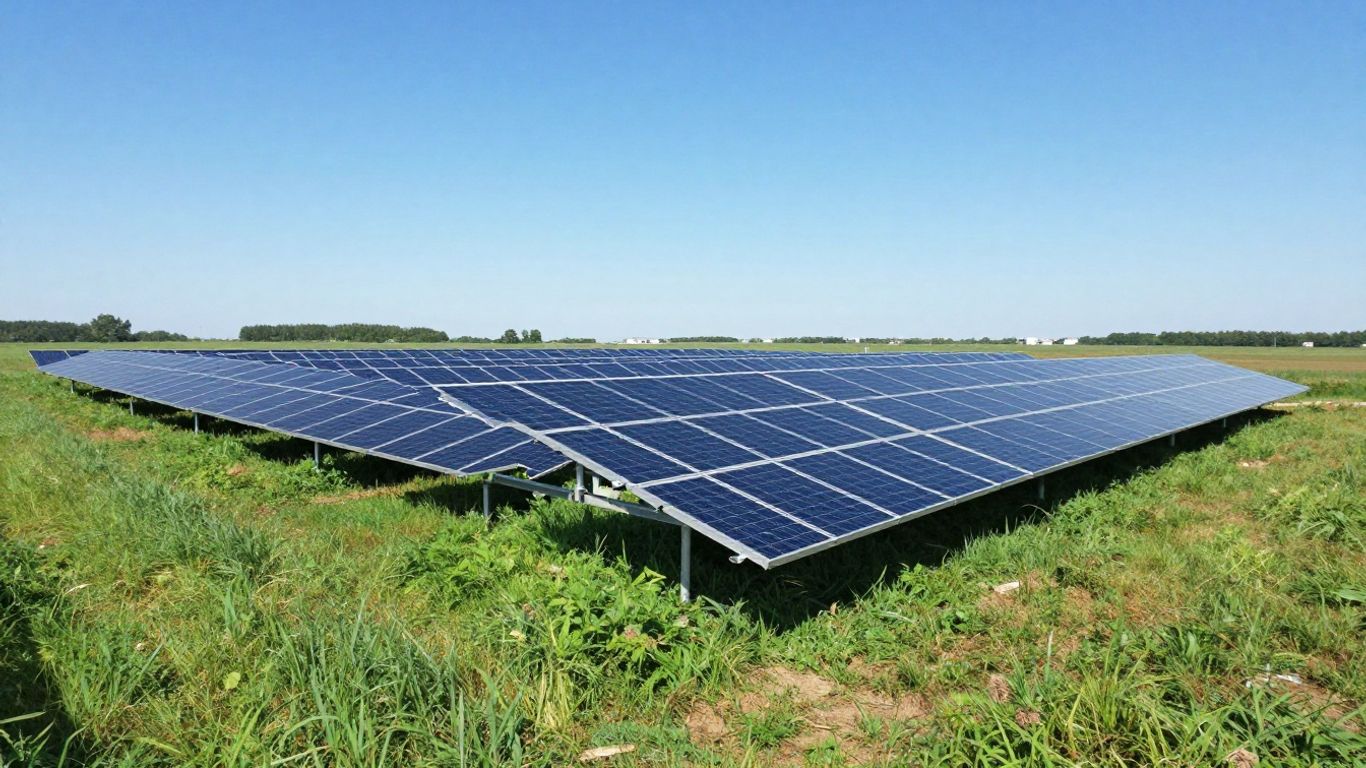
The cost of a ground-mounted solar installation can vary considerably. On average, you should expect to pay between €2 and €3 per Watt-peak (Wp) for an installation carried out by a professional. For example, a 3 kWp system could cost between €6,000 and €9,000, while a 6 kWp system would be more in the range of €9,000 to €12,000 [7857]. If you decide to do the installation yourself, costs can be reduced, ranging from €0.8 to €1.5 per Wp. However, this requires a certain technical know-how and time. It is always advisable to request multiple quotes to compare offers and ensure you get the best price.
Key Profitability Factors
Several elements influence the profitability of your ground-mounted solar installation. The sunshine in your region is a determining factor, as is the power of your system and the price of the electricity you consume or sell. The absence of specific government aid for ground-mounted installations, unlike those on roofs, can extend the payback period. It is therefore important to accurately assess your actual electricity consumption to correctly size your project and optimise its profitability. The use of a battery storage system can also improve self-consumption and thus long-term profitability.
Impact of Existing Financial Aid and Grants
Unlike roof installations, ground-mounted solar panels generally do not benefit from the same direct financial aid, such as the self-consumption bonus or the guaranteed purchase tariff from EDF OA. This can make the return on investment longer. However, it is always worthwhile to inquire about local or regional schemes that may exist. Furthermore, some companies offer solutions where they cover the financing and installation, ensuring you an income over several years [7857]. It is therefore essential to thoroughly research all available options before embarking on a ground-mounted solar panel project.
A thorough analysis of initial costs, potential savings, and any available aid is an essential step in assessing the financial viability of your ground-mounted solar project.
In Summary: Where to Install Your Solar Panels?
Ultimately, installing solar panels on the ground is entirely possible in many cases. Just because your roof isn’t perfect doesn’t mean you have to give up on producing your own energy. Whether in your garden, on a pergola, or even on a facade, solutions exist. Each option has its pros and cons, of course. You just need to carefully consider what best suits your situation, your space, and your budget. Think about it, it’s worth looking into to save money and help the planet.
Frequently Asked Questions
Can solar panels be installed on the ground anywhere?
Almost anywhere! The main thing is to have enough space and for the sun to be able to hit the panels well during the day. If your roof isn’t well-positioned for the sun or if there’s too much shade, the ground is a great alternative. It’s often simpler to install than on a roof.
Are ground-mounted solar panels difficult to maintain?
No, it’s even easier than on a roof! Since they are on the ground, they can be easily cleaned with water and a cloth. For those on roofs, it’s best to call a professional to avoid risks.
How should ground-mounted solar panels be oriented and tilted to produce more electricity?
To get the maximum electricity, they should ideally face south. You can also play with the tilt: around 30 to 35 degrees is generally best. But you can adjust the angle according to the seasons to further improve production, a bit more in winter and less in summer.
What are the disadvantages of ground-mounted solar panels?
You need to be careful about shadows cast by trees or the house, as this can reduce electricity production. You also need to consider the space they take up, as it’s no longer available for other things like a garden. There’s also a slightly higher risk of breakage or theft compared to roof-mounted panels.
Do I need to complete administrative procedures to install ground-mounted solar panels?
It depends on the size of the installation. If it’s less than 3000 watts (3 kWc) and the panels are not too high (less than 1.80 m), no permit is generally required. But if it’s larger or higher, you need to file a declaration with the town hall. In special areas (near monuments, for example), you always need to inquire.
Can electricity produced by ground-mounted solar panels be sold?
It’s a bit more complicated than for roof installations. You can often sell surplus electricity to suppliers other than EDF, but it requires more paperwork. Selling directly to EDF at a guaranteed price is generally only possible if the installation is done by a certified professional and on a roof.
What are the solutions for installing ground-mounted solar panels without fixing them into the ground?
There are systems with ‘ballast trays’. These are types of bases filled with weights (like concrete slabs) that hold the panels in place without digging. It’s practical and doesn’t damage the land.
Can ‘plug and play’ solar kits be installed on the ground?
Yes, absolutely! These kits are designed to be easy to install; you simply plug them into a socket. They are perfect for ground mounting, especially if you don’t have much space or want a simple solution to produce a little electricity.