Do you dream of freedom on the road with your motorhome, but the idea of running out of electricity stresses you out? A solar panel for a motorhome is the solution! But how much does it really cost in 2025? We’ll look at that together, so you can plan your budget without surprises.
Key Points to Remember
- The price of a solar panel for a motorhome depends on several things: its power, the type (flexible or rigid), and whether you install it yourself or not.
- Complete solar kits, such as those from Victron Energy or Offgridtec, are often a good starting point for easy installation.
- Installing it yourself can save on labour, but beware of hidden costs and warranties. A professional is more expensive, but safer.
- Think about your energy needs before buying. A 200W, 400W or even 1000W panel does not cost the same and does not produce the same amount of electricity.
- A lithium battery, even if it costs a lot initially, can really improve your autonomy and the lifespan of your motorhome solar installation.
Understanding the cost of a motorhome solar panel in 2025
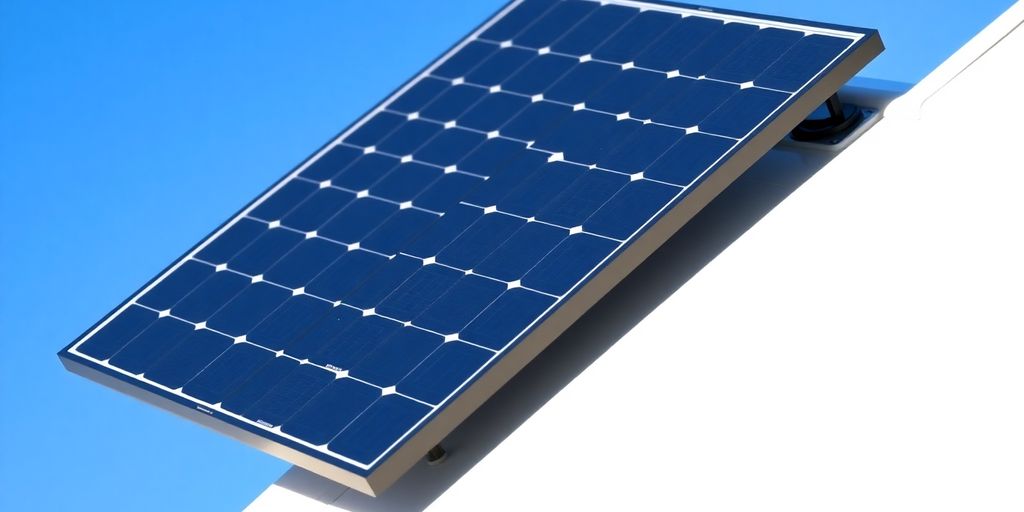
Acquiring a solar panel for your motorhome represents an initial investment that can prove very profitable in the long term. However, before you start, it is important to understand the different factors that influence the price and to estimate the overall budget required for a complete solar installation. In 2025, the motorhome solar panel market continues to evolve, with new technologies and price variations that are essential to take into account.
Factors influencing the price of a motorhome solar panel
Several elements determine the cost of a motorhome solar panel. The type of panel (monocrystalline, polycrystalline, flexible or rigid) plays a major role. The power of the panel, expressed in watts (W), is also a determining factor. The higher the power, the higher the price. The brand and quality of the materials used also influence the price. Finally, the accessories included in the solar kit (charge controller, cables, connectors, mounting brackets) can vary the total cost. It is important to note that financial aid can influence the final cost.
Comparison of prices for motorhome solar kits
The market offers a wide range of motorhome solar kits, with very variable prices. To give you an idea, here are some examples of average prices observed in 2025:
- 100W solar kit: €200 – €400
- 200W solar kit: €350 – €600
- 400W solar kit: €700 – €1200
- 1000W solar kit: €1500 – €3000
These prices are indicative and may vary depending on brands, retailers and current promotions. It is advisable to compare offers and read user reviews before making your choice. In 2025, the TOP 3 motorhome solar panel brands are Offgridtec, Victron Energy and SolarWatt.
Estimation of the overall budget for a solar installation
To estimate the overall budget for your solar installation, you should not limit yourself to the price of the solar panel. You must also take into account the following costs:
- The charge controller: €50 – €200
- Batteries (ideally lithium): €400 – €3000
- Cables and connectors: €50 – €100
- Mounting brackets: €30 – €100
- Installation (if you use a professional): €200 – €500
It is important to properly assess your energy needs before choosing the power of your solar panel and the capacity of your batteries. An oversized installation will be more expensive, while an undersized installation will not meet your needs.
In summary, the cost of a motorhome solar panel in 2025 depends on many factors. By taking the time to inform yourself and compare offers, you can find the solution best suited to your budget and your needs. Don’t forget to consider installing an auxiliary battery to store the energy produced.
The different types of motorhome solar panels and their prices
Choosing the right type of solar panel for your motorhome is essential to optimise your energy autonomy. The market offers a variety of technologies and configurations, each with its advantages and disadvantages in terms of cost, performance and adaptability. It is important to understand these differences to make an informed choice.
Monocrystalline and polycrystalline solar panels
Solar panels are mainly divided into two categories: monocrystalline and polycrystalline. Monocrystalline panels are made from a single silicon crystal, which gives them higher energy efficiency and better performance in low light conditions. They are generally more expensive than polycrystalline panels. Polycrystalline panels, on the other hand, are made from several silicon crystals melted together. They are cheaper to produce, but their efficiency is slightly lower.
In 2025, the average prices observed are as follows:
- Monocrystalline panels: €1.50 to €2.50 per watt
- Polycrystalline panels: €1.00 to €2.00 per watt
Flexible versus rigid solar panels
In addition to the silicon composition, solar panels are distinguished by their flexibility. Rigid panels are the most common and offer proven durability. They are generally fixed to the motorhome roof using specific brackets. Flexible panels, lighter and more flexible, can be glued directly to the roof surface, which facilitates their installation on curved or irregular roofs. However, they are often less weather-resistant and have a shorter lifespan. It is important to properly evaluate photovoltaic solar kits before making a choice.
Prices vary considerably:
- Rigid panels: €100 to €800 depending on power
- Flexible panels: €150 to €1000 depending on power and quality
Integrated solar kits and individual components
You have the choice between buying a complete solar kit, including the panel, charge controller, cables and connectors, or assembling your own system by buying the components separately. Integrated solar kits are easier to install and offer guaranteed compatibility between the different elements. They are particularly suitable for beginners. Assembling your own system allows you to choose specific components according to your needs and budget, but requires good knowledge of solar electricity. It is important to understand the purchase cost of a solar kit before starting.
Buying a complete solar kit greatly simplifies installation, as all components are designed to work together. This reduces the risk of compatibility errors and facilitates the setup process, especially if you have no prior experience in solar electricity. However, assembling your own system can be more economical if you have specific needs and are willing to invest time in researching and selecting components.
Here are some things to consider:
- Ease of installation
- Component compatibility
- System flexibility
Cost of installing a motorhome solar panel
DIY installation: advantages and hidden costs
Installing a solar panel on your motorhome yourself may seem like an economical option at first glance. The main advantage is the absence of labour costs. However, it is important to consider hidden costs. For example, the purchase of specific tools may be necessary. In addition, an error during installation can lead to costly damage to the solar panel or the vehicle’s electrical system. You also need to take into account the time spent, which could be used for other activities. Here are some things to consider:
- Purchase of specific tools (drill, cables, connectors).
- Risk of material damage in case of error.
- Time spent on installation.
Incorrect installation can not only damage the equipment, but also compromise the safety of your motorhome’s electrical system. It is therefore crucial to do your research and follow the instructions to the letter.
Calling on an RGE professional: price and guarantees
Calling on an RGE (Recognised Environmental Guarantor) professional for the installation of your solar panel represents a larger initial investment, but offers several advantages. The cost of labour is generally between €200 and €500, in addition to the price of the equipment. However, a qualified professional ensures an installation that complies with safety standards, which reduces the risk of future problems. In addition, they can advise you on the choice of equipment best suited to your needs and provide you with guarantees on the installation. Unfortunately, unlike a home installation, there is no state financial aid for this type of installation.
Breakdown of labour and material costs
The total cost of installing a motorhome solar panel depends on several factors, including the type of panel, the complexity of the installation and the choice of whether or not to use a professional. Here is an estimate of the costs to expect:
| Element | DIY Installation (€) | Professional Installation (€) |
|---|---|---|
| Solar panel (350W) | 749 | 749 |
| Charge controller | 85 | 85 |
| Labour | 0 | 200-500 |
| Total (estimate) | 834 | 1034-1334 |
It is important to note that these prices are indicative and may vary depending on suppliers and professionals. Don’t forget to include the price of a solar kit for a complete installation. Installation involves fixing the panel to the roof and connecting the controller to the battery. Using a lithium battery is preferable for storing unused energy, despite a high additional cost (€400 to €3000, in addition).
Choosing the right power for your motorhome solar panel
Choosing the right power for your motorhome solar panel is crucial to ensure your energy autonomy. You need to assess your needs and understand the impact of power on the final price. Here are some things to consider.
Calculating your motorhome’s energy needs
To determine the ideal power, start by listing all the electrical appliances you will use in your motorhome: refrigerator, lighting, chargers, etc. Note the power in watts (W) of each appliance, information often indicated on the label. Then estimate the number of hours of daily use for each appliance. Multiply the power by the number of hours to obtain the consumption in watt-hours (Wh) per day. Then add up the consumption of all appliances to obtain your total daily energy need. Don’t forget to take into account cloudy days, when solar production will be reduced. For a 200W panel, you can choose a 100Ah battery, for 400W, 200Ah and for a 2000W panel a 1000Ah battery will be suitable.
Recommended powers according to use (200W, 400W, 1000W)
The power of your solar panel must match your energy needs. Here are some recommendations:
- 200W: Ideal for small vans or occasional use, allowing you to power LED lighting, a small refrigerator and some phone charging.
- 400W: Suitable for medium-sized motorhomes with higher consumption, allowing you to power a refrigerator, lighting, television and some additional appliances.
- 1000W: Recommended for large motorhomes or for complete autonomy, allowing you to power all appliances, including air conditioning and energy-intensive equipment.
It is important to note that these figures are estimates and may vary depending on your actual consumption.
Impact of power on the final price
The price of a motorhome solar kit varies considerably depending on the power of the panel. A 200W kit will naturally be cheaper than a 1000W kit. Here is an idea of average prices in 2025:
| Power | Average price (€) | Recommended use |
|---|---|---|
| 200W | 230 | Small vans, occasional use |
| 400W | 1000 | Medium-sized motorhomes |
| 1000W | 2250 | Large motorhomes, complete autonomy |
You also need to consider the cost of other components, such as the charge controller and the lithium battery, which increase with the power of the panel. Choosing the right power is therefore a compromise between your energy needs and your budget.
The best motorhome solar panel brands in 2025
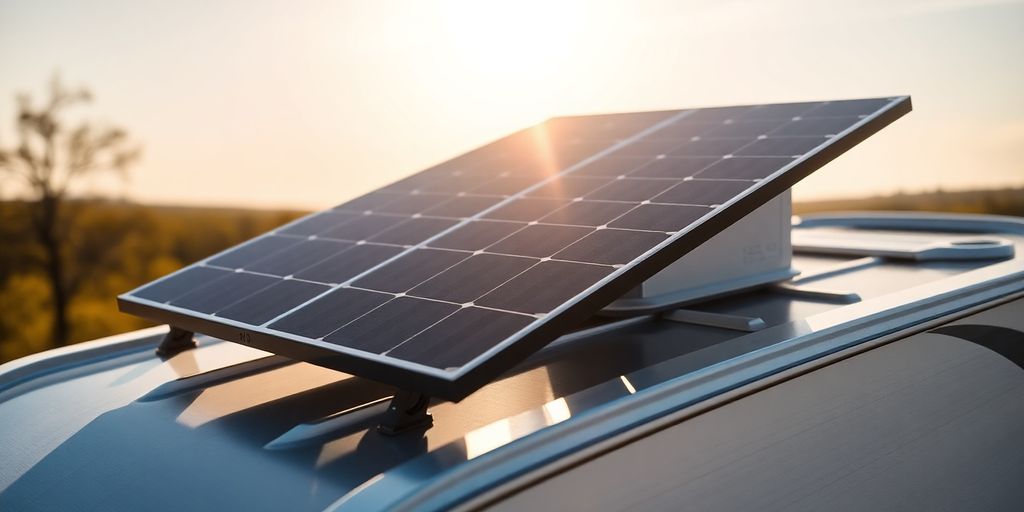
Choosing the right solar panel for your motorhome is crucial to ensure a reliable power supply during your travels. In 2025, several brands stand out for their quality, performance and durability. Let’s explore the most interesting options together.
Offgridtec: ideal solution for vans
Offgridtec has built a solid reputation, particularly among van owners. Their Offgridtec 200W Kit model is often cited as an excellent choice for small spaces and moderate energy needs. This kit is appreciated for its affordable price and ease of installation. It is perfect if you are new to solar energy and are looking for a simple and effective solution. The solar panel for vans is a wise investment for nomadic adventurers.
Victron Energy: performance for motorhomes
If you own a motorhome and are looking for optimal performance, Victron Energy is a brand to seriously consider. The Victron Energy 400W Kit is renowned for its high efficiency and reliability. Although slightly more expensive than other options, it offers excellent durability and consistent energy production, even in difficult weather conditions. It is an investment that can be worthwhile if you have significant energy needs and want a long-term solution. Victron Energy solar panels are a safe choice for demanding travellers.
SolarWatt: power for converted vans
For owners of converted vans with significant energy needs, SolarWatt offers powerful and efficient solutions. The SolarWatt 1000W Kit is particularly suitable for this type of vehicle, offering excellent value for money. Although customer support is mainly in English, the power and reliability of this kit make it a popular choice among travellers who need to power many electronic devices or energy-intensive equipment.
Choosing the right solar panel brand depends on your specific needs, your budget and the type of vehicle you own. Take the time to compare the different options and read user reviews before making a decision.
Here is a simplified comparison table:
| Brand | Recommended vehicle | Typical power | Advantages | Disadvantages |
|---|---|---|---|---|
| Offgridtec | Van | 200W | Affordable, easy to install | Less complete than other options |
| Victron Energy | Motorhome | 400W | High efficiency, reliability | More expensive |
| SolarWatt | Converted van | 1000W | Excellent value for money, high power | Customer support mainly in English |
In summary, the choice of brand will depend on your priorities and specific needs.
Essential components and accessories for your solar installation
Charge controller: role and cost
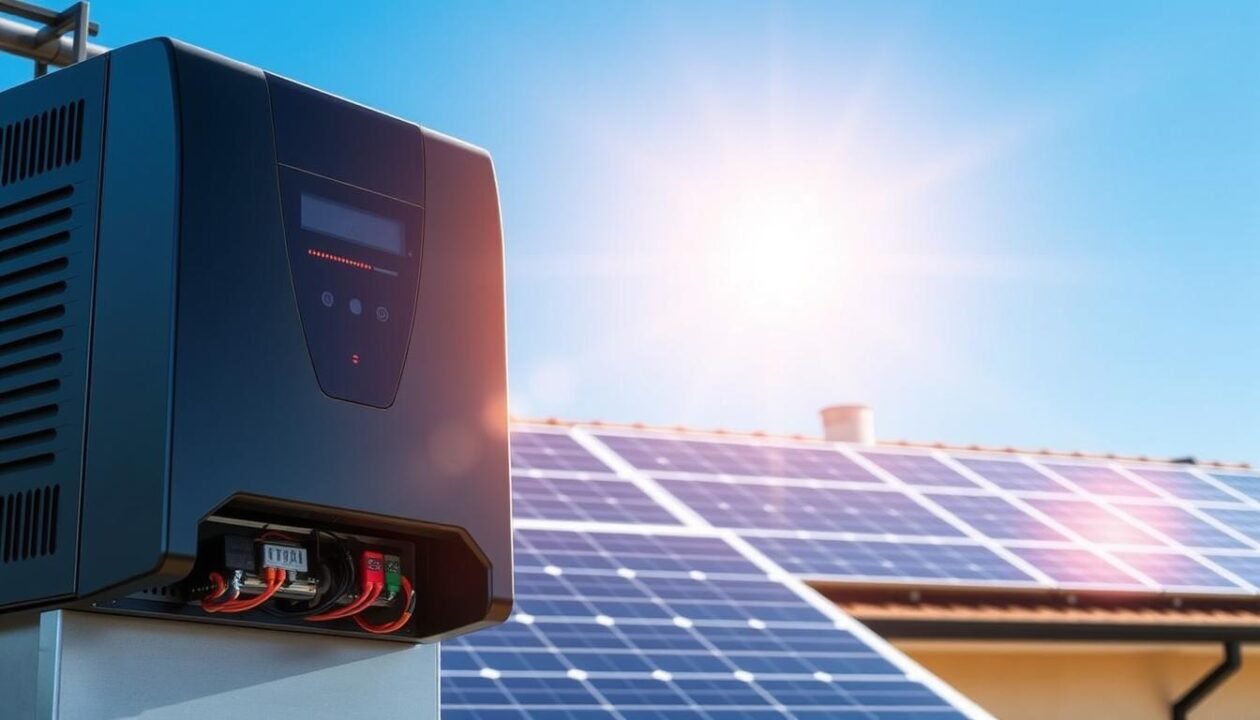
The charge controller is an essential element of your motorhome solar installation. Its main role is to protect your batteries against overcharging, by controlling the voltage and current coming from the solar panels. Without it, your batteries could be irreversibly damaged. Prices vary depending on the technology (PWM or MPPT) and power, ranging from approximately €50 to over €300.
Lithium batteries: a profitable investment?
Lithium batteries are increasingly popular for motorhome solar installations, and for good reason! They offer several advantages over traditional lead-acid batteries: a longer lifespan, deeper discharge possible, and lighter weight. However, they represent a larger initial investment. You should expect to pay at least €500 for a 100Ah lithium battery. Is it a profitable investment? It depends on your use and your energy needs. If you travel often and need a lot of autonomy, home battery, then yes, it can be worth it.
Mounting brackets and wiring: elements not to be overlooked
Mounting brackets and wiring are often overlooked, but they are essential for a safe and efficient solar installation.
- The brackets must be robust and suitable for the type of roof on your motorhome.
- The wiring must be of appropriate cross-section to support the current generated by the solar panels.
- It is also important to use waterproof connectors to avoid corrosion problems.
The cost of these elements can vary from a few tens to a few hundreds of euros, depending on the quality and quantity required. Do not hesitate to consult a standalone solar guide for more information.
A well-designed solar installation made with quality components will guarantee optimal energy autonomy and peace of mind during your travels. Do not skimp on these essential elements to fully enjoy your solar installation.
Optimising the efficiency of your motorhome solar panel
To get the most out of your motorhome’s solar installation, it is essential to adopt certain practices and understand the factors that influence energy production. A well-optimised installation will allow you to maximise your autonomy and reduce your dependence on external energy sources.
Tips for maximising energy production
To maximise the energy production of your solar panel, several aspects must be taken into account:
- Orientation and inclination: Orient your solar panel so that it is perpendicular to the sun’s rays as much as possible. The ideal inclination varies depending on the season and your geographical location. In general, an inclination of 45 degrees in winter and 20 degrees in summer is recommended.
- Avoid shadows: Make sure that no obstacles (trees, buildings, etc.) cast a shadow on your solar panel, especially during the sunniest hours of the day. Even a small shaded area can significantly reduce energy production.
- Regular cleaning: Dust, dirt and debris can accumulate on the surface of the solar panel and reduce its efficiency. Regularly clean your panel with water and a soft cloth. Avoid using abrasive products that could damage the surface.
Optimising the orientation and inclination of your solar panel can significantly increase energy production, especially during periods of low sunlight.
Maintenance and upkeep for extended lifespan
Regular maintenance is essential to extend the lifespan of your solar panel and maintain its optimal performance. Here are some tips:
- Visual inspection: Regularly check the general condition of the panel, cables and connectors. Look for signs of damage, corrosion or cracks.
- Connection check: Make sure all connections are tight and there are no bare wires. Loose connections can lead to power loss and even a fire hazard.
- Performance test: Use a multimeter to check the voltage and current output of the solar panel. Compare the results with the manufacturer’s specifications to detect any anomalies. If you are not comfortable with these checks, call an RGE professional.
Impact of orientation and inclination
The orientation and inclination of your solar panel have a significant impact on the amount of energy it can produce. Here are some points to consider:
- Orientation: In the northern hemisphere, the ideal orientation is south. However, slight variations may be necessary depending on your geographical location and the season. Use a compass or a solar location app to determine the optimal orientation.
- Inclination: The ideal inclination varies depending on latitude and season. In general, an inclination equal to your latitude is recommended for optimal energy production throughout the year. You can adjust the inclination according to the season to maximise production during periods of high energy demand. For example, in summer, a lower inclination may be preferable, while in winter, a higher inclination may be more effective. Consider checking the available photovoltaic solar kits.
- Solar trackers: For maximum optimisation, you can consider installing a solar tracker. These devices automatically adjust the orientation and inclination of the solar panel according to the sun’s position, which can significantly increase energy production. However, solar trackers are generally more expensive and more complex to install than fixed solar panels.
By following these tips, you can optimise the efficiency of your motorhome solar panel and enjoy a clean and renewable energy source during your travels.
Installing a second solar panel on your motorhome
Series or parallel connection: which option to choose?
Adding a second solar panel to your motorhome can significantly increase your energy autonomy. The choice of connection type, series or parallel, is crucial to optimise the efficiency of your installation.
- Series connection: Increases the total voltage of the system by adding the voltages of each panel. Ideal if your charge controller requires a higher voltage. However, if one panel is shaded, the performance of the entire system can be reduced.
- Parallel connection: Maintains the voltage but increases the total current. This option is more tolerant to partial shading, as a shaded panel will affect the others less. This is often the preferred choice for motorhome installations where shading can be an issue.
- Before proceeding, check the specifications of your charge controller and solar panels to ensure compatibility.
It is important to fully understand the implications of each type of connection before making a decision. A wrong choice can lead to a loss of efficiency or even damage your equipment.
Compatibility of panels and regulators
Before installing a second solar panel, ensure compatibility with your existing installation. Here are some points to check:
- Voltage and current: The panels must have similar electrical characteristics (nominal voltage and current). Significant differences can lead to imbalance and reduce efficiency.
- Charge controller: Check that your charge controller is capable of handling the additional power generated by the two panels. An undersized controller can be damaged.
- Wiring: Use cables of appropriate cross-section to support the total current. Cables that are too thin can overheat and pose a fire hazard. To connect the solar panel, create a suitable extension cable.
Increasing your vehicle’s energy autonomy
Installing a second solar panel is an excellent way to increase your motorhome’s energy autonomy. This allows you to:
- Power more electrical appliances without relying on an external power source.
- Extend the life of your batteries by reducing deep discharge cycles.
- Enjoy greater freedom during your travels, allowing you to camp outside equipped areas. For information on repowering, consult specialised sites.
Here is a comparative table of the advantages and disadvantages of the two types of connection:
| Characteristic | Series connection | Parallel connection |
|---|---|---|
| Voltage | Increased | Maintains individual panel voltage |
| Current | Maintains individual panel current | Increased |
| Sensitivity to shading | High | Low |
| Complexity | Simple | Simple |
| Use | Controllers requiring high voltage | Installations where shading is possible |
In conclusion, the choice between a series or parallel connection will depend on your specific needs and the characteristics of your installation. Careful planning is essential to ensure optimal performance and maximum safety.
Profitability and amortisation of a motorhome solar panel
Savings on electricity costs
Installing solar panels on your motorhome represents an initial investment, but it is important to assess the potential long-term savings. By producing your own electricity, you reduce your dependence on external energy sources, such as paid campsite hook-ups. These savings can accumulate quickly, especially if you travel frequently or stay in isolated places where electricity is expensive or unavailable. The return on investment for this solution, which varies between 4 and 6 years, is influenced by usage patterns and regional sunlight exposure.
Energy independence when travelling
One of the main advantages of a motorhome solar system is the autonomy it provides. You are no longer limited by the need to find electrical outlets or rely on noisy generators. This independence allows you to travel wherever you want, enjoy nature and settle in remote places without sacrificing the comfort of electricity. Imagine being able to power your refrigerator, lighting, electronic devices and even your heating without worrying about energy consumption.
- Freedom to park outside campsites.
- Reduced stress related to finding energy sources.
- Possibility of travelling in isolated areas.
The energy independence offered by solar panels transforms your travel experience, allowing you to connect more with nature and fully enjoy your adventure.
Added value for your motorhome
Installing solar panels can increase the resale value of your motorhome. Potential buyers are increasingly interested in vehicles equipped with renewable energy systems, as they offer economic and environmental benefits. A motorhome equipped with solar panels is perceived as a more sustainable and economical investment, which can justify a higher selling price. In addition, the installation of solar panels can be a convincing selling point, as it demonstrates your commitment to the environment and your concern for optimising the use of your vehicle. It is important to note that repowering is a strategic option for rural areas.
Regulations and standards for solar panel installation
Installing solar panels on a motorhome, although relatively simple, must comply with certain regulations and standards to ensure the safety and conformity of the installation. It is important to stay informed of the latest requirements in force, as they may evolve.
Compliance with European standards (CE marking)
CE marking is a key indicator of compliance with European standards. It certifies that the product meets the safety, health and environmental protection requirements applicable within the European Union. Before buying a solar panel, check that it has this marking. This ensures that the manufacturer has complied with the conformity assessment procedures. European standards CE marking are there to protect you.
Insurance and equipment guarantees
It is important to check the insurance and guarantees offered by solar panel manufacturers and installers. A good warranty protects you against manufacturing defects and performance problems. In addition, make sure that your motorhome insurance covers the installed solar equipment. In the event of a claim, you will then be compensated for any damage to your installation. Warranties can vary considerably from one brand to another, so take the time to compare offers.
Tips for a safe installation
A safe installation is essential to avoid the risk of fire or electric shock. Here are some tips to follow:
- Call on a qualified professional for installation, especially if you do not have electrical skills.
- Use quality cables and connectors, suitable for outdoor use and weather conditions.
- Protect cables from friction and cuts by running them through conduits.
- Install a protective fuse on the solar circuit to prevent overloads.
- Regularly check the condition of the installation and have it inspected by a professional every two years.
Installing solar panels on a motorhome can increase its value and energy autonomy. However, it is essential to comply with current regulations and standards to ensure the safety and durability of the installation. Do not hesitate to seek advice from professionals and consult the guides and resources available online. The repowering portal can help you find useful information.
In summary: choosing the right solar panel for your motorhome
So, we’ve covered the topic of motorhome solar panels. As you’ve seen, there are quite a few things to consider. Price is important, but it’s not the only criterion. Think about the power you need, the type of panel (flexible or rigid), and whether you want to install it yourself or hire a professional. Each option has its advantages and disadvantages. The idea is to find the perfect balance so that your motorhome trips are always synonymous with freedom, with enough energy for everything you need. Take the time to think carefully about your needs, and you’re sure to make the right choice.
Frequently Asked Questions
How much does a motorhome solar panel cost in 2025?
The cost of a motorhome solar panel in 2025 depends on several things: the type of panel (flexible or rigid), its power, and whether you install it yourself or hire a professional. In general, a complete kit can cost between €200 and €2500, not including installation.
What solar panel power should I choose for my motorhome?
To choose the right power, you first need to know what electrical appliances you use in your motorhome (fridge, lights, chargers…) and for how long. Once you have an idea of your daily consumption, you can choose a panel that produces enough energy. For example, a 200W panel is often sufficient for light use, while a 400W or more will be better for more intensive use.
Can you install a solar panel on your motorhome yourself?
Yes, it is entirely possible to install a solar panel yourself. This will save you labour costs. However, you need to be a bit handy and follow the instructions carefully to avoid mistakes. If you are unsure, hiring a professional is safer, even if it is more expensive.
What is the difference between monocrystalline and polycrystalline solar panels?
Monocrystalline panels are more efficient and take up less space, but they are often more expensive. Polycrystalline panels are slightly less efficient but more affordable. For motorhomes, monocrystalline panels are often preferred because roof space is limited.
Flexible or rigid solar panel for my motorhome: which one to choose?
Flexible panels are lightweight and can be glued directly to the roof, which is practical for curved roofs or if you want something discreet. Rigid panels are more durable and generally offer better efficiency, but they require mounting brackets. The choice depends on your needs and the structure of your motorhome.
What is the purpose of a charge controller in a motorhome solar installation?
A charge controller is essential because it protects your battery from overcharging and excessive discharge, which extends its lifespan. It ensures that energy from the solar panel is sent to the battery safely and efficiently.
Why install a second solar panel on my motorhome?
Adding a second solar panel can greatly increase your energy autonomy. You can connect them in series (to increase voltage) or in parallel (to increase current). The choice depends on your charge controller and your needs. This is ideal if you use many appliances or if you stay for a long time without an electricity source.
How to optimise the efficiency of my motorhome solar panel?
To optimise efficiency, you must first orient your panel correctly towards the sun. Clean it regularly to remove dust and dirt. Avoid shadows, even partial ones, as they can significantly reduce energy production. Good maintenance also ensures a longer lifespan for your installation.